Guide
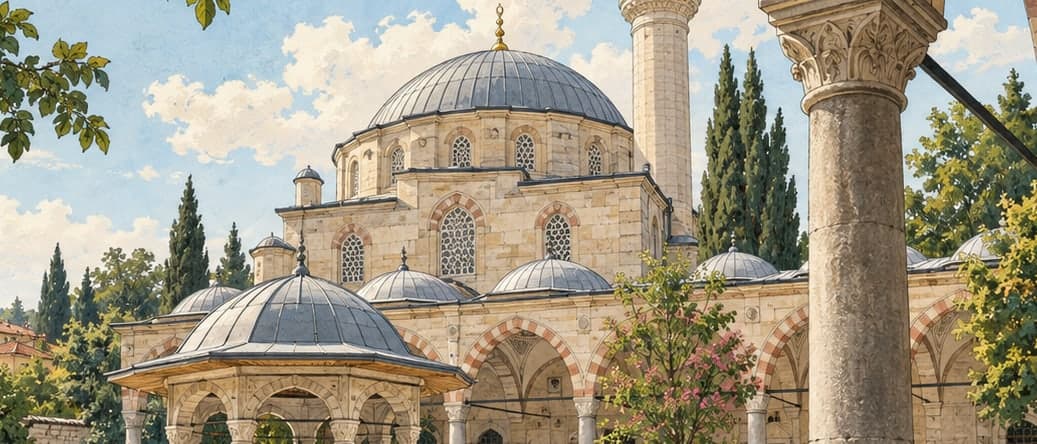
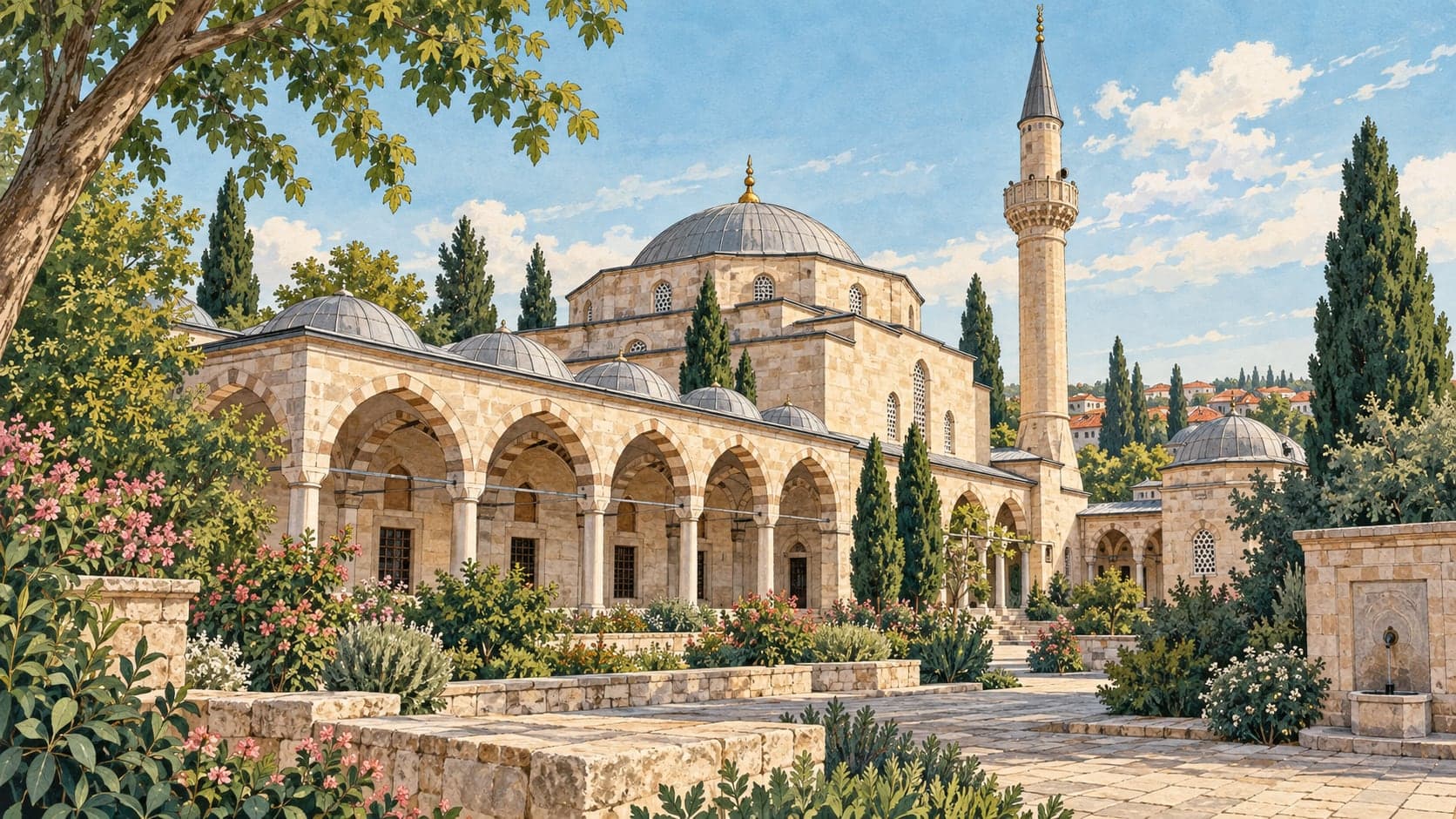
The complex spreads over a wide area at the entrance to Lüleburgaz. Built in 1569–70 for worship, trade and teaching, it brought a mosque, a row of arched shops, a han, a bath and a medrese together as one establishment. Damage over the centuries has loosened that unity: what a visitor sees now reads as a set of separate buildings rather than a single composition.
Its patron was Sokullu Mehmet Paşa, born in 1505, taken into the palace through the devşirme, married into the dynasty, and holding in turn the offices of grand admiral, sancak governor and governor-general of Rumelia before becoming grand vizier in 1564 — a post he kept until his death in 1579.
The portal reads the choice of Lüleburgaz as a matter of state policy rather than piety alone. Campaigns into the Balkans grew more frequent under Süleyman the Lawgiver, which raised the importance of the old Roman road from İstanbul through Edirne to Belgrade and forced its improvement; every significant point along it was designated a menzil, a staging post where an army could halt and be provisioned. Lüleburgaz was one of them.
Trade made the same demand. Caravans carrying grain, livestock and cloth between İstanbul and the Balkan towns of Thrace needed somewhere to stop, and the rich farmland and pasture around Lüleburgaz made it the natural place for a large caravanserai, a great many shops and a fair — Evliya Çelebi calls the fair held here the Cattle Fair. Pilgrims added to the traffic: once the caliphate had passed to the Ottomans, those travelling from the Balkans to the holy cities and back passed through the town each year, and they too needed safe lodging.