Guide
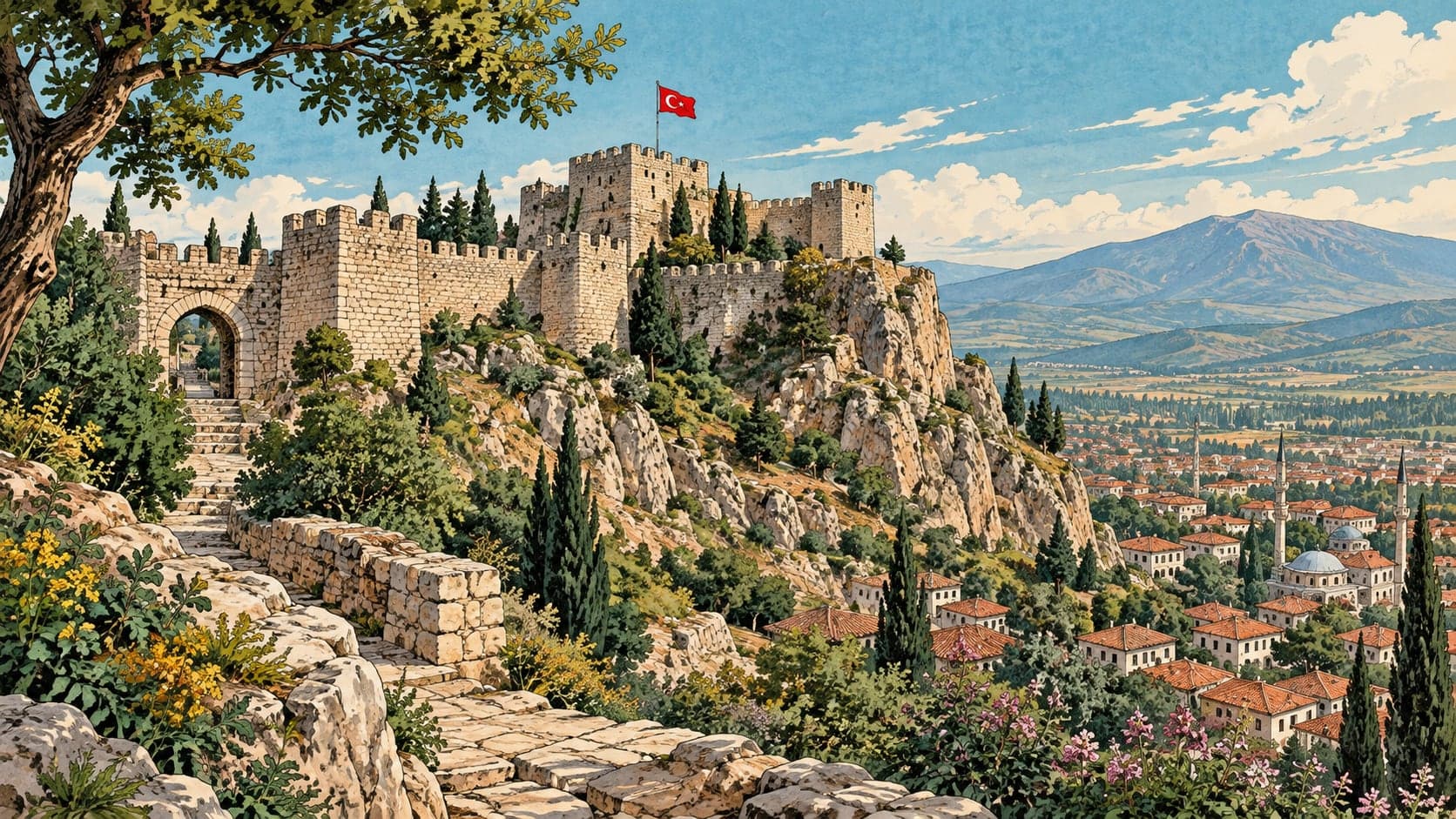
Byzantine emperors built a castle on a high and sheer hill commanding the city, fortified it with towers and enclosed it within two rings of wall.
Kütahya Castle is a solid and ornamented building of five sides standing on blue and reddish sheer rock, set on the hill like a ring. Its circuit runs about three thousand metres. Sheer rock surrounds it on all four sides; it has no ditch, but the ground below the walls falls away as a precipice. To the north-east of the castle stand the Kale-i Bâlâ Mosque, a work of the Germiyanids, and a fountain.
Under the Ottoman government the castle was placed in the keeping of garrison troops holding fiefs and under the command of a castellan, the dizdar, while the castle grounds were assigned as quarters for artillerymen, sappers and armourers. There were 119 fief-holding garrison soldiers in the castle; when wars ran long and troops were badly needed, some of them went on campaign and the rest stayed to guard the castle. The post of castellan was generally given to men who had served in the palace and earned their retirement. Besides his garrison fief the castellan held certain lands under the name of ocaklık, which passed to his children and grandchildren; he was appointed by imperial decree and drew a daily allowance from the poll tax revenues of Kütahya in addition to that land. A fief worth 7,600 akçe from Karaağaç and other villages of the Altıntaş district belonged to the castellanship. Besides the castellan there were a castle steward, a chief gunner, a chief armourer, a gaoler and a gatekeeper.
During the long war that began in the reign of Mehmed IV and lasted sixteen years, military resources were exhausted and it was thought necessary to send the soldiers guarding the castle to the front as well. That practice was later given up and replaced by the taking of a fixed payment: an imperial rescript at the beginning of 1698 ordered each man either to send a levend in his place or to pay thirty kuruş instead, an amount later reduced to ten. By a decree of 1804 the castle troops were attached to the Üsküdar corps of the New Order organisation.
The castle also held a prison, and offenders sent by decree from Kütahya and its region and from elsewhere were imprisoned here. Those who rebelled were strangled, and a cannon was fired from the castle as a sign to the people. The son and brother of Nasuhzâde Nasuh, voivode of Gediz, who gave the state a great deal of trouble, were imprisoned in Kütahya Castle by order of the governor of Anatolia, Alâeddin Paşa, with fifty men set to guard them.
The castle was inspected at least once a year by the governor of Anatolia.