Guide
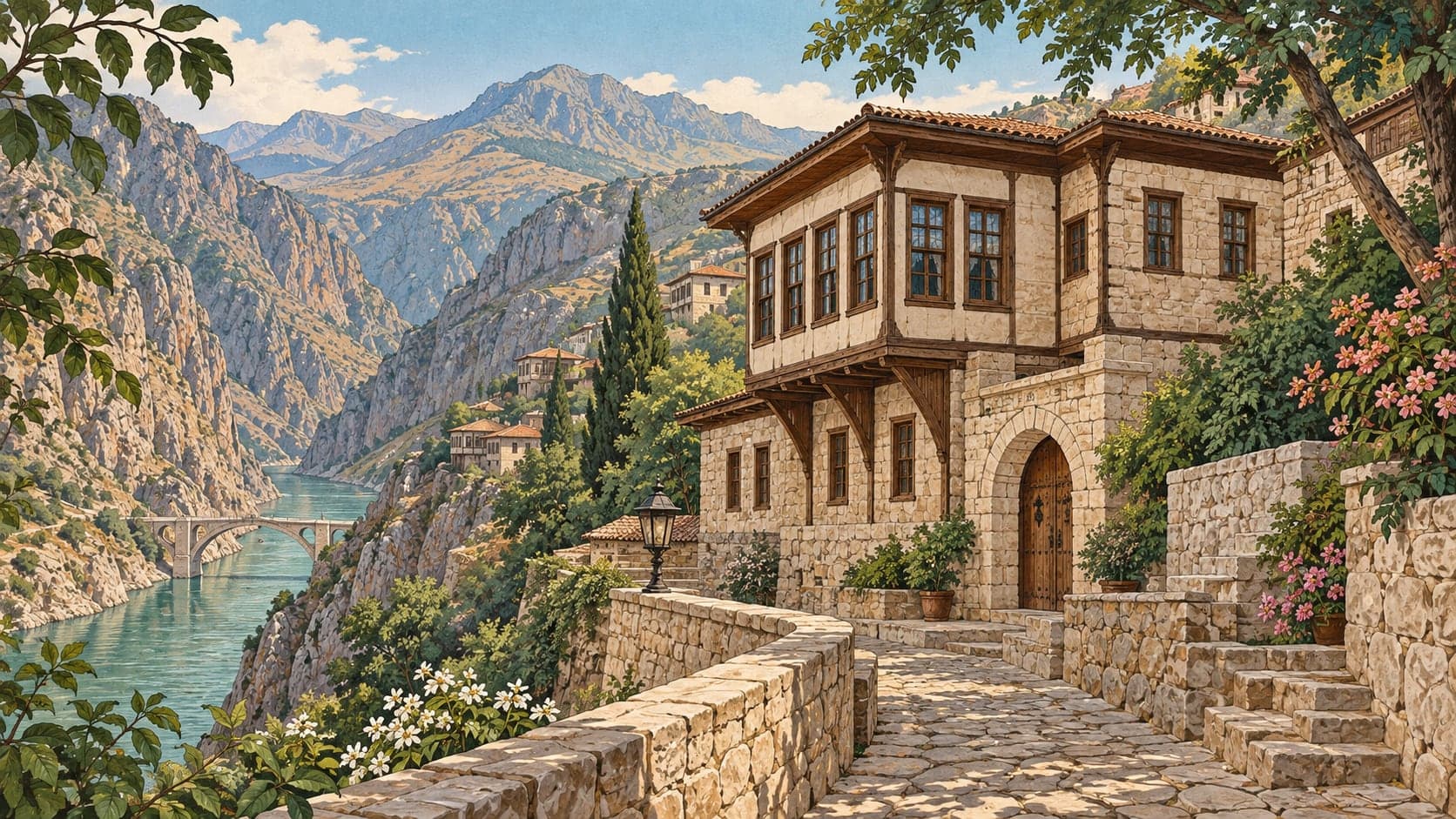
Kemaliye lies in the south-west of Erzincan. It was known in the past as Eğin, and the present name was taken from that of Mustafa Kemal. Historically it stood on the Silk Road and the caravan routes, and what stands out about it now is the fabric of the town, its architecture and its houses.
The settlement was built on an understanding that took the landscape as the governing element: three main terraces rising from the Euphrates. The river shaped how the town was arranged and how it was built, and the quarters were laid out to suit it.
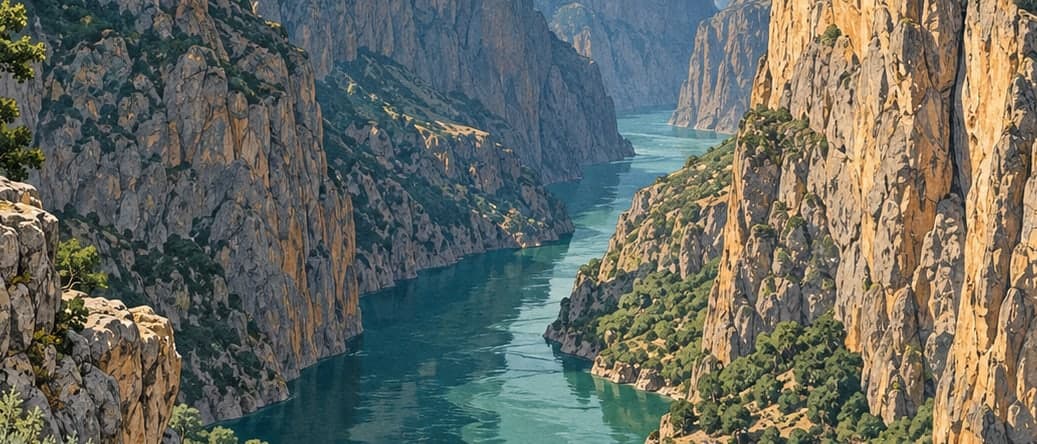
The Dark Canyon is inseparable from the whole. One of the more unusual canyons in the country, it is a gorge between sheer rock walls cut by the Karasu, a branch of the Euphrates. The Taş Yolu within it — counted among the dangerous roads of the world — is remarkable in itself. Four or five kilometres north-west of the town centre, the Dilli valley carries old Turkic traces: work on the petroglyphs and tamgas there has produced information of real importance for Turkic cultural history.
The town and the settlements attached to it keep their traditional local architecture and fabric to a large degree. Carpet weaving is what Kemaliye is known for, and a carpet festival is held each year. Among its historic places are Endiçi castle, a Roman cemetery, the remains at Pigan, Hasgel and Arsania, Topkapı castle, the Orta mosque, Kadıgölü, the Ala cave, the village of Ocak and the tomb of Hıdır Abdal. Kemaliye was added to the UNESCO World Heritage tentative list in 2021 — a candidacy, not an inscription — and joined the Cittaslow network in 2022.