Guide
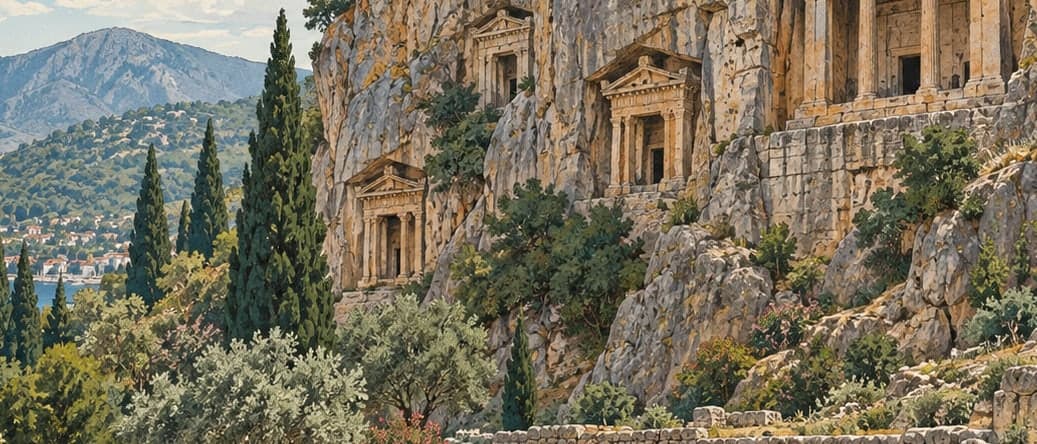
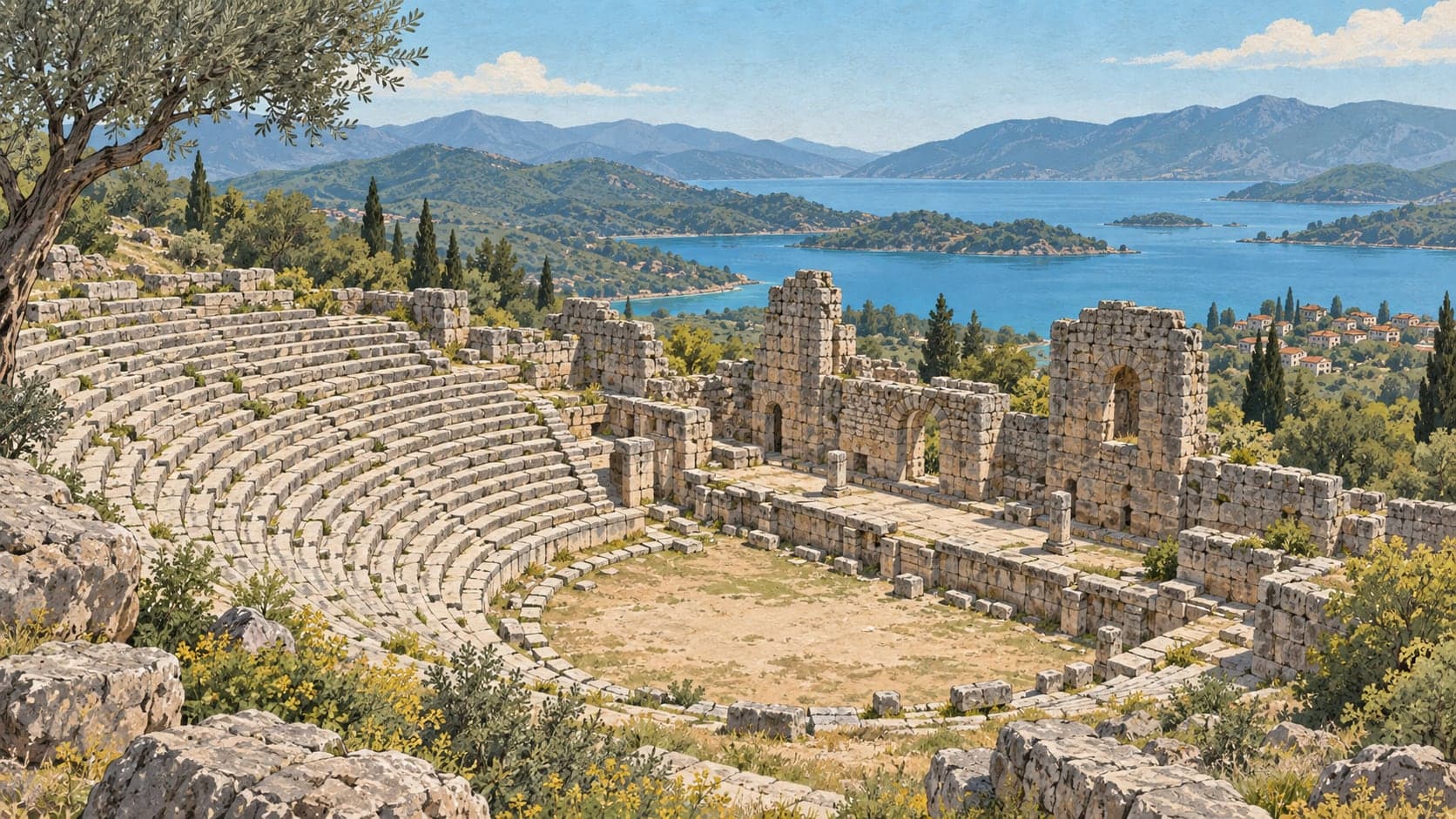
Kadyanda sits in the hills above Fethiye. Its name is read as Kadawanti in Lycian inscriptions, and because of the -nd ending the Ministry suggests its foundation may reach back to the third millennium BC; that is an inference from the name, not from finds, since the oldest remains visible on the surface go no further back than the fifth century BC. From that earliest phase come parts of the circuit wall, rock tombs and some inscriptions. Alongside them are a Hellenistic theatre that was repaired and reused in the Roman period, a bath, a running track, an agora, the remains of a temple whose deity is not known, and dense traces of housing — enough to show this was a full city rather than a village.
The walls follow the steep ground and were rebuilt several times; the southern stretch is the best preserved, and the polygonal retaining wall supporting the theatre area is Hellenistic and of good workmanship. The necropolis lies outside the walls on the south side and shows heavy traces of illegal digging. The other thing you notice is the number of cisterns. Four large interlinked cisterns were built under a wide area east of the stadium, which says how pressing the city's water problem was and raises the possibility that it was why the site was eventually left. Most of the standing remains are Roman; the city was occupied until the seventh century AD, but the late material is thin. Fethiye Museum carried out a rescue excavation in 1992 and laid out a walking route of about 2.5 kilometres to make the site easy to go round. Kadyanda is 24 kilometres from Fethiye, mostly on asphalt with eight kilometres of graded road.