Guide
The İzmir Museum of History and Art served visitors inside Kültürpark in İzmir between 2004 and 2025. Its collection has since been moved to the İzmir Culture and Art Factory and the buildings were taken back from the ministry in 2025, so anyone planning a visit should check what is open before setting out.
The museum was created because the İzmir Archaeological Museum had run out of room to display what it held. The metropolitan municipality repaired the old museum building in Kültürpark and two buildings beside it, handed them to the Ministry of Culture, and the museum opened in 2004. It drew more than a hundred thousand visitors a year and showed finds from excavations in and around İzmir in three sections: stone works, ceramics, and precious objects.
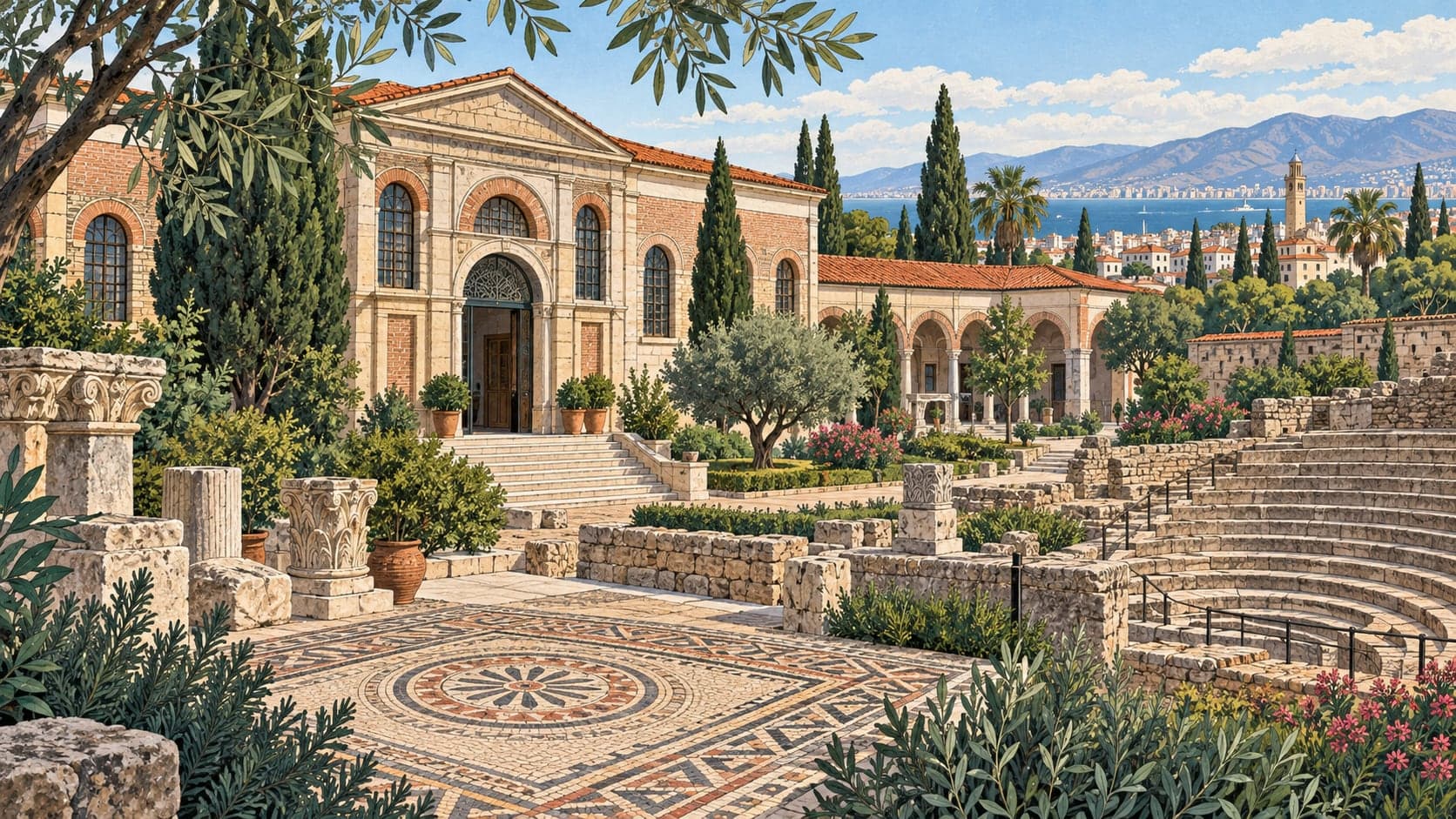
The works were displayed by subject and material across the three buildings, which stand around a wide courtyard. The Stone Works building, with a ground floor and a mezzanine, is the largest of the three. It holds sculpture and architectural carving of the Archaic, Classical, Hellenistic, Roman and Byzantine periods, arranged so that the chronological development can be followed through the halls, with separate displays for groups of works that belong together by subject or find spot. The mosaics, architectural pieces, inscriptions, statues and reliefs on the two floors number 225.
The large courtyard at the entrance greets visitors with a statue of the philosopher, taken to be Homer, flanked by lions. The hall to the right of the ground floor begins with stone works of the Archaic period. The U-shaped Funerary Monuments hall holds carved stelae of the Hellenistic and Roman periods and two Roman sarcophagi, and a small room at its centre shows three statues of Aphrodite set within the decoration of a Roman bath. That room opens into the large display hall, whose cases hold Roman heads and statuettes found in the excavations of the İzmir Agora. The left-hand corridor leading through to the gladiator section shows inscriptions uncovered during the building of the Basmane metro station.
On the mezzanine of the Stone Works building the halls are given to architectural sculpture and the corridor to Hellenistic and Roman heads. The Metropolis hall shows statues and round and rectangular altars from the excavations at Metropolis in Torbalı; the Great Hall is given over to the carved panels of the Belevi Mausoleum, with colossal griffins and urns; and the third hall of the mezzanine holds reliefs from the theatre at Miletos and the temple of Dionysos at Teos.
Visit status for this record: open to visitors.
Entry fee
- Single entry to the museum or site · Local
- MüzeKart
- Single entry to the museum or site · Foreign
- €3