Guide
The Kestanepazarı Mosque stands within the Kemeraltı market in the Konak district of İzmir, in the area known as the chestnut market, between the Başdurak and Şadırvanaltı mosques. Together with those two and the Kemeraltı, Konak Yalı and Hisar mosques it is among the most important historic mosques of Kemeraltı.
Its date is given differently by two inscriptions. According to a four-line inscription no longer in place but recorded by Evliya Çelebi, the mosque was built by Eminzade Hacı Ahmed Ağa in 1667–68; a newer inscription made in recent times gives the year as 1663. Ahmed Ağa, who served as superintendent of the imperial powder works, also held pious foundations in the Üsküdar quarter of İstanbul.
The building has carried other names. A foundation record of 1730 calls it the Hacı Ahmed Ağa Mosque, while two records of 1735 and 1838, concerning the foundation of the same man, call it the Kızıl İbrâhim Mosque. According to Ahmet Vefa Çobanoğlu a mosque called Kızıl İbrâhim stood on this spot and was rebuilt by Ahmed Ağa in 1667–68.
The mosque was damaged by a great fire in the nineteenth century and altered, and it was restored again in 1965. Its load-bearing vaults in particular were damaged in the İzmir earthquake of 1992; restoration began in 1993 and the mosque was reopened at a ceremony in February 1998.
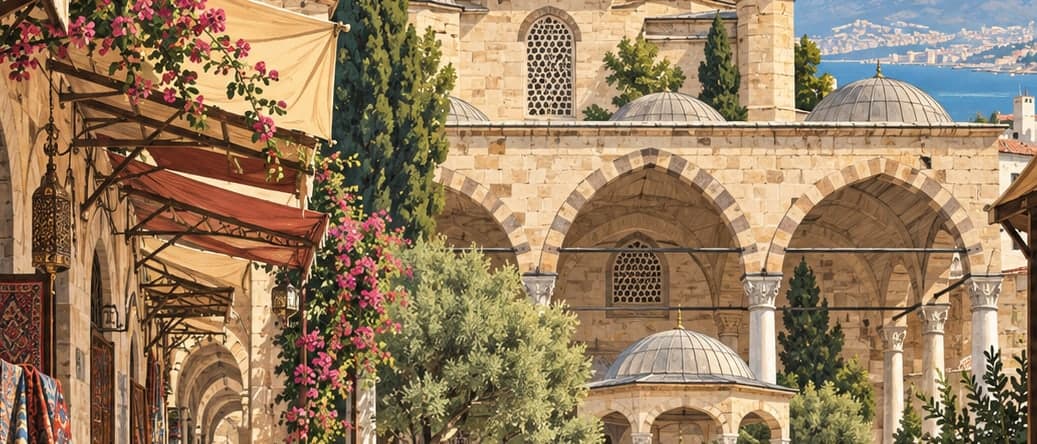
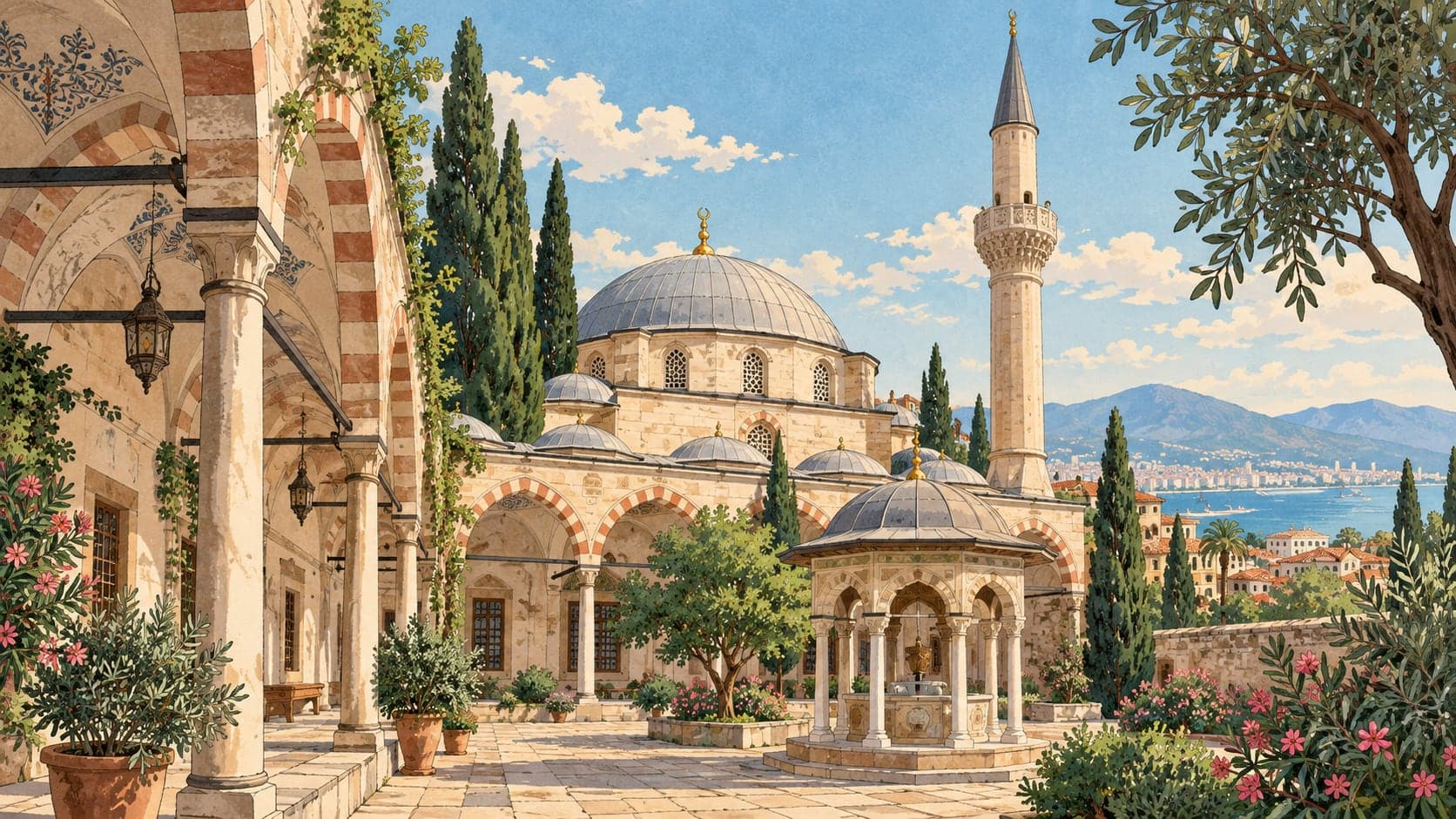
Built of cut and rubble stone, the mosque has two levels. It rests on a substructure holding a good many shops and stores and has a wide courtyard, with a centrally planned prayer hall, a three-domed porch and a minaret. The porch in front of the mosque, reached by steps, has been enclosed with glazing in recent times. The prayer hall is square in plan, laid out on a cross plan with barrel-vaulted arms, and the central dome is repeated at smaller size at the corners.