Guide
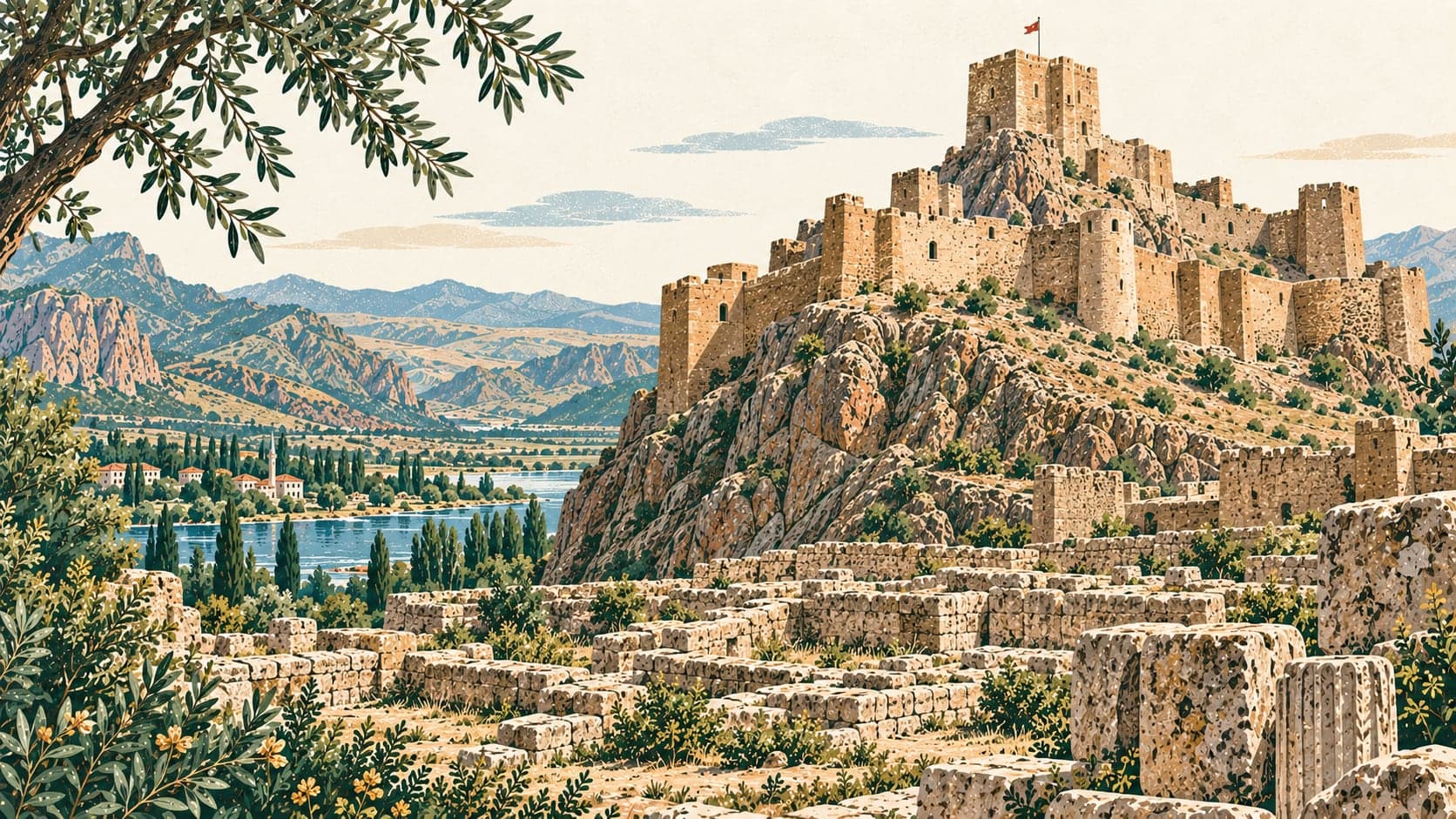
Hoşap Castle stands at Güzelsu on the Van–Başkale road, between fifty and sixty kilometres from Van, and took its present form in the Middle Ages. It rises on the sheer rocks above the Hoşap water, which gives it its name — the word means good or sweet water. Because it stood on the road between Türkiye and Iran it once held strategic importance. It is also known as the Mahmûdî Castle and as Narin Kale. It was rebuilt in 1643 by Sarı Süleyman Bey, lord of the Mahmudis.
The castle's known history reaches back to the Urartians. It is accepted that in that period a military installation was founded here at the junction where the Tuşba–Kelişin military road running to the south-east crossed the eastern road from Van to Kotur.
After the Urartians, Hoşap passed with Van and the country around it under Persian, Macedonian, Seleucid, Roman and Byzantine rule. In the Middle Ages it was among the cities of the kingdom of Vaspurakan, and from the eleventh century it came under Turkish rule. That rule, beginning with the Seljuk dynasty, continued under the Ilkhanids, when it was a city of the province of Van. The Karakoyunlu ruler Kara Yusuf later settled here the Kurdish tribe known as the Mahmudis, who founded a principality under their own name. In the Ottoman period they sided with the Ottomans in the struggle with the Safavids and, through their success, were granted certain privileges. The beys living in the castle, which survives intact, held their position until the proclamation of the Tanzimat in 1839.
The castle existed before 1643. Matrakçı Nasuh mentions it as Kal'e-i Mahmudi among the places on the route taken by Süleyman the Magnificent on his return from his eleventh Persian campaign in 1548–49, and Evliya Çelebi writes of the castle when he passed through in 1650. After describing its position, Evliya remarks on the gates of the inner castle: in the Ottoman lands, he says, castle gates are made of wood faced with iron, so that under fire the wood burns and the iron falls away — but each leaf of the gate at Hoşap is made of three hundred kantar of Nakhchivan iron, with no wood in it at all.
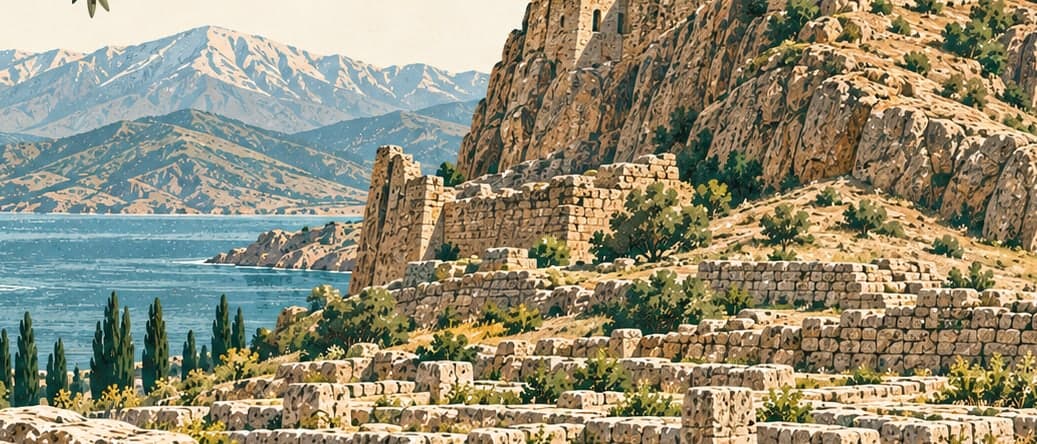
The castle is enclosed by three rings of wall, one within another. Its west-facing entrance and its original door have come down to the present undamaged; above the door are a Persian inscription concerning its building and reliefs of lions. Traces of the past can be seen in the old bath, mosque, medrese, water cistern, dungeon and rooms within the castle.