Guide
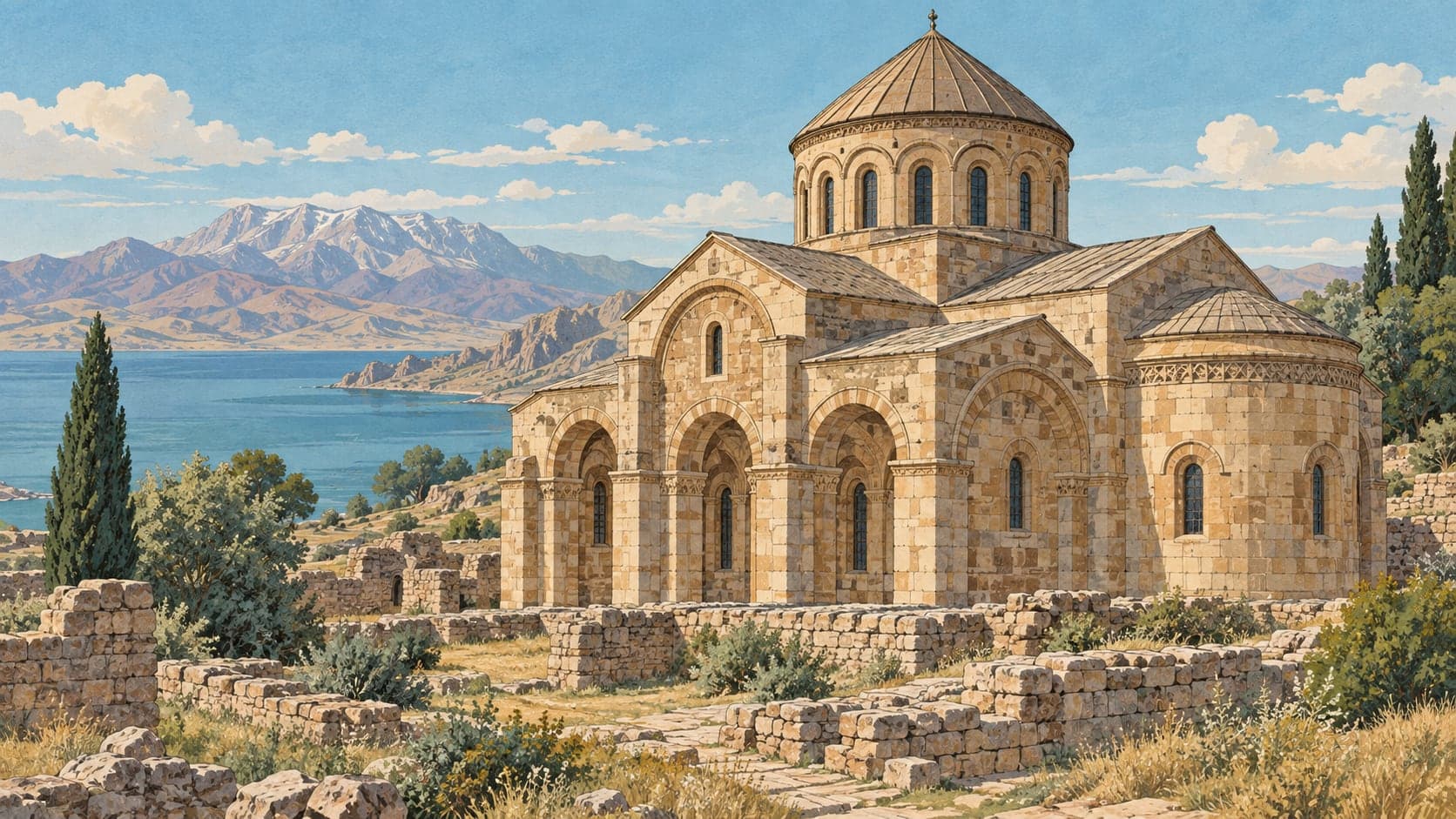
The church stands in the village of Albayrak in the Başkale district, on a hill overlooking the great Zap valley, and it was built at the same time as its jamatun — the covered forehall of an Armenian church. The most widespread belief holds that the church was built in the fourth century over the grave of Saint Bartholomew. Working from the references to the monastery, however, the church and its jamatun are taken to have been built at the end of the thirteenth and the beginning of the fourteenth century.
The colophon of a manuscript of 1457 records that the buildings were decorated by the chief priest Kirakos. The sources say the church and jamatun were repaired in 1651, with the support of the Catholicos Philippe and during the episcopate of the vardapet Kirakos, under the rule of Hüsrev Şerif, the Ottoman bey of Hakkari. What stands today is dated to the seventeenth and eighteenth centuries. The monastery and its buildings were badly damaged in the earthquake of 1966.
The church occupies a rectangle running east to west, with a monumental entrance at the middle of the west front. The portal is marked above by a pointed-arched tympanum; within a rectangular frame it forms a pointed-arched recess bounded at the corners by colonnettes, with a depressed-arched door opening at its centre. The tympanum of the portal recess carries two horsemen fighting, in relief, and the upper tympanum shows God and angels — God seated on a throne carried by six angels, with doves on his shoulders and lions beneath his feet.
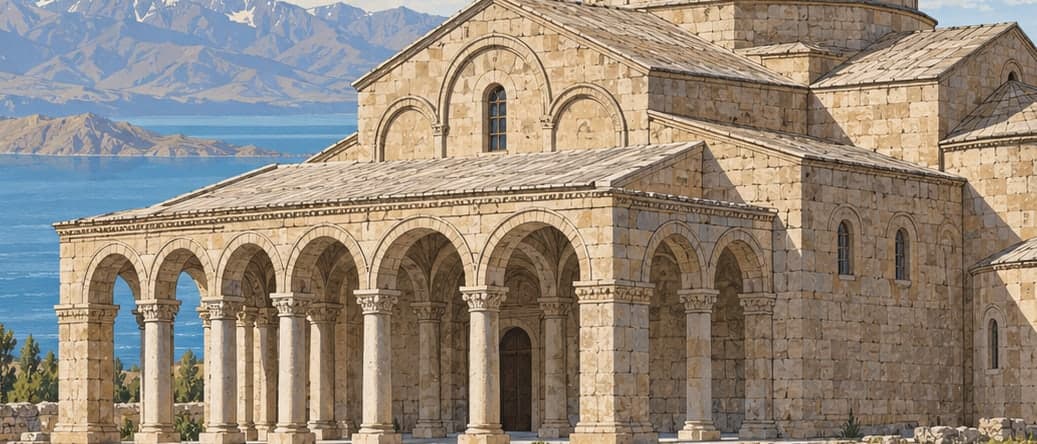
The square jamatun was covered by a cross vault resting on four arches thrown across from the sides; everything but the arches has now collapsed. A door leads from there into the church, which has a central dome and a cross plan. The apse on the east has five arches with the priests' cells beside it. The coverings of the central dome and of the arms of the cross have fallen in; old pictures show that outside they were marked by a high drum and a conical cap. Regular cut stone was used throughout.