Guide
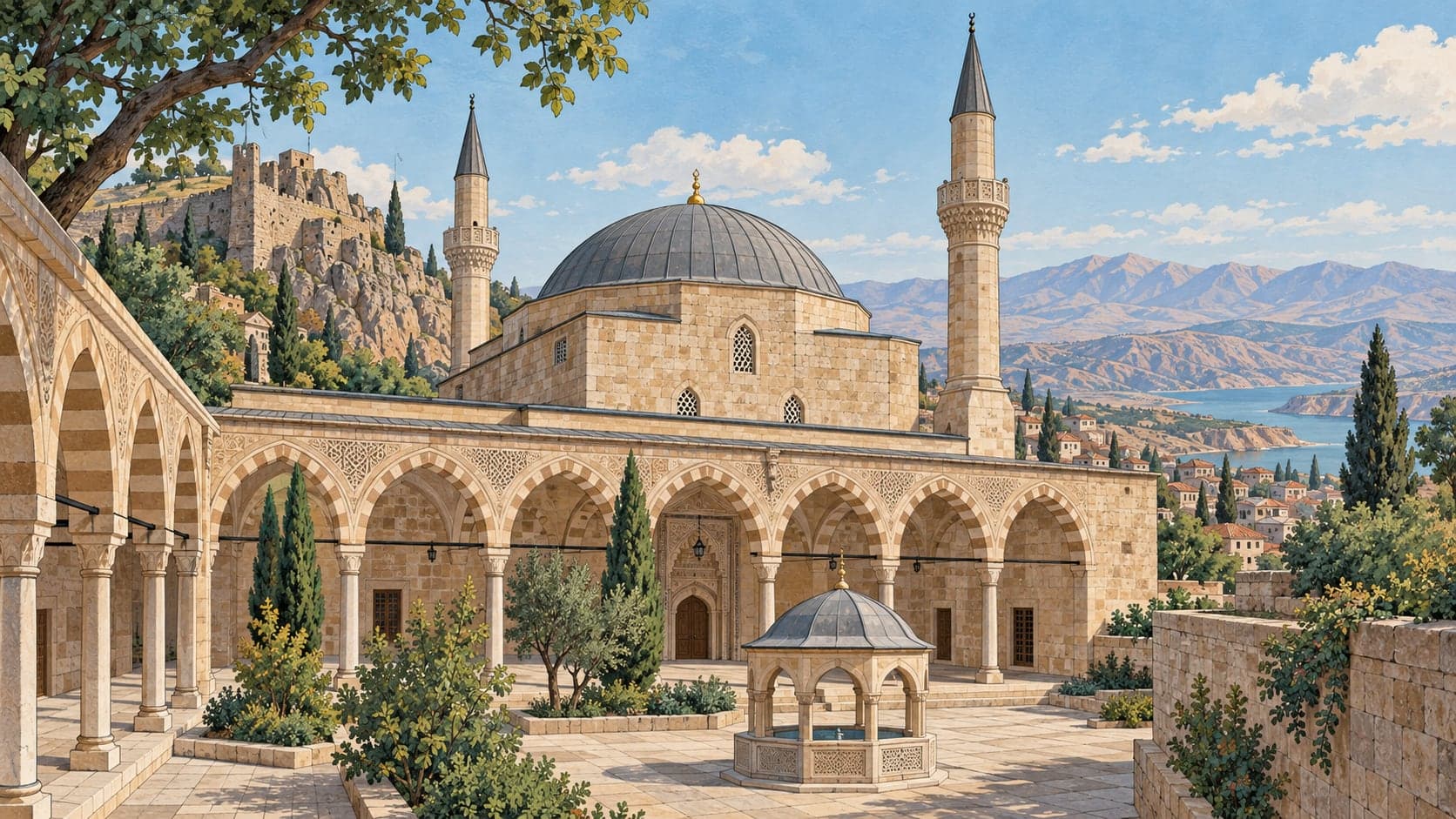
The great mosque of Harput stands on 2,000 square metres in what was the Cami Kebir quarter, and when it was built is not known for certain. There is no foundation inscription. What there is instead is a tax inscription of eleven lines in Arabic, set into a niche in the wall on the north side of the courtyard, above an arch pier and between the pointed arch openings; from it the mosque is accepted to have been built in 1156–57 by Karaarslan bin Davud bin Sökmen bin Artuk, the Artukid ruler of Harput. That inscription names him at length, in the titles of his time, as the man who raised the building seeking God's favour.
This is among the oldest Turkish mosques in Anatolia. It was restored in 1899, 1905 and 1996.
Inside it falls into three parts: the inner courtyard, the porch for latecomers and the prayer hall. The plan is rectangular, with rubble-stone walls and brick used for the dome arches and the minaret, and there are two doors.
The minaret leans. Some hold that the thick shaft, narrowing as it rises, was built leaning deliberately; others that it took that shape after an earthquake.