Guide
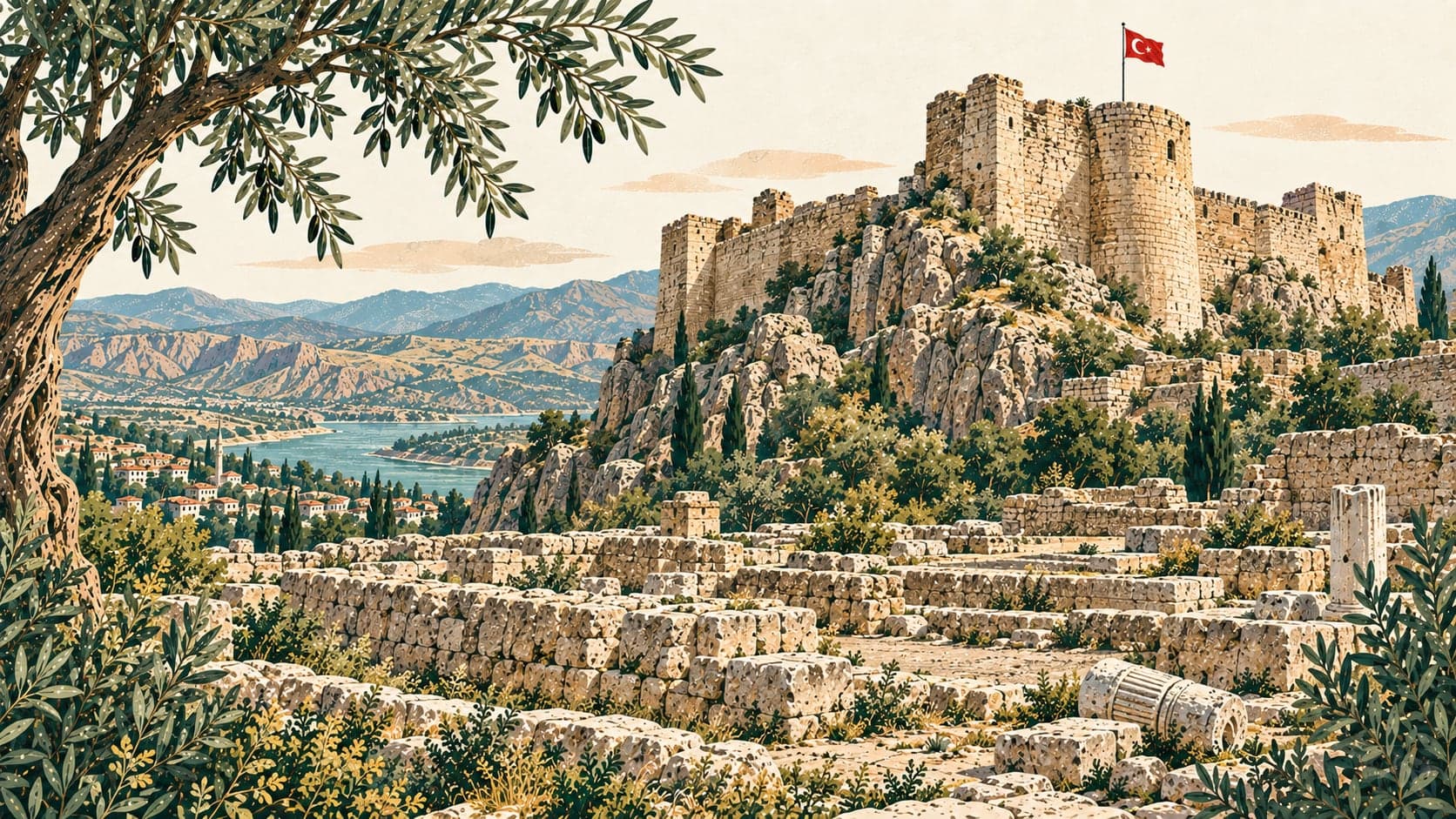
Harput Castle, also known as the Milk Castle, stands in the historic quarter of Harput within the boundaries of Elazığ. It was built by the Urartians on a rectangular plan and is made up of two parts, an inner castle and outer walls.
The second name comes from a tale that milk was mixed into the mortar in place of water; another version holds that this was done because of a shortage of water at the time.
The castle was built by the kingdom of Urartu in the eighth century BC and came under Persian rule from the sixth century onwards. Between the first century BC and the eleventh century AD it passed through Parthian, Roman, Sasanian, Byzantine and Abbasid hands, and remained under the Byzantines until the end of the eleventh century.
It was held by the Çubukoğulları from 1085, by the Artuqids from 1112 and by the Seljuks from 1234, serving as the seat of government of the Artuqid lord Belek Gazi and of the Seljuk lord Alaeddin Keykubad. From 1366 it changed hands often in the struggles between the Dulkadirids and the Akkoyunlu, and in 1465 the Akkoyunlu ruler Hasan Bahadır Han took it into Akkoyunlu rule. In 1507 Shah İsmail took Harput, turning the inattention of the Ottomans and the Mamluks to his advantage, and in 1515 Selim I brought the region and the castle under Ottoman rule.
The castle is rectangular in plan and entered from the east, on the Harput side. It stands on ground commanding the plain of Elazığ. Excavation has found dungeons within it along with areas where people lived and were treated for illness.
Digging began in 2005 with the permission of the general directorate of cultural heritage and museums, under the scientific guidance of Professor Veli Sevin, and continued until 2009. Work was also carried out within the field of Ottoman archaeology to recover the Ottoman quarter that stood inside the castle from the middle of the seventeenth century to the beginning of the twentieth. A second campaign was begun in 2014 by Professor İsmail Aytaç.