Guide
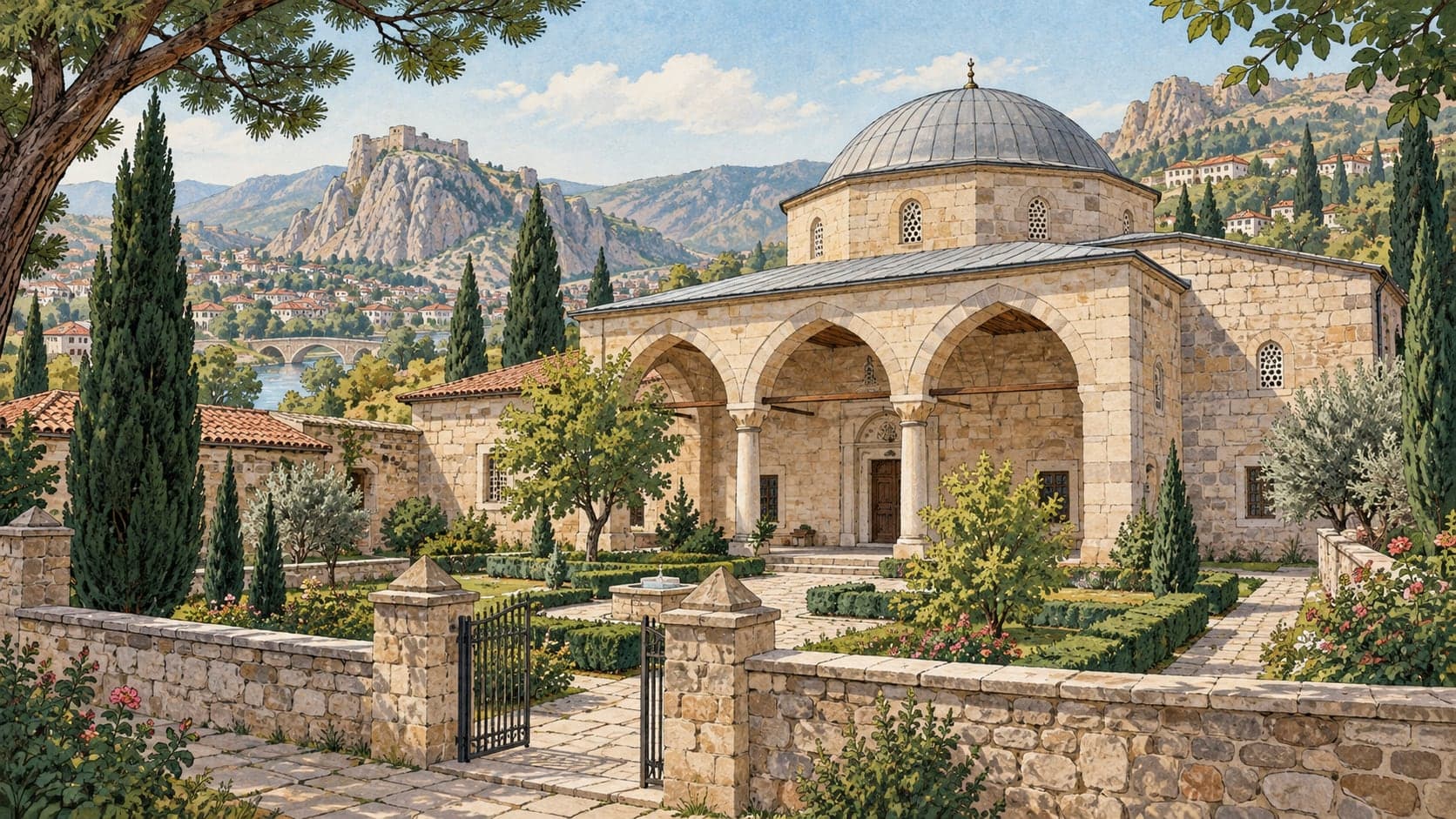
The Halef Sultan zaviye, also called the Halef Sultan hankah, was built in Tokat in the time of the Anatolian Seljuks in the name of Halef ibn Süleyman.
It was put up after the taking of Tokat in the thirteenth century, to receive travellers, mystics, students and the poor, and it went on serving that purpose until the fall of the Ottoman empire. Today it houses a library under the Directorate General of Foundations.
A deed of endowment in the Ottoman archives, dated 18 February 1295, shows that villages, mills and gardens were endowed to bring in income for the lodge, and it lays down as a condition that food be given to the sufis there.
Who Halef bin Süleyman was is recorded in the building inscription on the outer wall. From that inscription and from the endowment deed it appears that he was a local lord living in Tokat in the reign of Mesud II under the Anatolian Seljuk state, and he is thought to have been of the ruling line. Documents of later periods show that he came to be regarded as the sheikh of an order.
The lodge stood outside the town when it was founded. As the town grew around it, it lost its character as a way station and became a place where people called in, and although the endowment deed said nothing of it, tobacco and coffee began to be offered to those who came.
The lodge was not founded as part of any order, but from the middle of the nineteenth century the orders took an interest in it, and both the Nakşibendi and the Rufai petitioned to hold the office of sheikh there.
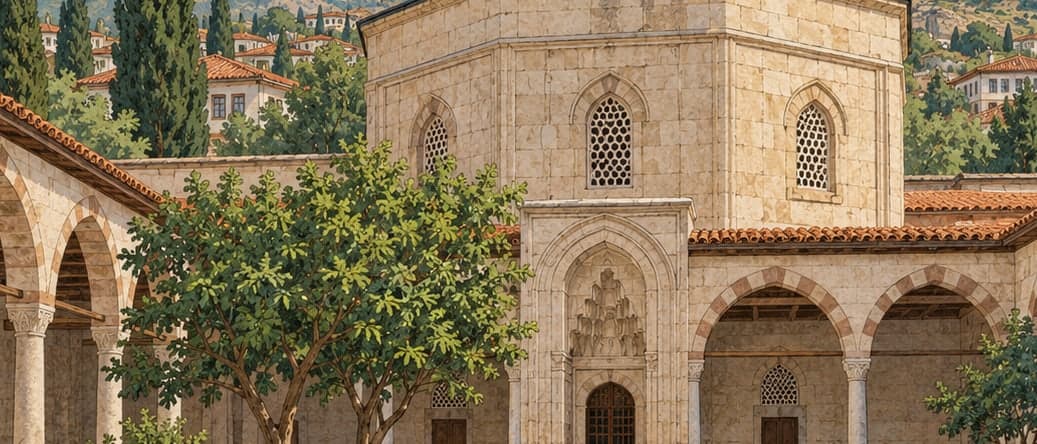
The building is rectangular. Stepping in through the entrance, one comes into a room covered by two domes; according to one researcher the wider of the rooms served as a meeting room, and it is assumed to have been given over to the dervishes. The building is entered from the south and the east, and it is one of those that have kept their original form.