Guide
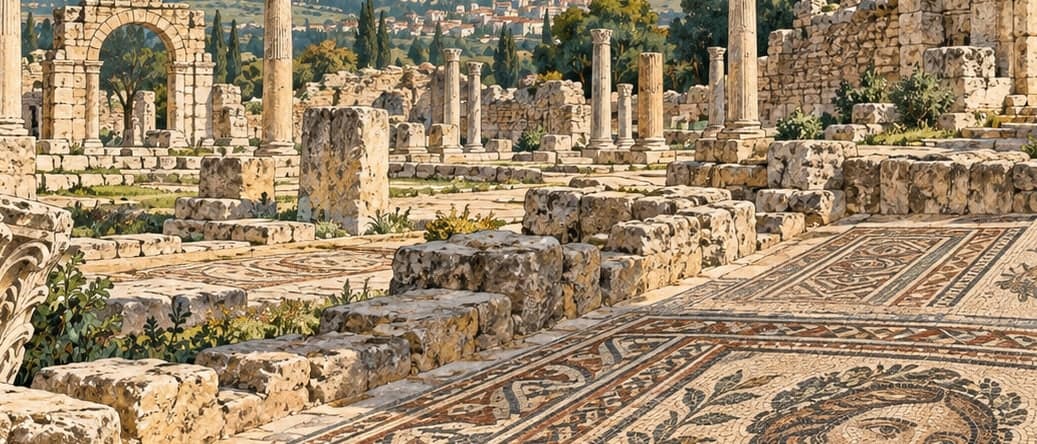
The Germanicia mosaic area can be visited today as an open-air museum, in the Dulkadiroğlu district of Kahramanmaraş. Excavation and survey found mosaic floors at a number of points across the district, and from them it became clear that this was the ancient city of Germanicia. Maraş came under Roman rule in 64 BC and was named Germanicia in honour of the emperor Gaius Julius Caesar Augustus Germanicus — Caligula.
The mosaics found in the recent excavations are thought to have been the floors of hillside villas within the ancient city. They date from the 4th and 5th centuries AD, and their careful workmanship, the patterning of their images and the range of their subjects and iconography give them a character of their own.
What they show, broadly, is the political, social, cultural and economic condition of the city in that period. The density of tesserae in the mosaic layers allowed fine detail in the motifs. The images include plant and geometric ornament, scenes drawn from daily life, and compositions showing the architecture of the period. Mythology is largely absent here: what these floors depict is local life.