Guide
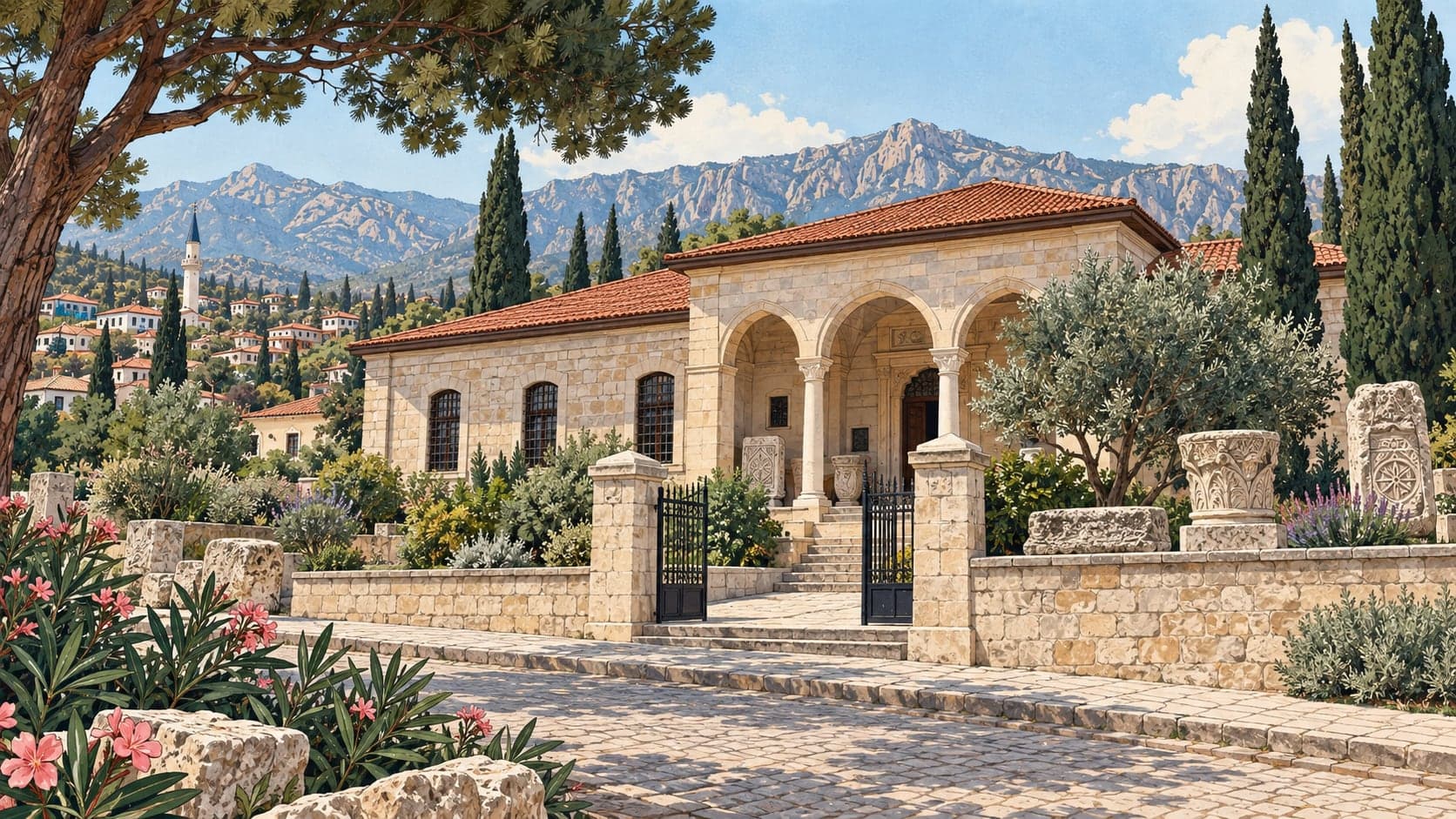
Elmalı Museum opened in 2011 in the old government building, a two-storey structure on a central plan adapted for the purpose, with eleven display rooms — three on the ground floor and eight on the first — and a garden used as an open-air gallery.
The display follows the region's sequence. Room 1 on the ground floor begins with late Chalcolithic material from Bağbaşı in eight cases and continues with Early Bronze Age finds from Karataş Semahöyük, with burial and storage vessels of the same periods alongside. In room 3, three pithos burials from the Karataş Semahöyük cemetery are shown in their original positions.
Upstairs, room 1 holds finds from the Hacımusalar Höyük and Karaçakır excavations, and other cases carry material from the Karaburun, Kızılbel and Bayındır tumulus digs. Room 3 shows Lycian city coins and Roman imperial coins.
One thing to know before going: room 5 displays the fifth-century BC Elmalı coins, known as the hoard of the century — but what is shown there are imitations, not the originals. In the back garden, grave stelae, column fragments and architectural pieces of the Hellenistic, Roman and Byzantine periods stand together with an arı sereni, a traditional raised beehive stand that shows how beekeeping was done in the region.