Guide
The system that carried water from the Lamas stream to Elaiussa Sebaste, on the coast of what is now the Erdemli district of Mersin, was first built under Rome, probably in the first or second century AD. At the start the aqueducts served Elaiussa Sebaste alone.
That changed with the region's fortunes. After the fourth century, when Seleukeia became the seat of the province of Isauria, nearby Korykos rose with it; it had begun as a settlement dependent on Elaiussa Sebaste but its harbour made it important, while the harbour at Elaiussa Sebaste silted up and the city declined. The aqueducts, repaired many times, were extended in the fifth and sixth centuries to reach Korykos, and an inscription on the second aqueduct names the Byzantine commander Ilios, under whom the extension was made.
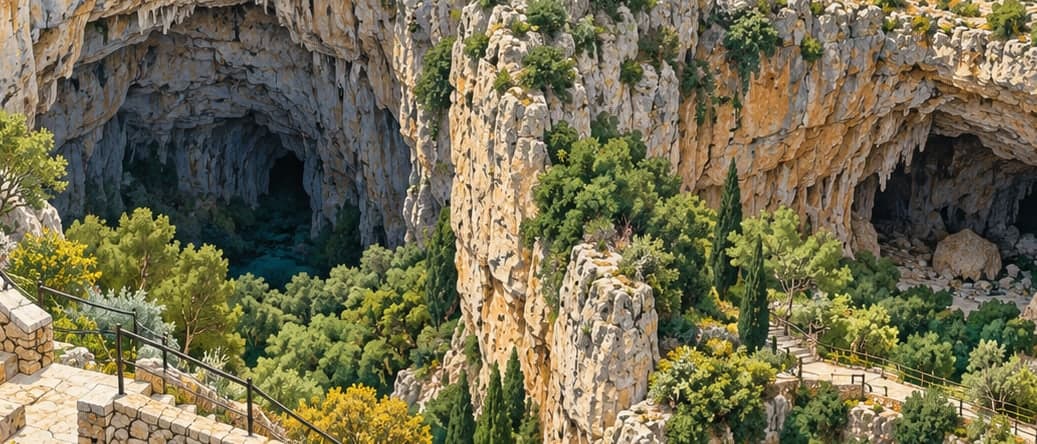
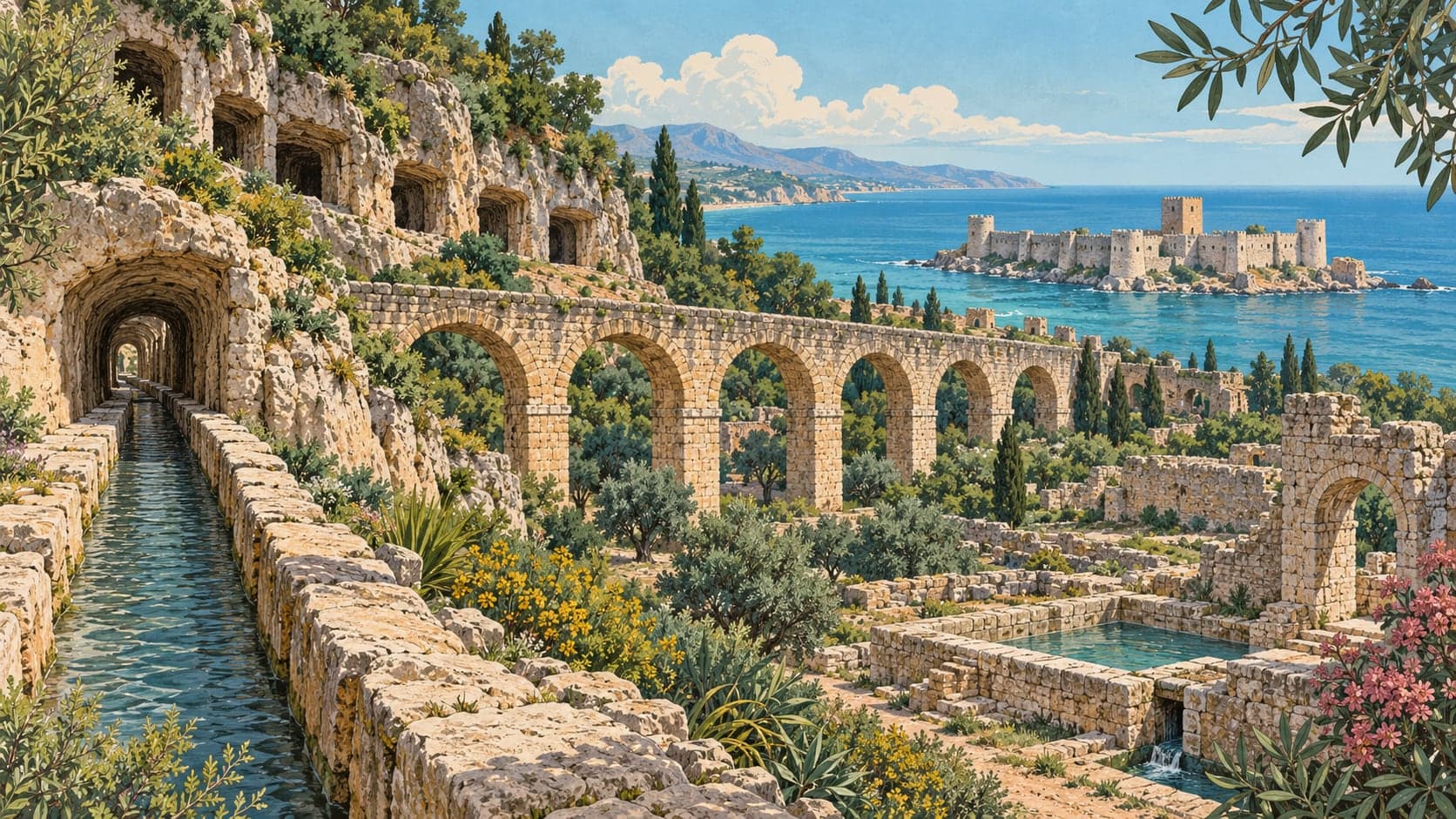
The system is not one kind of structure but three: galleries cut into the bedrock, open channels either cut into rock or built in mortared masonry, and the aqueducts themselves. The rock-cut galleries begin in the Lamas valley and follow a gradient set so as not to raise the water's speed — holding a constant fall is what keeps the level steady. Because the valley side is too steep to reach from outside, window-like openings were cut at intervals; they also served to clear out the spoil from the tunnelling and to keep the air moving so that damp did not turn to moss.
The aqueducts were built one or two storeys high depending on how wide the stream bed was and how high the slopes, with arch spans varying accordingly. The channels were plastered inside, roughly 1.10 high and 1.70 wide, and covered with slabs or a mortared roof.
The two traditions solved the same problem differently. Hellenistic builders covered their channels and ran them underground wherever they could, which kept the water clean but made a fault almost impossible to reach. The Romans preferred an open course, and paid for it in contamination. Lime scale, drifting sand and other debris slowed the flow if the channels were not cleaned, so the Romans put maintenance crews on the line and inspection crews over them.