Guide
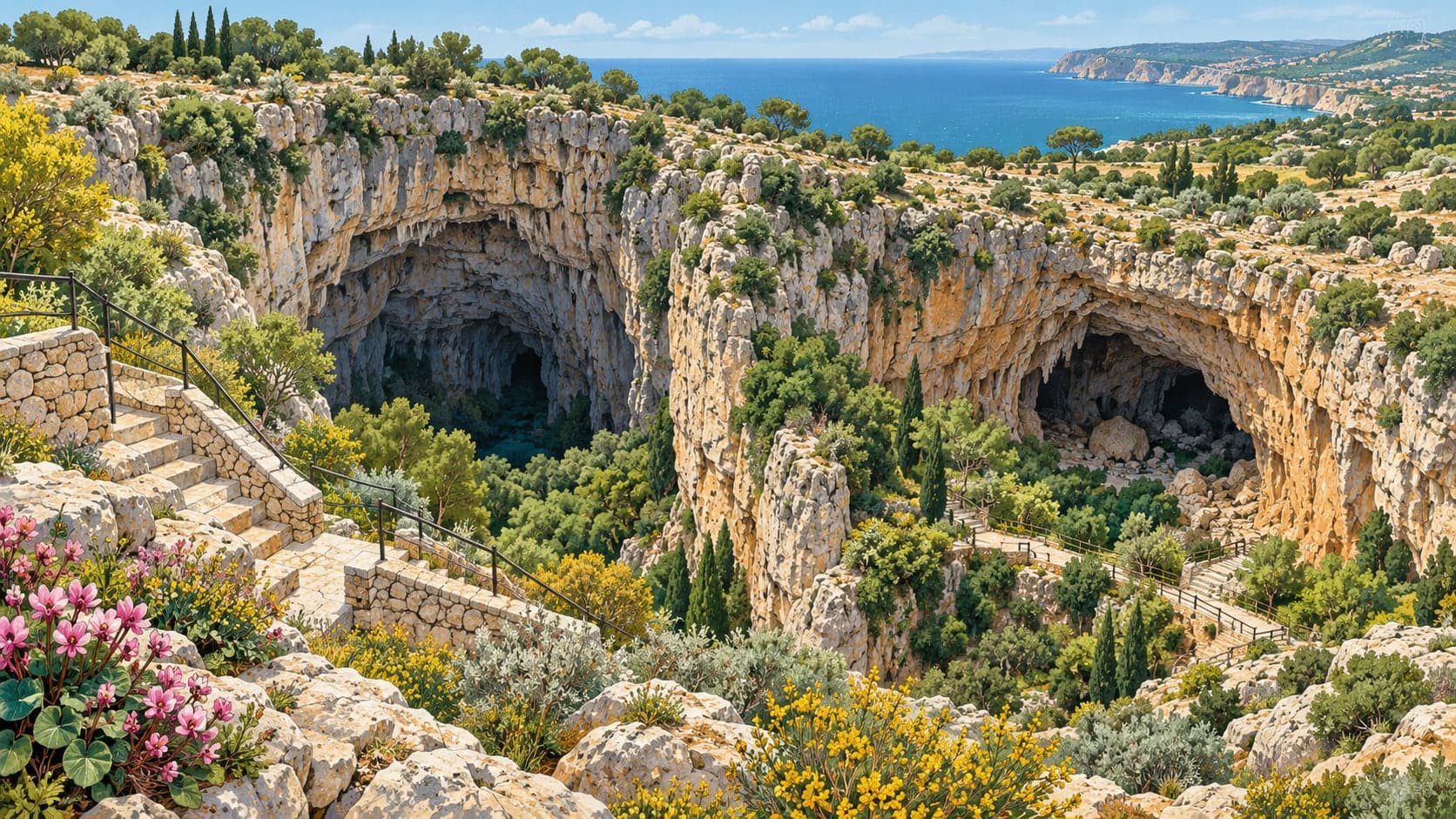
The two sinkholes called Cennet and Cehennem — Heaven and Hell — lie in the Silifke district of Mersin, at a distance the Ministry's page gives as 25 kilometres in its text and 21 kilometres in its directions. Both are collapse features: over thousands of years groundwater dissolved the limestone from beneath until the roof of the cavity gave way. Antiquity treated them as sacred ground, and the buildings around them show it.
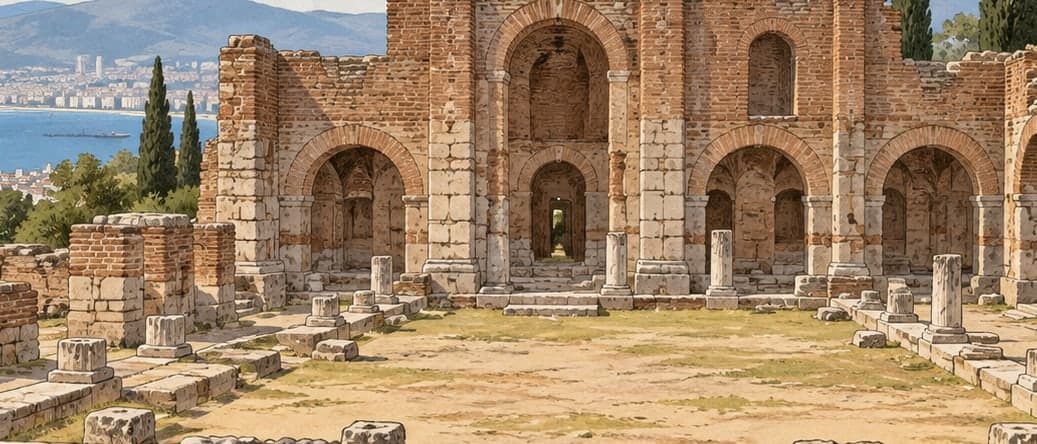
Cennet, known in antiquity as the Korykos cave, is the one you can descend into. A roughly cut stair of about 450 steps runs first north, then south; at the 300th step it reaches a church, and at the southern end of the collapsed floor a large cave mouth opens. The church is the Church of the Virgin, built around the 5th century AD. A four-line inscription over its door records that a pious man named Paulus had it built in her name. The overhanging rock shelters it so completely that it never needed a roof, though the apse at the east and the two side rooms next to it were each domed. The apse dome and its inner walls were frescoed; what survives is worn past clear reading, but Christ and the apostles beside him can still be made out. A row of small arched windows runs along the north and south walls.
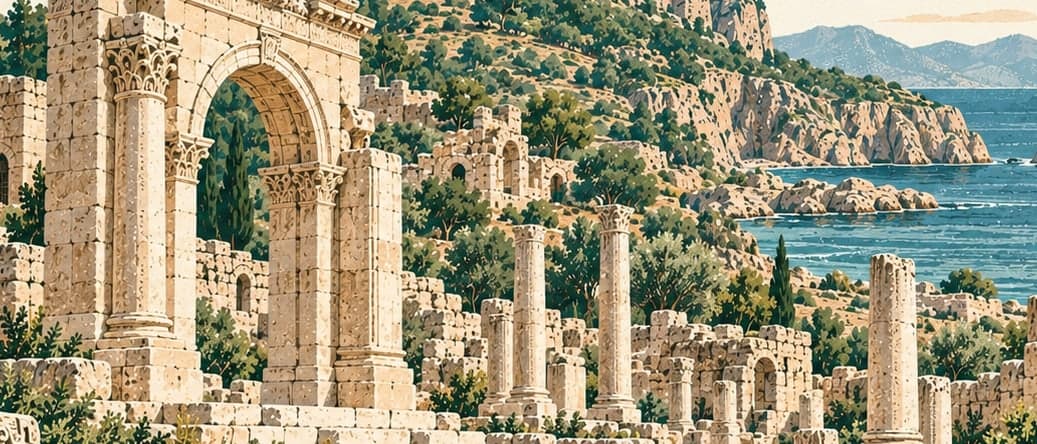
At the southern end of the same sinkhole stands a temple of Zeus. Its first phase is Hellenistic, Doric, and without a surrounding colonnade. Carved into the reused stones of its north wall are the names of 130 priests who served in the Hellenistic and Roman periods. In the Christian period it became a church, and its south wall was taken down entirely; the stones went into a three-doored entrance wall on the west side, which is itself now ruined.
Cehennem lies 75 metres from Cennet. It was formed the same way, by an underground stream dissolving the rock until the roof fell, but its sides curve inward, which makes any descent extremely difficult. The pit has its own place in ancient myth: after Zeus imprisoned the defeated giants deep in the earth, Gaia bore a dragon to avenge her grandchildren the titans. Typhon — shell-covered, fire-eyed, burning whatever he passed — fought Zeus and lost, and before shutting him under Mount Etna, Zeus is said to have held him for a time in the pit of Hell. The Ministry credits the account to the Silifke Museum Directorate.