Guide
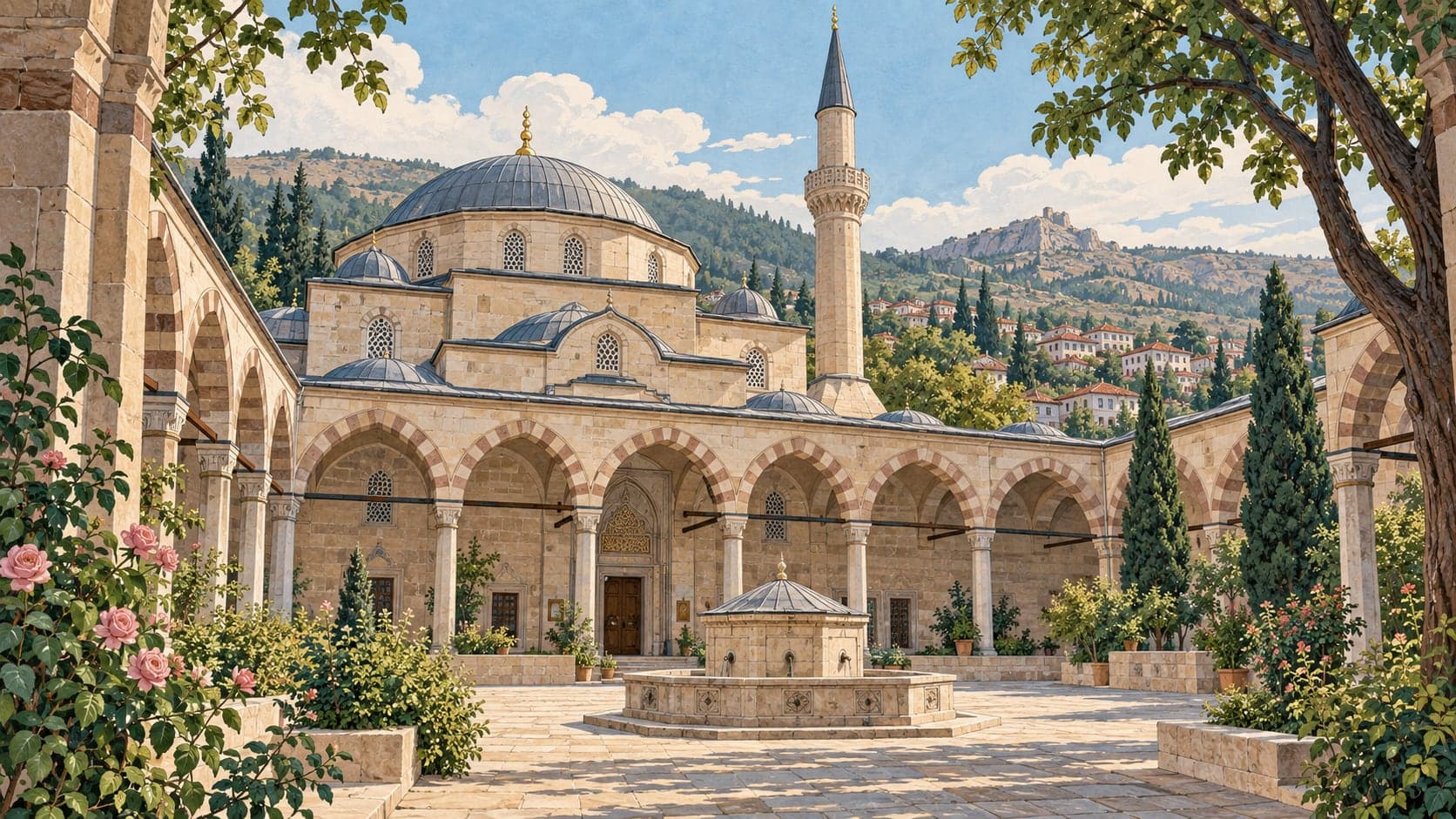
The Cevahir Ali Efendi Mosque stands in the Aşağıçatak neighbourhood of Yozgat, on the old road to Sungurlu and set about a metre and a half below it: a rectangular building with masonry walls under a hipped roof, and one of the better examples in Anatolia of eighteenth-century Ottoman work in timber.
The inscription above the door into the prayer hall gives both date and patron: the mosque was built in 1788 by Cevahir Ali Efendi in the name of Hacı Ahmet Ağa, steward to Çapanoğlu Süleyman Bey. A school was built with it as a single foundation, but it has not survived.
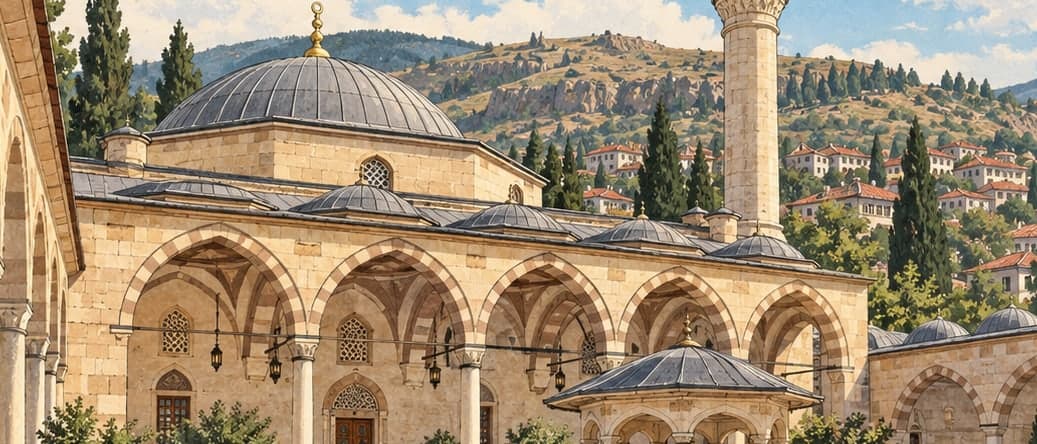
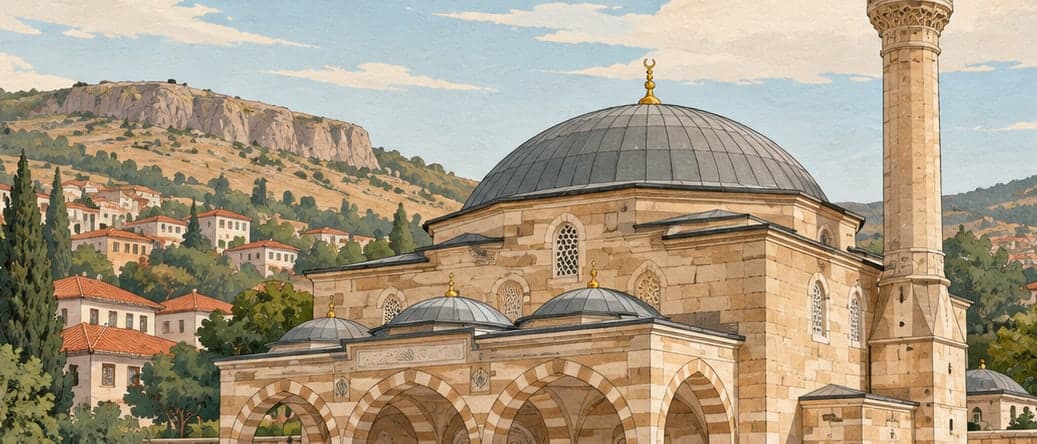
A wall of yellow cut stone encloses the courtyard, entered through small round-arched gates on the west and east that echo the east gate of the Çapanoğlu Mosque; from the east gate six semicircular steps lead down. The minaret stands against the north-east corner, on a square base with a polygonal shaft and a heavy pear-shaped moulding, in white cut stone.
Inside, the timber is the point. The coffered ceiling is framed in layered mouldings around a square centre, carved and painted with plant and geometric motifs, with a pendant like a pine cone at its middle. The minbar is plain, its railings cut in openwork. The finest piece is the preaching chair: Corinthian capitals, arches formed of C and S curves, four wooden colonnettes and coffered side panels, with gilt used heavily in the painted work. Medallions on the walls and in some of the arch spandrels hold calligraphy. Outside there is almost no decoration at all.