Guide
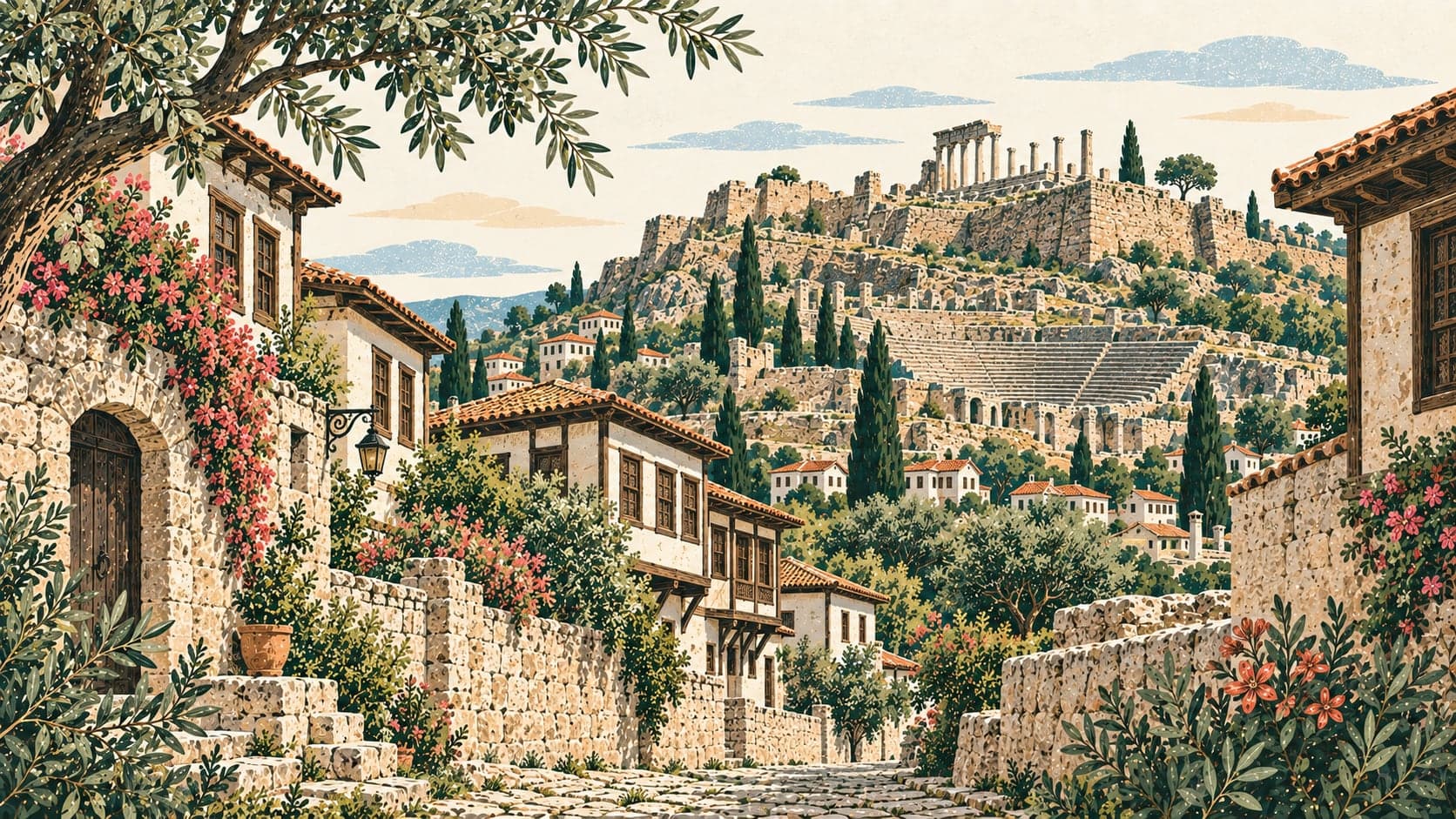
Bergama is a district of İzmir province, the largest by area, lying about 103 kilometres north of the city in the Bakırçay basin between the Madra and Yunt mountain ranges. The modern town is built on the slope where the ancient city of Pergamon stood, and the two are inseparable: monuments from the Ionian, Hellenistic, Roman and Byzantine periods stand within the town itself. Together with Selçuk, Bergama is counted as one of the two centres of cultural tourism in İzmir. The listing that UNESCO inscribed in June 2014 is called the Pergamon and its Multilayered Cultural Landscape, and that name is the point: what is protected here is not a single ruin but a whole terrain of settlement stacked over three thousand years.
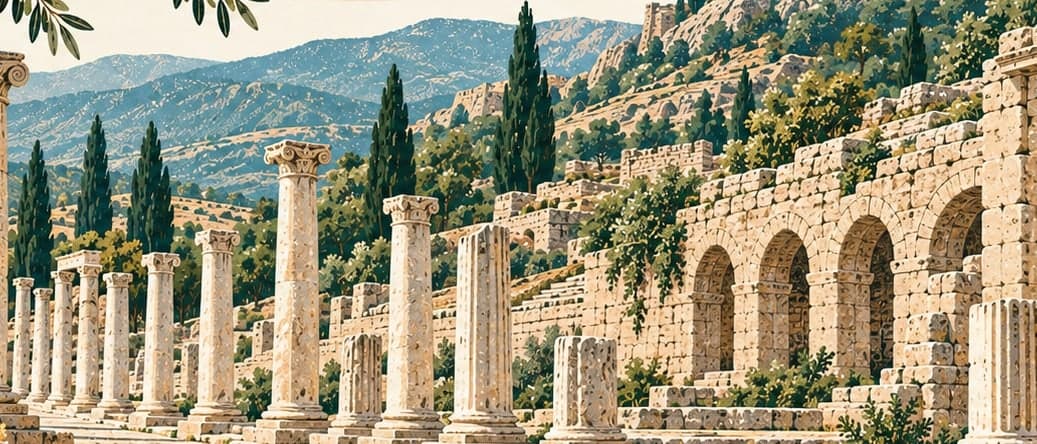
The earliest known history of Pergamon is placed in the third millennium BC, when the site held a small farming population. Its great period ran from 280 to 133 BC, when the Attalid kingdom made it one of the strongest Hellenistic states in Anatolia and filled it with monumental building. Under Eumenes II came the Altar of Zeus, raised to mark the defeat of the Galatians, the propylon of the Temple of Athena with its surrounding stoas, the royal palace, the city walls, and the library that held two hundred thousand book rolls. In 133 BC the kingdom passed to Rome by the will of its last king, and Pergamon went on as a provincial metropolis, competing with Smyrna and Ephesus. The physician Galen reported that the population reached 120,000 in the second century BC. An earthquake in 262 did severe damage.
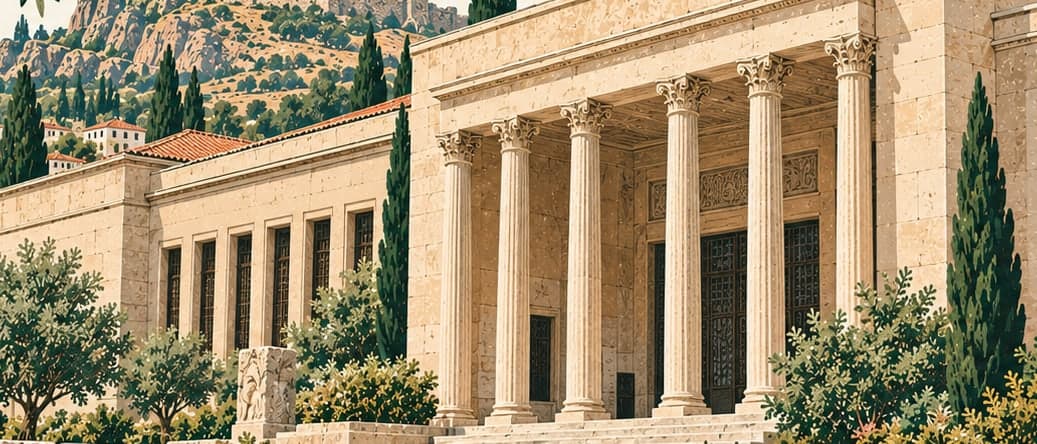
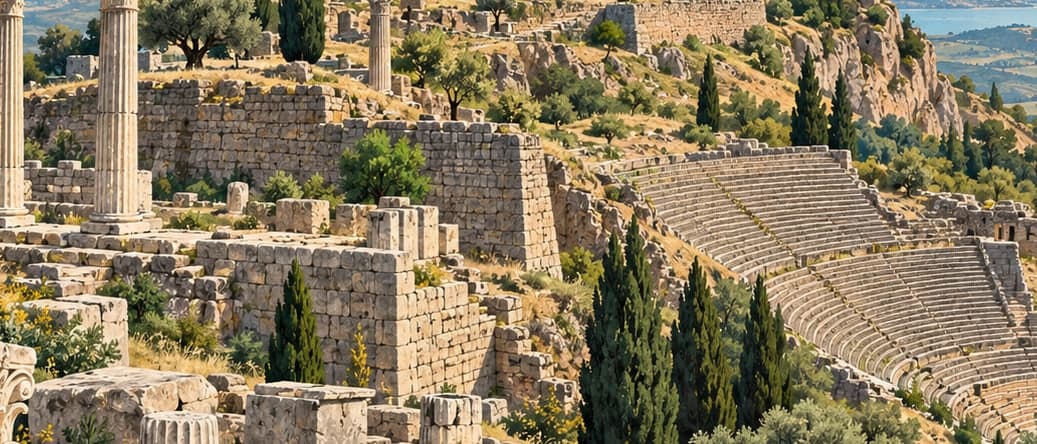
The upper city was the formal quarter, where the royal families, commanders and men of learning lived. Preserved within it are the Temple of Athena and the steepest theatre of the ancient world, cut for ten thousand spectators; the city fanned out from this core on three sides. The middle city held the sanctuaries of Hera and Demeter, the temple of Asklepios, the gymnasia and the city fountain — buildings the public entered freely rather than seats of government. The lower city held the lower agora, the shops lining both sides of the main road climbing to the upper town, and the peristyle houses known as the House of Attalos. Because the upper agora sat high and apart, it was the lower one that served as the commercial centre.
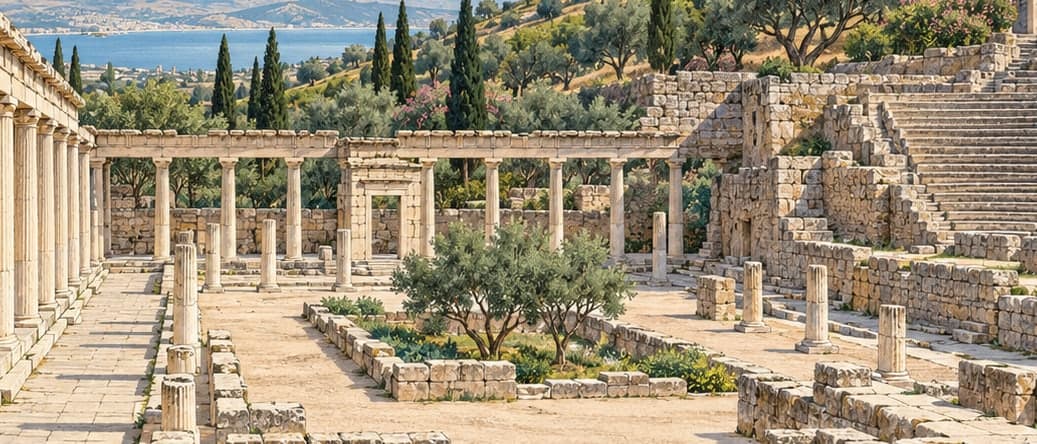
The Asklepieion, about three kilometres from the acropolis, was one of the great healing sanctuaries of antiquity. Pausanias placed the first temple of Asklepios here in the first half of the fourth century BC, and excavation has confirmed the sanctuary existed from that century and expanded in the Hellenistic period. What survives is largely Roman: a colonnaded courtyard, a theatre for 3,500, a cult hall of the emperor Hadrian, a library, and the round temple of Asklepios, built around AD 150 by the consul Lucius Cuspius Rufinus on the model of the Pantheon in Rome. In the southern part are three small Hellenistic temples, sleeping chambers, the sacred spring and its pools, and a long underground tunnel built to shield patients from heat and cold on their way to it. Treatment relied on suggestion and on forms of physical therapy still in use: drinking the sacred water, water and mud baths, fasting cures, herbs and anointing with creams.
In the middle of the Roman lower town stands the building locals call the Kızıl Avlu, the Red Courtyard, so named because it is built entirely of brick and fronted by a large enclosed court. Evidence from cult and art history points to construction in the second century AD, probably under Hadrian, and to a dedication to the Egyptian gods Serapis and Isis — though the two round structures flanking it hold cult altars whose deities are not identified. Water tunnels were cut under the Selinos stream, which ran through the site and would otherwise have severed the temple from its courtyard; they are still in use. In the early Byzantine period the sanctuary was adapted and continued in use as one of the seven churches of Anatolia.
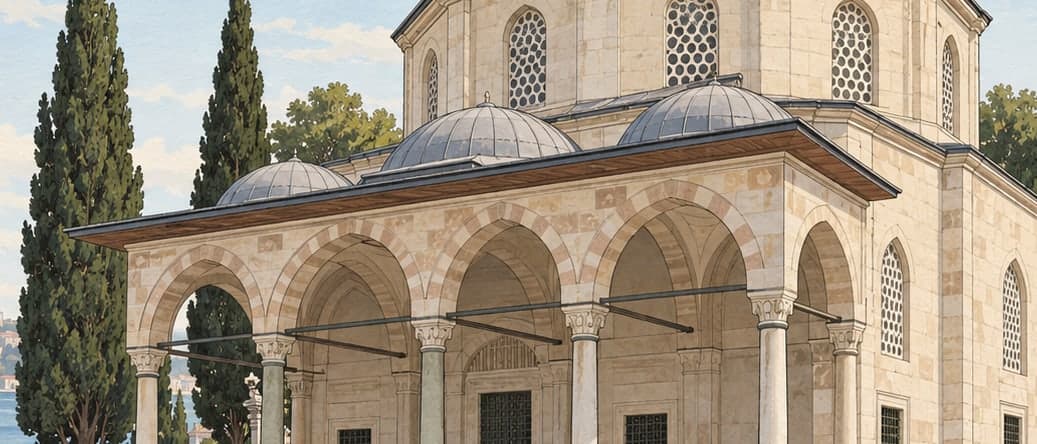
Bergama Museum holds finds from the site, and the district keeps mosques, baths, caravanserais and bridges from the Seljuk and Ottoman centuries. The Ulu Mosque was built in the reign of Bayezid I, a few years before the Battle of Ankara; it is valued as a place where the architectural influence of the Crusader states in Anatolia can be traced. Whether it was damaged when Timur quartered at Bergama after the battle is not recorded. Twenty-three kilometres east, on the Bergama–İvrindi road, excavation uncovered Allianoi, a thermal settlement founded around a hot spring in the first century BC and at its height under Hadrian; its sulphurous water emerges at 45°C, and the digs of 1998–99 produced sculpture, glass, some 1,500 gold, silver and bronze coins, and a Roman marble Aphrodite.
Getting there
Bergama lies 103 kilometres from central İzmir, and roughly 100 kilometres from Manisa and Balıkesir as well, in the north-west of the Aegean region. The town centre stands about 70 metres above sea level; the acropolis above it reaches 331 metres.