Guide
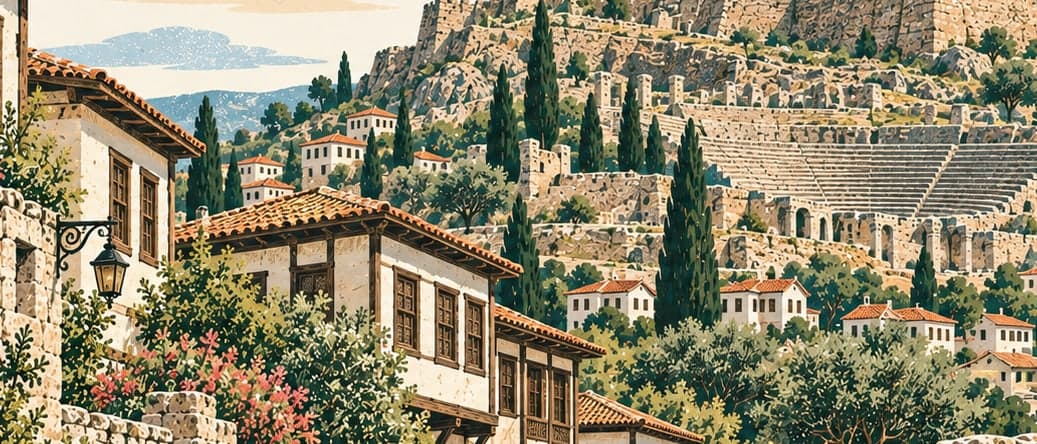
The Asklepion lies outside the acropolis of Pergamon and was a place people came to in order to be cured. It was founded in the fourth century BC in the name of Asklepios, the god of healing, though the ground had been sacred earlier than that and its real growth begins from the fourth century on. The ministry's account gives it the title of the most important centre of treatment in western Anatolia, on the strength of both its developed architecture and the methods practised in it. What a visitor walks through today, however, is largely a second-century AD layout: the surviving remains belong to the rebuilding carried out under the Roman emperor Hadrian.
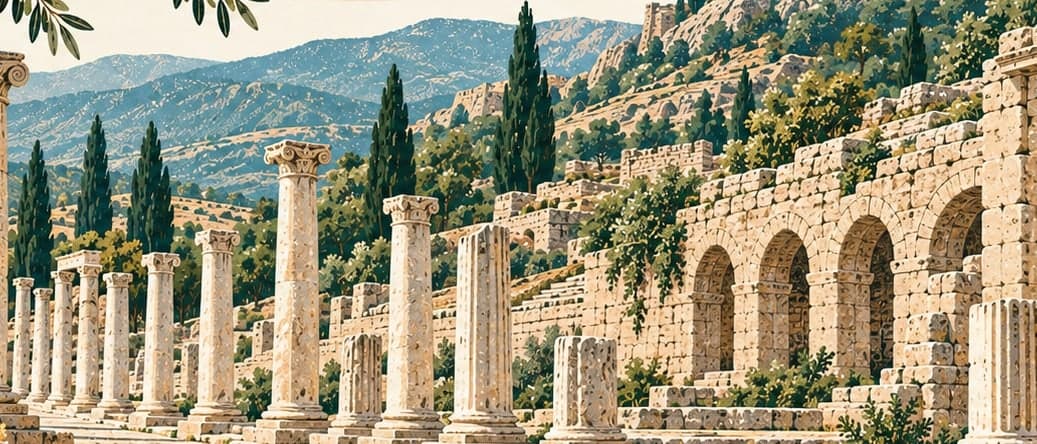
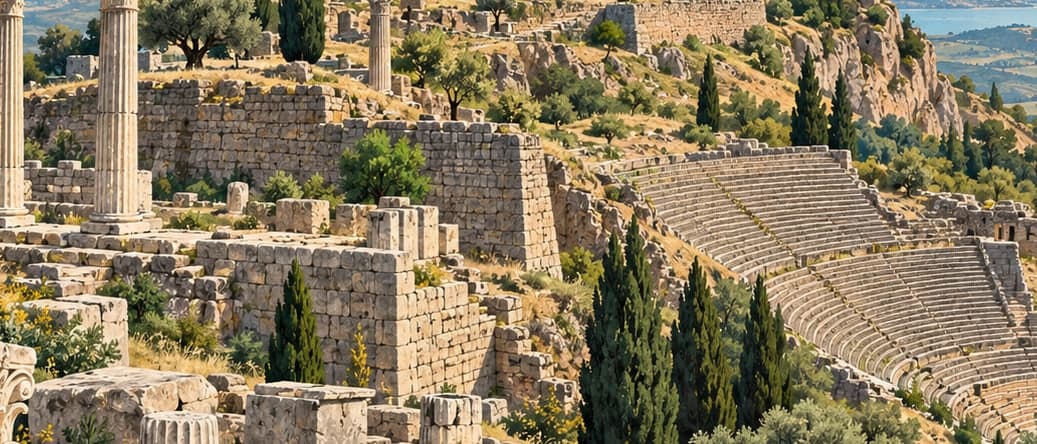
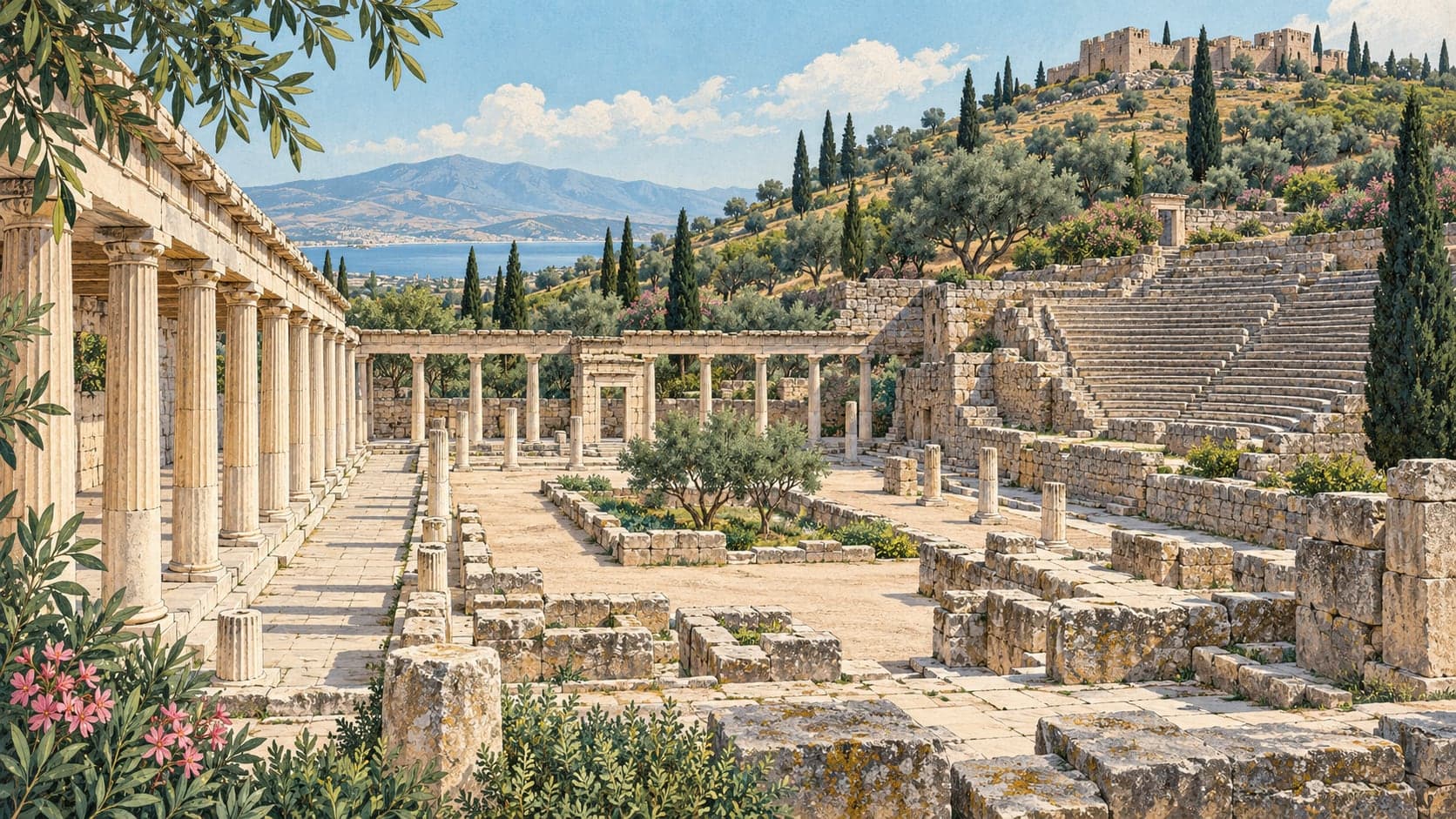
The approach was deliberately long. A sacred way called the Via Tecta ran for a kilometre, roofed over, its final stretch colonnaded, and ended at a monumental gateway, the propylon. To the right of the entrance was the library hall, to the left the temple dedicated to Zeus Asklepios. Beyond that opens the great festival courtyard, enclosed by colonnaded galleries on its north, south and west sides.
Around that courtyard the buildings can still be read off the ground. A theatre for 3,500 people adjoins its northwest corner; the west gallery was widened westwards; the great banqueting hall stands on the south side and the latrines in the south corner. In the southeast corner is the round building on the lower level, which served as the treatment house. West of the great courtyard are the sacred springs, an earlier temple, and the foundations of the sleeping rooms.
What went on in those rooms is known because a patient wrote it down. Aelius Aristides, the celebrated orator of the period, was treated at the Asklepion and set out the methods in detail in his Hieroi Logoi: patients laid down to sleep so that a cure might come to them in a dream, the sound of running water, mud cures, healing water, cupping, alternating regimes of fasting and eating, therapy and sessions of music. Pergamon was also the home town of Galen, the physician known as the father of pharmacology, who looked after gladiators and Roman rulers here and made important findings in the field. The combination — the complex plan, the treatments, the doctors and Galen's own methods among them — is what set this sanctuary alongside its contemporaries at Epidaurus and Kos.
The site is open every day, 08:30 to 20:00, with the ticket desk closing at 19:15. It is on Prof. Dr. Friedhelm Korte Caddesi in Zafer Mahallesi. An audio guide service is available, and the Müzekart is valid here for citizens of Türkiye.