Guide
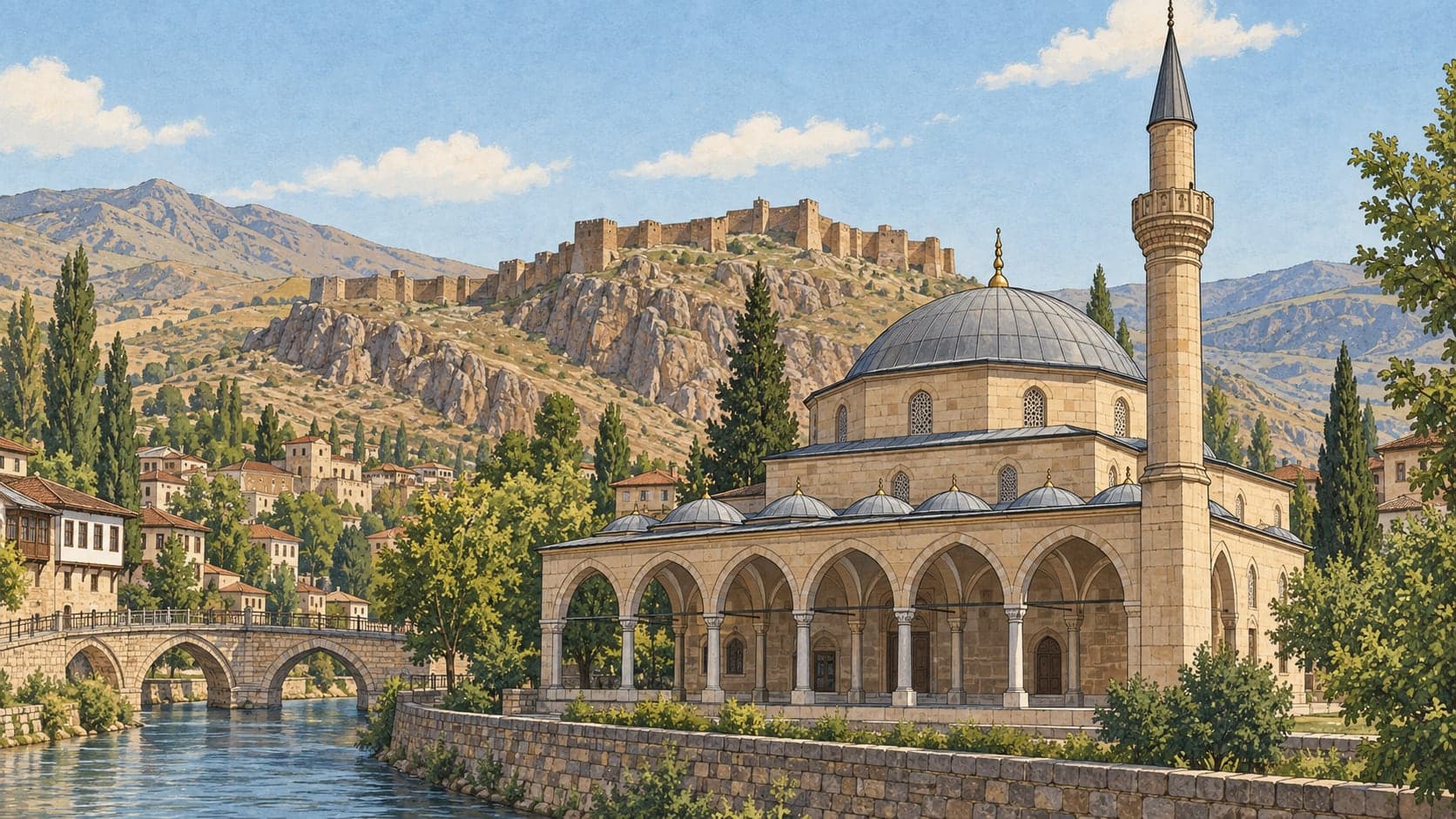
The Great Mosque of Bayburt did not begin as a mosque: it was built as a caravanserai in the Seljuk period and converted later. It is accepted as having been raised in the reign of Gıyaseddin Mesud II, between 1282 and 1298, and it is known to have been repaired many times. The building is rectangular, of cut stone in load-bearing masonry. The minaret at the northeast corner is the classic Seljuk brick type, with one balcony; the tile decoration that once filled the niches on its octagonal drum has been destroyed, but the band of plant-patterned tilework beneath the balcony can still be seen.
The porch on the east front is a later addition and has recently been closed in with glazing. There are inscriptions in several parts of the building. One in the niche on the south side reads 1266 and is supposed to be a repair inscription, though that date falls before the reign in which the building is said to have been put up; the Ministry's page carries both without reconciling them. The main hall is entered through two arched wooden doors with stone frames on the east side, both quite plain. In the garden is an Ottoman-period burial enclosure with four cenotaph graves, their headstones carved with fezzes and palms and bearing inscriptions.