Guide
The mosque was built in 1223 by the sancak bey of Niğde. Its foundation inscription places the work in the reign of Alâeddin Keykubad I (1220–1237) and names the patron as Beşare, son of Abdullah, holding the office of emîr-i ahur; the portal gives his name in two spellings, Ziynettin and Zeyneddin. The inscription also carries the name Müstenireddin, understood as the man who ran the construction rather than the one who paid for it. A second inscription names the architects: master Sıddık and his brother Gazi.
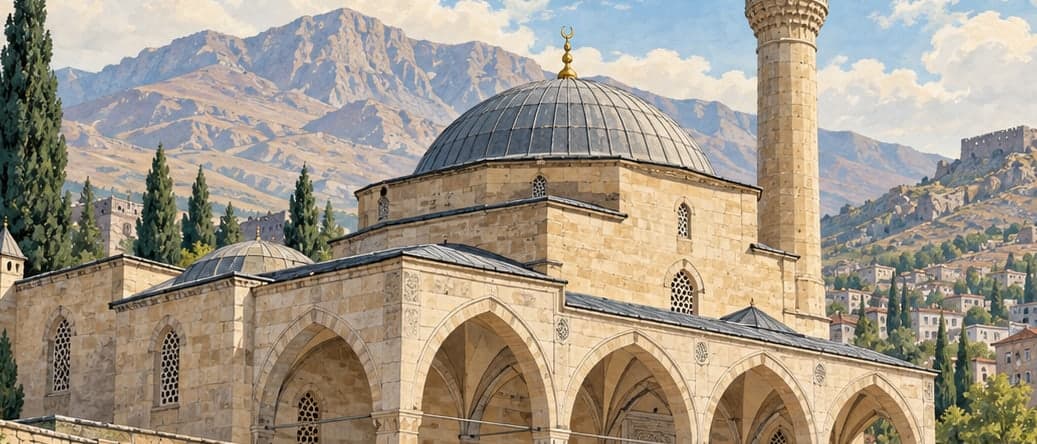
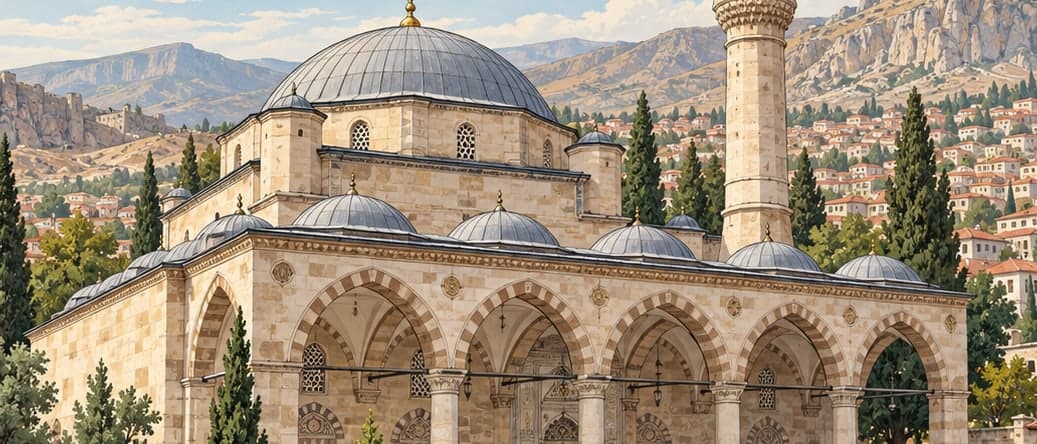
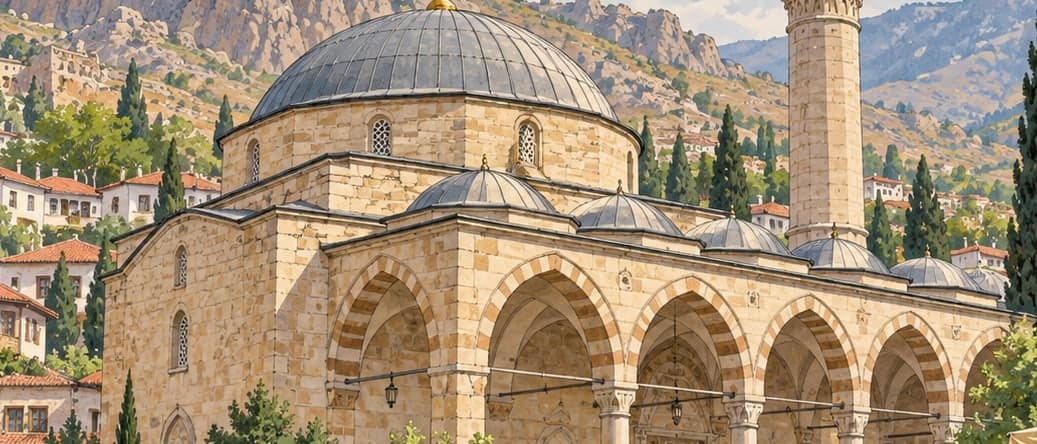
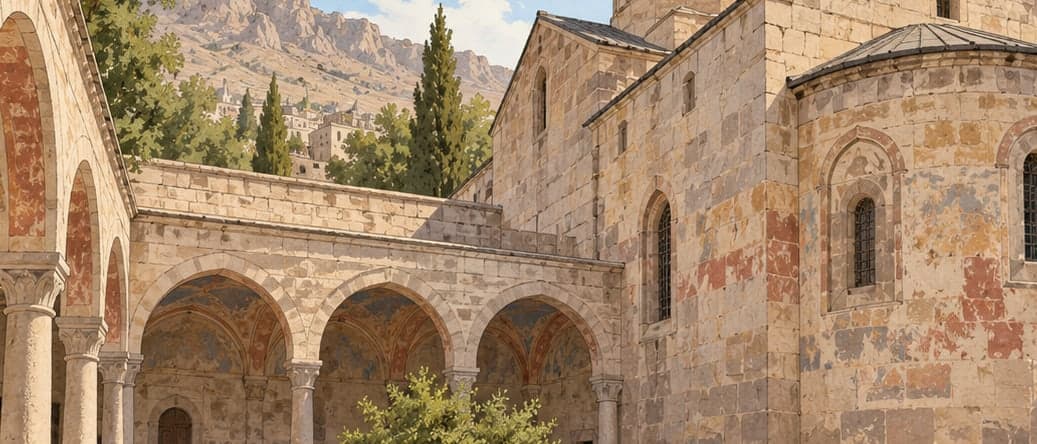
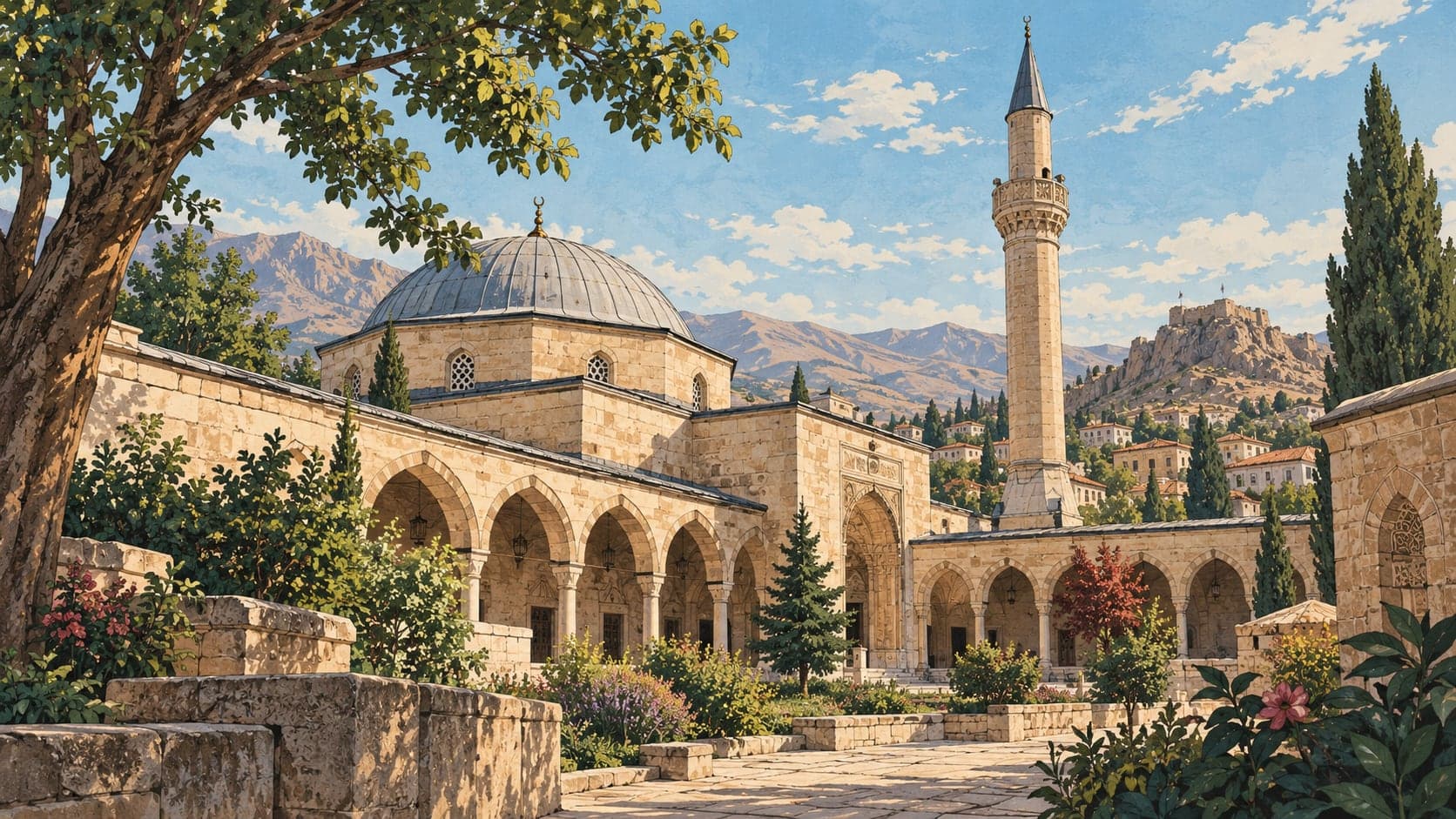
Cut stone throughout, the building is dominated by a monumental main doorway set into the east side rather than on axis. It rises above the height of the mosque itself and is covered entirely in geometric ornament. A second door on the north, at the foot of the minaret, takes the form of a classic Seljuk niche; set somewhat high, it opens onto a private gallery with wooden beams — one of the early examples in Anatolian Turkish architecture of the special galleries, like the sultan's gallery, that later became standard. The cylindrical minaret is original Seljuk work in two-coloured cut stone.
Inside, three domes sit side by side along the mihrab wall, each differing from the others in diameter, height and shape. Three wide arches with thick stepped mouldings separate this part from the sections to the north, producing a main space that runs crosswise in front of the mihrab.
One thing here belongs to summer mornings. Between about half past nine and eleven, the shadow falling across the east doorway resolves into the silhouette known as the Crowned Woman's Head. The legend attached to it says the master builder was in love with the daughter of the sancak bey of Niğde, knew he could never marry her, and worked her likeness into the stone of the doorway so the feeling would outlast him.