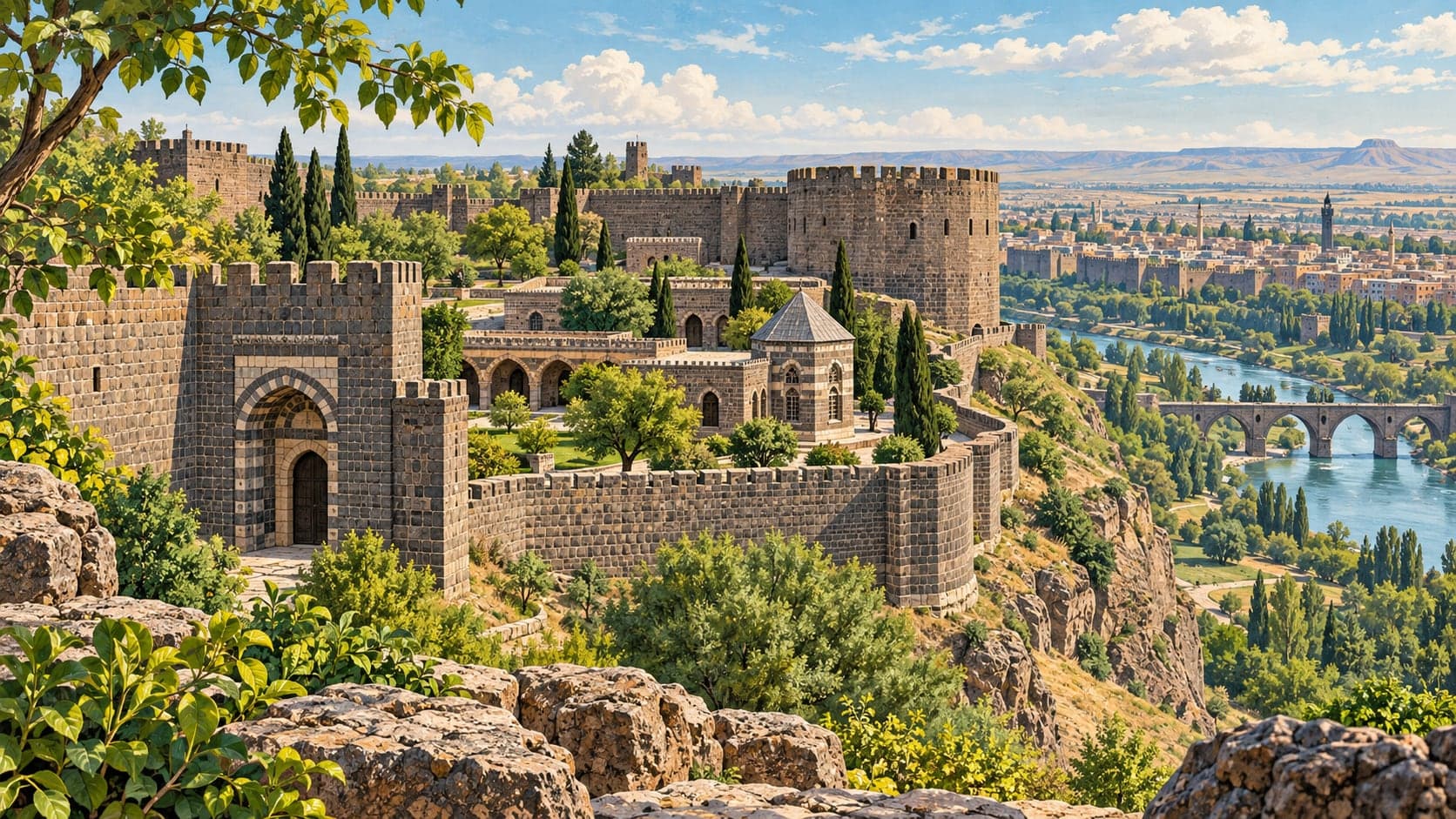
Our compilation for Diyarbakır, not an official route. The walled city is the heart of it. The circuit of walls around the old town, inscribed as World Heritage in 2015 together with the Hevsel gardens, is held to be among the longest and most solidly built anywhere, and four gates open through it.
Inside and just outside that circuit everything stands close together and can be walked between: the archaeological museum, now in two nineteenth-century buildings within the inner citadel; Surp Giragos, regarded as the largest Armenian church in the Middle East; and the Syriac Orthodox church of the Virgin Mary, believed to be third-century, burned, thrown down and repaired many times over. Our inventory also carries the inner citadel as a record of its own, alongside the World Heritage listing that encloses it; the two have not been merged.
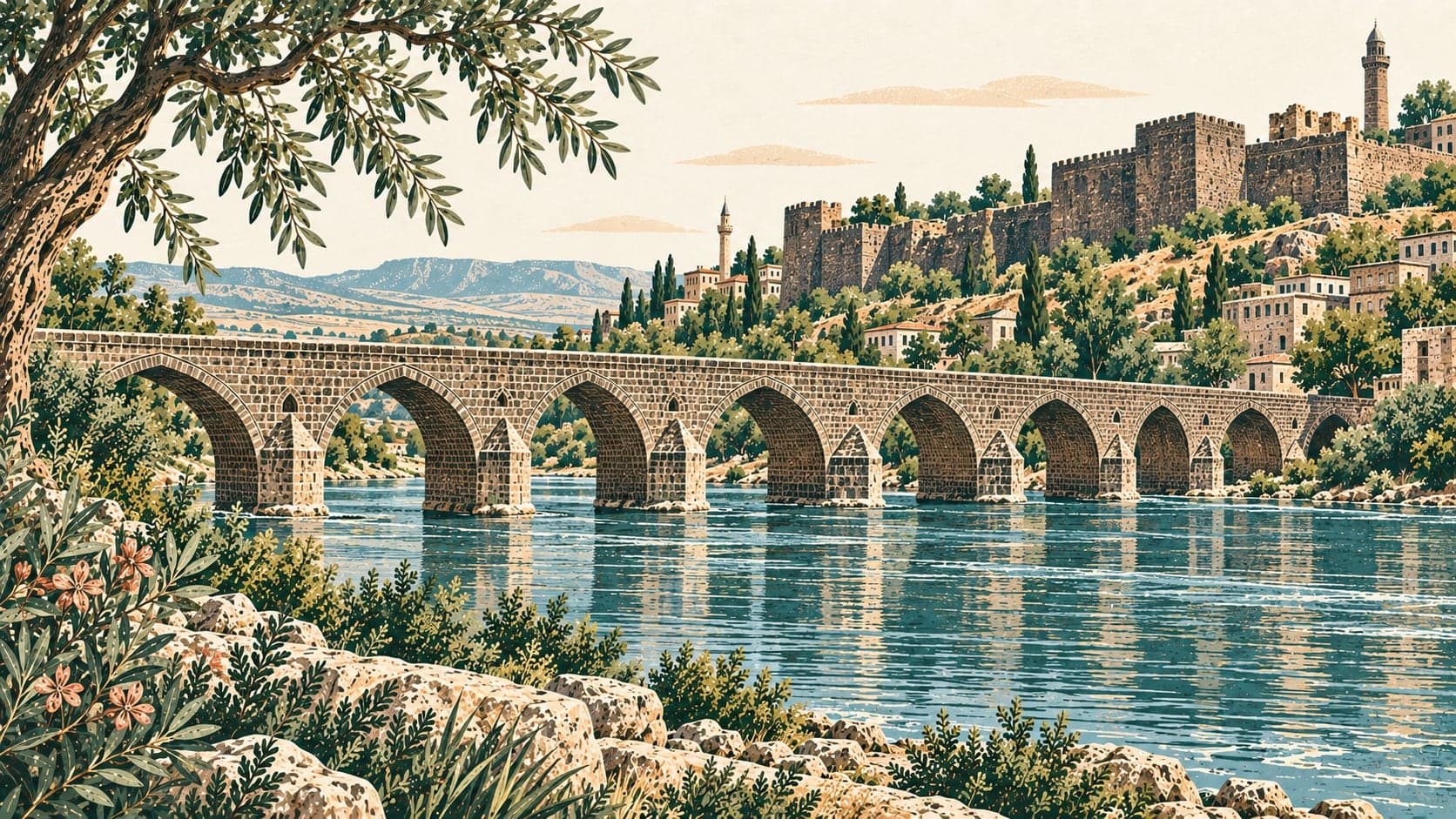
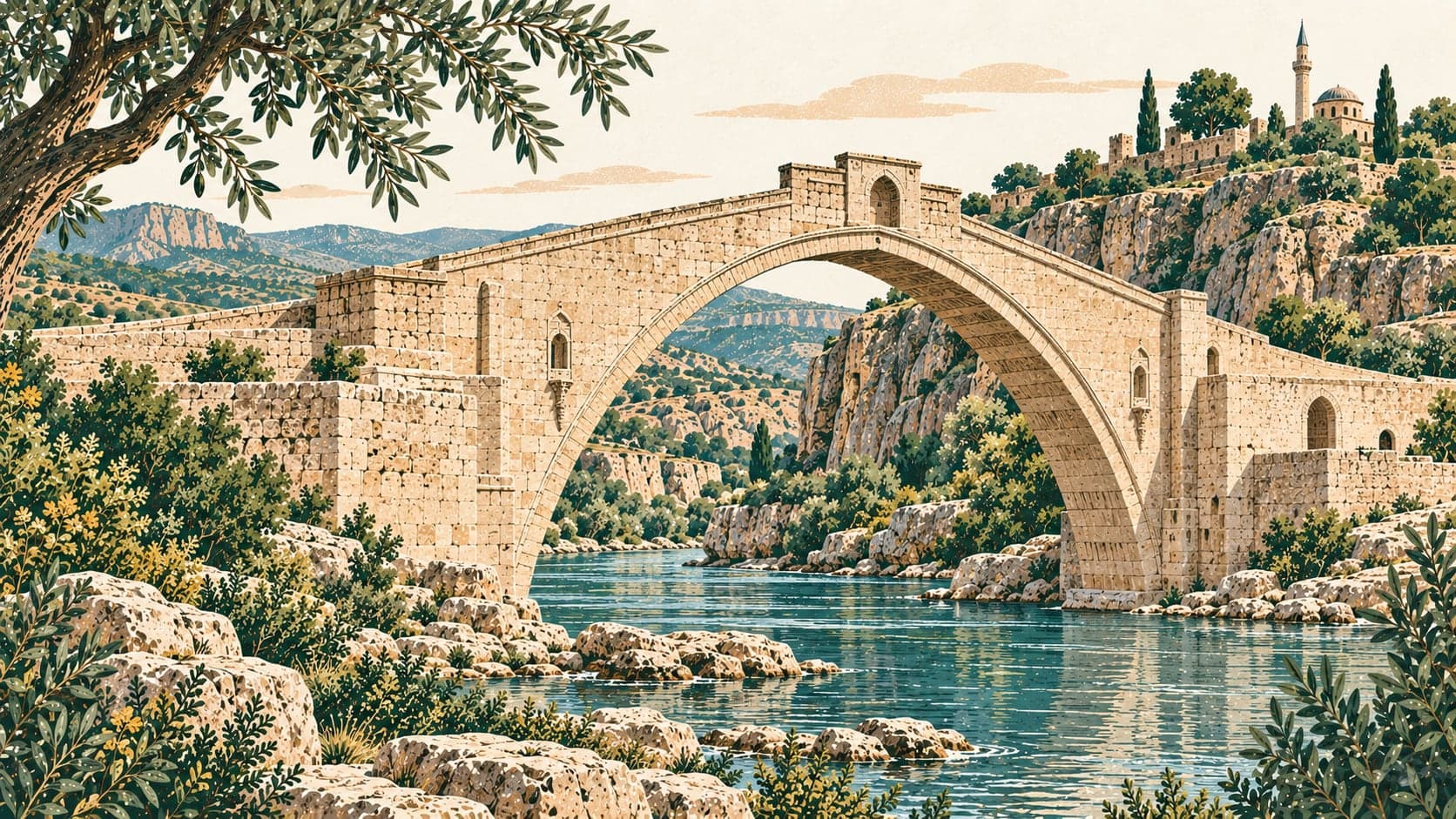
Two bridges take the route out of the city. The Tigris bridge, called the ten-eyed bridge for its openings, stands just beyond the Mardin gate, and the Malabadi bridge, built by the Artuqids in 1147, is out at Silvan.
The nature parks are the outliers and belong with neither group: Eğil, named for the tombs of three prophets standing beside it, and Yabanardıl Şeyhandede out at Çermik, whose page opens by saying the park is still under construction. Where our inventory holds no position for a place, the grouping is a shape rather than a schedule. What each place is, and who says so, is on its own page.