Guide
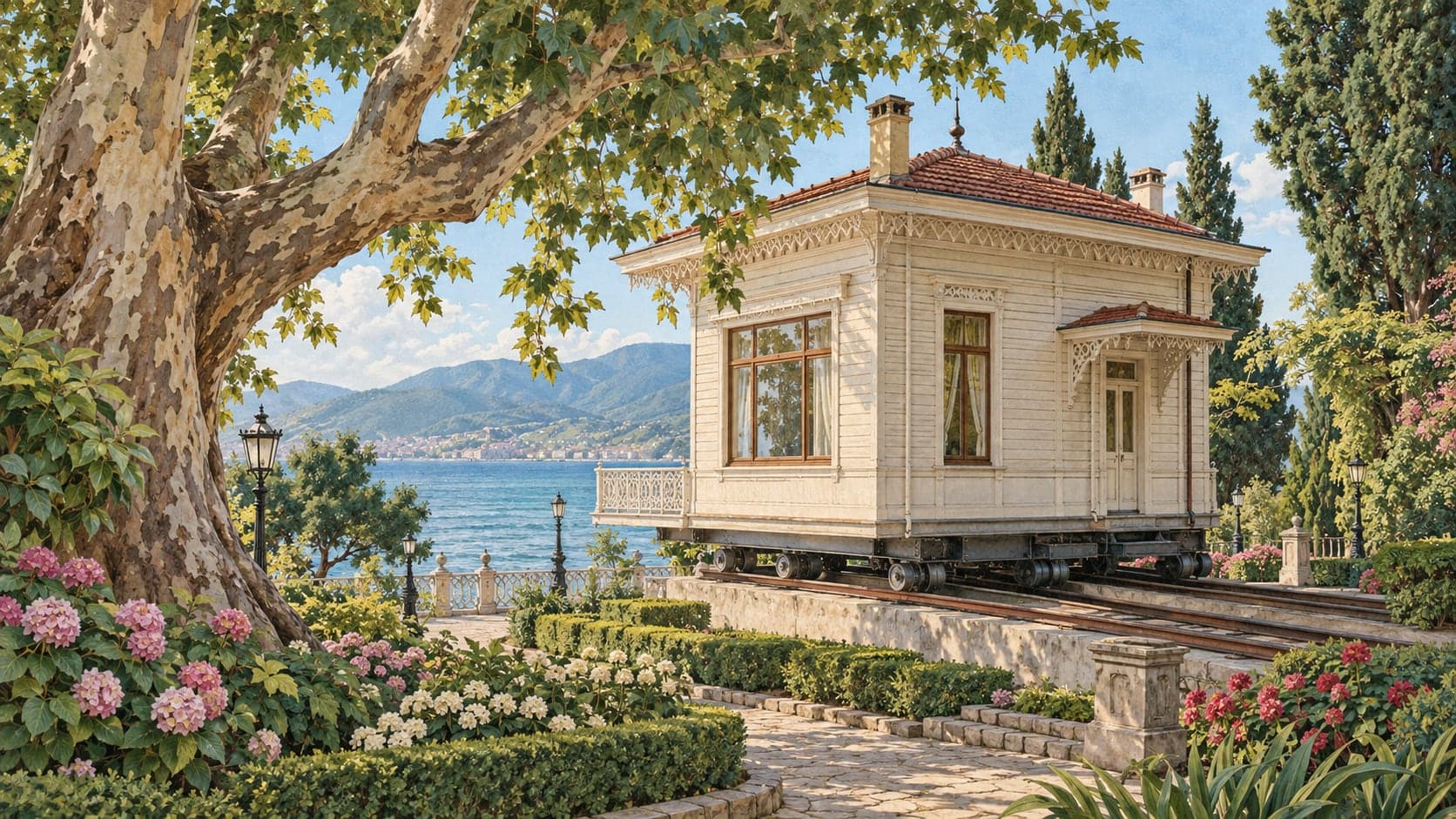
The house takes its name from the fact that it was moved rather than have a tree cut down. Mustafa Kemal first came to Yalova in 1927 and stayed at first in a tent on the Baltacı farm he had bought there. He was fond of the town and visited it often, and on 21 August 1929, passing through on his way to Bursa, his attention was caught from the deck of the yacht Ertuğrul by a large plane tree standing in the Millet farm near the Yalova pier. The yacht was stopped at his wish and he came ashore in the ship's boat; after resting a while in the shade of the tree he gave the order for a house to be built beside it.
One day in the summer of 1930, when he came to the house, the staff told him that a branch of the plane tree beside it was striking the roof and damaging the roof and the wall, and asked permission to cut the branch that reached towards the building. He asked instead that the building be moved a little way along on tramway rails.
The work was given to Yusuf Ziya Erdem, director of public works at the İstanbul municipality, to which Yalova then belonged. Erdem came to Yalova with the chief engineer Ali Galip Alnar and technical staff and began the work. The team dug down to the level of the foundations and tramway rails brought from İstanbul were laid beneath them, and after long effort the building was set on the rails run under the foundation.
The move began on the afternoon of 8 August 1930, watched by Mustafa Kemal, his sister Makbule Atadan, the deputy governor Muhittin Üstündağ, Yusuf Ziya Erdem, engineers from İstanbul and journalists. It was done in two stages: the terrace section on 8 August, and the main building over the two days that followed. The house was shifted about five metres east. In this way the house was saved from demolition and the plane tree from being cut down, and from that day the building has been known as the Walking Mansion.
The move matters as a sign of the importance Mustafa Kemal gave to environmental awareness, and it made both the house and Yalova better known. He came to Yalova many times afterwards and rested in this house and beneath the plane tree. On his death he left the house, like all the property he owned, to the Turkish nation.
The fame of the house faded after his death, and it stood neglected for a long time. In 2006 the municipality of Yalova took it in hand, repaired it and opened it as a museum, after which it regained its former standing.