Guide
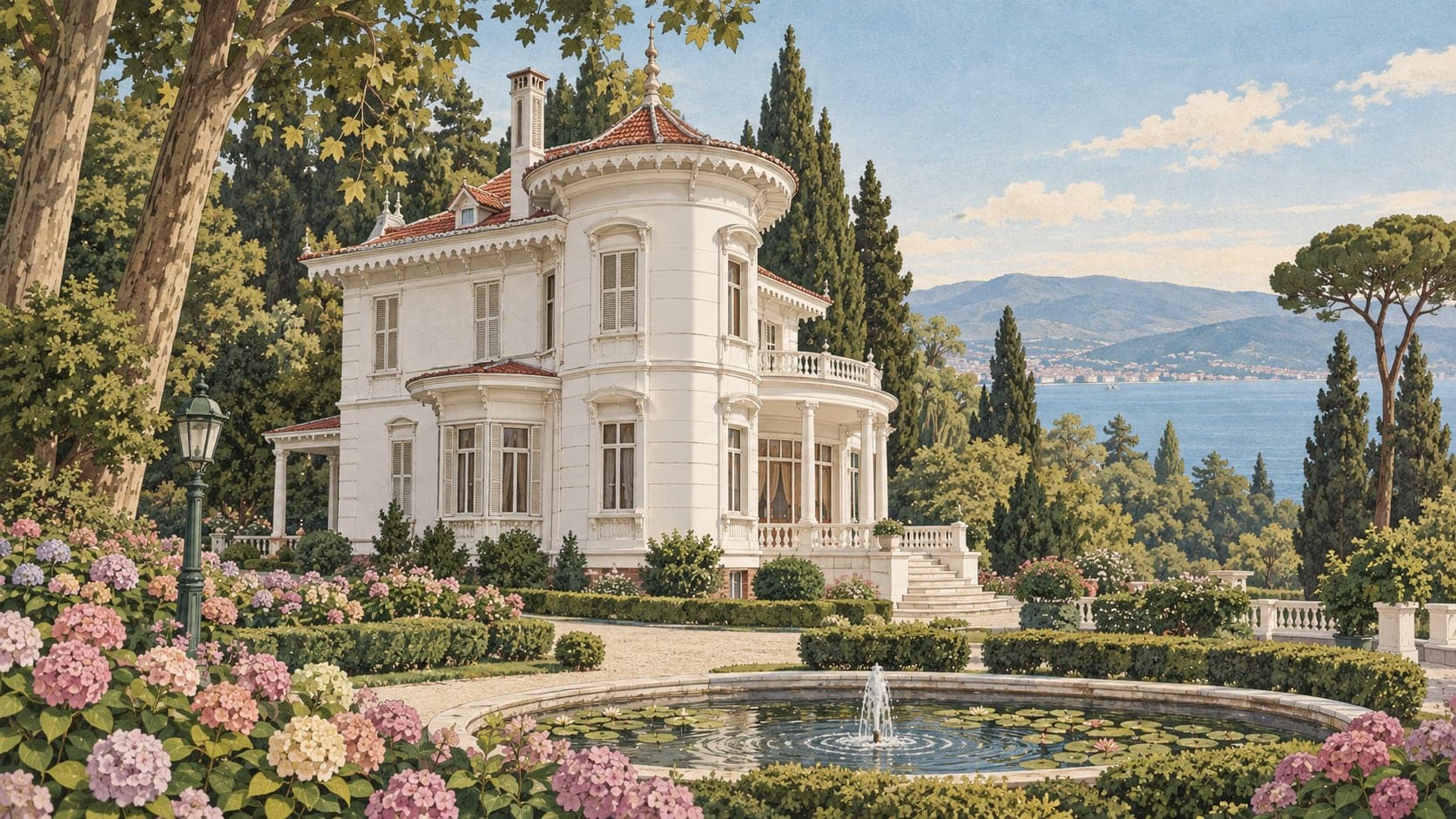
The Atatürk Villa at Termal is a two-storey house built in 1929 at Mustafa Kemal Atatürk's wish, in the Termal district twelve kilometres south of Yalova.
Termal has been a place of settlement since Roman and Byzantine times, and its healing waters drew enough attention in the last Ottoman period for some building and repair to be done. The curative springs and the green country around them won Atatürk's liking as well, and he is known to have been very fond of Yalova; he stayed first at the villa on the Baltacı farm and later at the one on the Millet farm.
In 1929 Mustafa Kemal and those around him chose the spot where the villa now stands as the place to receive the Shah of Iran, Reza Pahlavi. The building was put up in thirty-eight days, finished in the summer of 1929 and given over to the use of the presidency.
Most of the furniture was brought from Dolmabahçe Palace. The carpets are from the Hereke carpet works and the porcelain from Yıldız.
A number of decisions that shaped the political and social life of the republic were taken here: the move to a multi-party system, the Domestic Goods Week, the founding of the Turkish Historical Society and the Turkish Language Society, and the work on rendering the Quran into Turkish.
The villa served as a presidential residence until 1981, when President Kenan Evren had it taken in hand and repaired. After that work was finished the same year, it opened as a museum with the furnishings it had held as an official residence.
One of the early examples of republican Turkish architecture, the two-storey wooden building covers 245 square metres. It holds three reception rooms and, counting the bathrooms, bedrooms and studies, eleven rooms in all. Because the house is of wood there is no kitchen in it: while it served as an official residence, meals were cooked in temporary kitchens set up outside and carried in, and the dishes were washed afterwards in the scullery in the basement. Since it was used only in summer, it has no heating.
In the reception room at the entrance of the ground floor hang Nurettin Niyazi's painting of the Kurşunlu bath and the women there, along with a German piano, Japanese vases and an incense burner of brass and ebony decorated with Egyptian hieroglyphs. The room to the left of the entrance serves as the meeting room and holds the conference table with chairs of gazelle hide, a billiard table, and a French piano given to Atatürk.