Guide
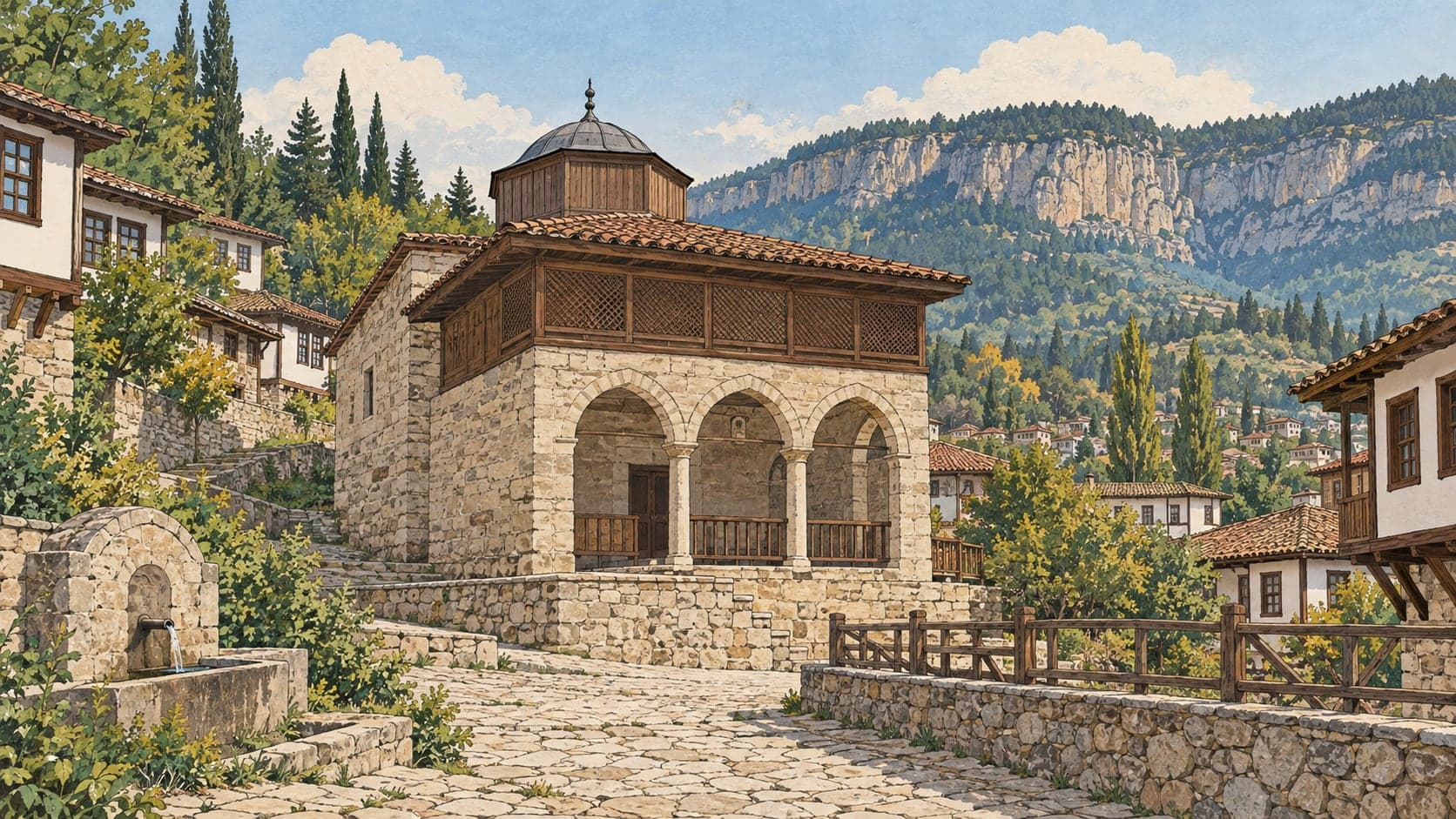
Yörük Köyü, six kilometres from Safranbolu, is often described as a miniature Safranbolu, and it was brought under protection as an urban conservation area in 1997 because it is a genuine Turkmen village. Its origins are told partly through legend: that the Yörüks were still nomadic in the fourteenth and fifteenth centuries, that they were placed under a judge with their own tax arrangement as a separate administrative unit, that they were settled over time, and that today's Yörük Köyü was fixed as the centre of that district. The village may have been founded by clans of the Karakecili tribe, by members of the Taraklı tribe, or by both together. In the sixteenth century the nomadic communities living around Safranbolu were called Yörükan-i Taraklı or Yörükan-i Taraklıbor.
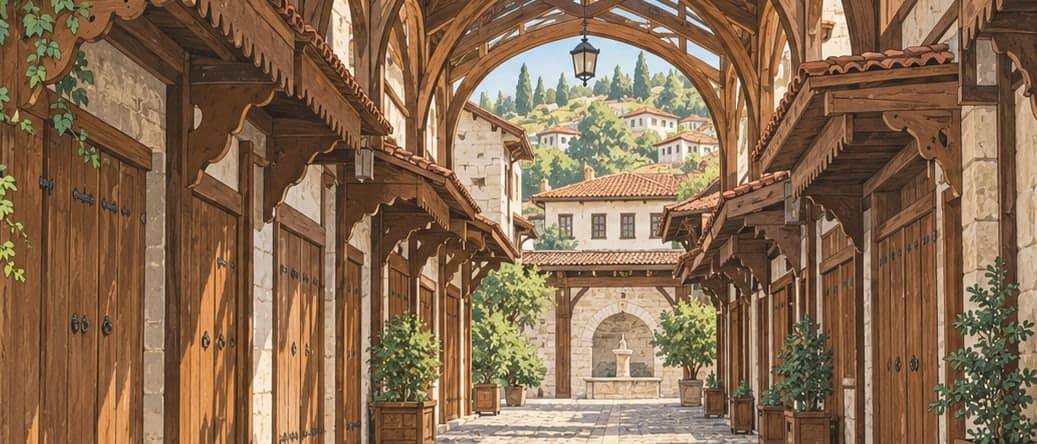
The layout is what makes the village worth the detour. Unlike Safranbolu, the site had no shortage of land and no difficult slopes, so the houses were built almost wall to wall, and instead of the loose clusters usual in Anatolian villages they line the main street; even on the regular lanes opening off the square at its end the terraced feeling continues. The Sipahioglu house, one of the monumental houses here, is open to visitors: two storeys on a stone base, like the other Yörük houses, with its harem and selamlik sections divided between the shareholders. The painted decoration in its rooms is the thing to look at, and the friezes and cartouches, which use C and S scrolls, carry the date 1294 in the Hijri calendar, 1877. The village is fourteen kilometres from Karabük.