Guide
The Museum of Economic Independence occupies the former head office of Türkiye İş Bankası on Ulus Square, in the Altındağ district of Ankara. The bank, founded by Mustafa Kemal Atatürk in 1924, turned the building into a museum telling both its own story and the course of economic change in the country. It is the institution's second museum, after the İş Bankası Museum in İstanbul.
The name comes from the founder's view that military victories become lasting only through economic ones, and the displays follow the steps the country took toward economic independence from the founding of the Republic onward.
The building was finished in 1929 and came into use on 26 August of that year as the bank's third head office, a role it kept for many years. When the head office moved to Kavaklıdere it became the Heykel branch, where everyday banking went on and staff were trained. Under a project to lay out Ulus Square and its surroundings as a cultural centre, the bank closed the branch and turned the building into a museum, which opened on 2 May 2019.
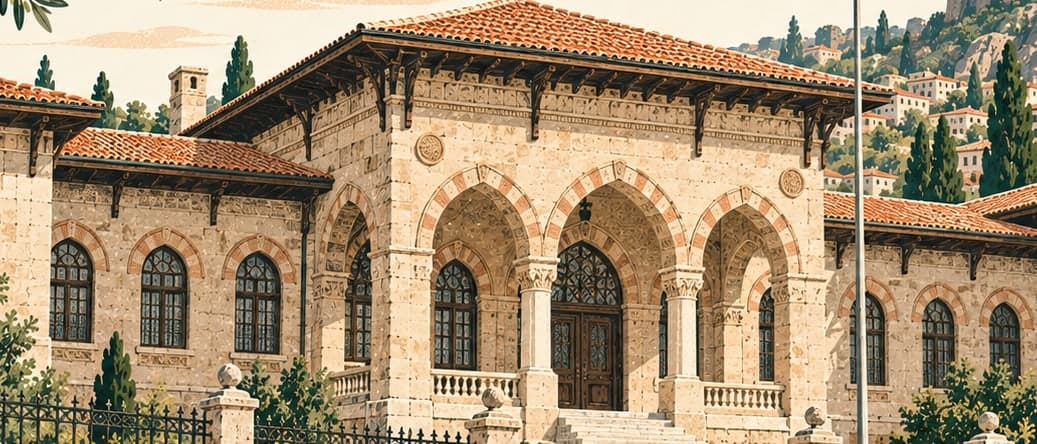
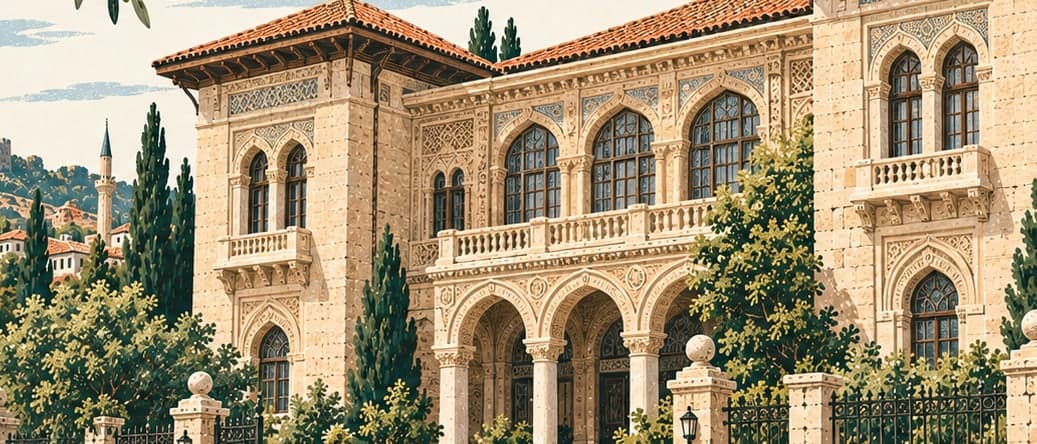
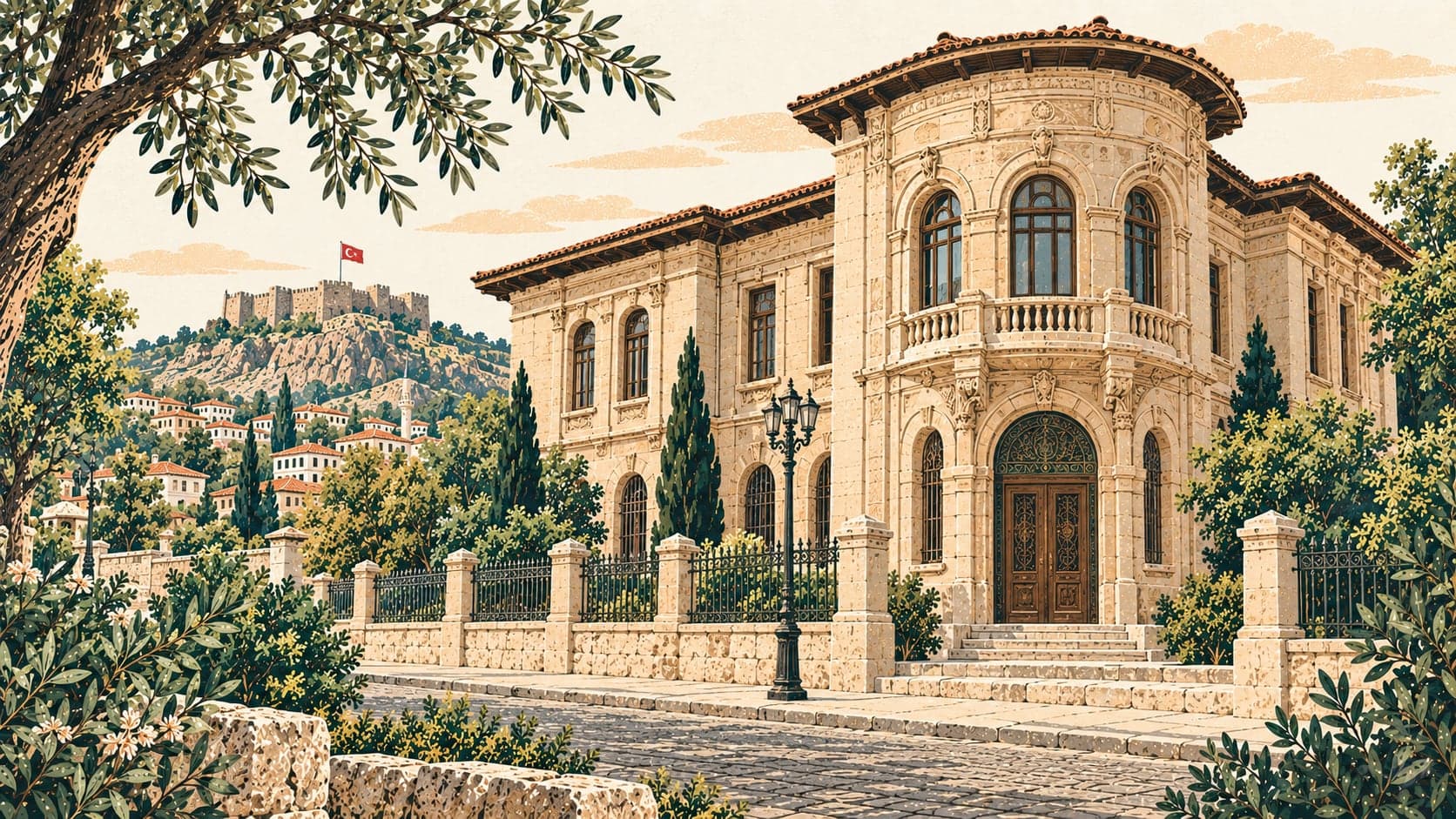
It was designed and built by the Italian architect Giulio Mongeri. The outer face carries a great deal of Ottoman and Seljuk figurative work; the design as a whole belongs to the First National Architectural Movement, while the horizontal lines marking the floors draw on neo-Renaissance architecture and the glass canopy over the entrance shows the mark of Art Nouveau. From its first days the building counted among the landmarks of Ankara.
The main hall is oval and covered by a glass ceiling, so that it is lit by daylight. Its look comes from the stained glass made by the Italian artists Salvatore Corvaya and Carlo Bazzi, which shows Hermes holding the serpent staff that stands for power — in Greek mythology the figure associated with money and trade. The interior decoration is the work of the Turkish architect Selahattin Refik Sırmalı, who also designed Atatürk's study at the Çankaya residence.
The safe-deposit section in the basement and the historic rooms kept in their original state on the ground and first floors are open to visitors, along with photographs, documents, objects and films from the bank's collection. The second floor holds a permanent exhibition on the bank's communications work and its contributions to society.
The board room, where Atatürk was received on 22 October 1929, has been kept as it was. On show there are an oil painting made for the museum by Kurt Bullent from a photograph taken during that visit, and the Weinberg painting that Atatürk signed for the bank's Alexandria branch.
After the decision to make the building a museum, a team advised by the historian Zafer Toprak carried out the renovation and the rearrangement of the interior, with Burçak Madran as curator and Emre Senan responsible for the visual design.
The museum is at Çam Sokak No 3, Ulus, Altındağ.