Guide
Sinan called the Süleymaniye the work of his journeyman years. It was built between 1551 and 1558 on the order of Süleyman the Magnificent, and it is one of the central buildings of classical Ottoman architecture. The first stone of the foundation is said to have been laid by the şeyhülislam Ebussuud Efendi.
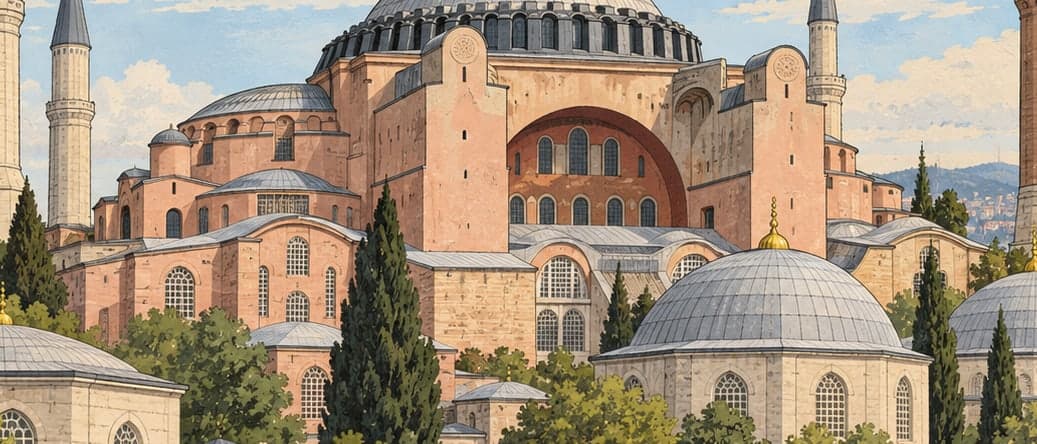
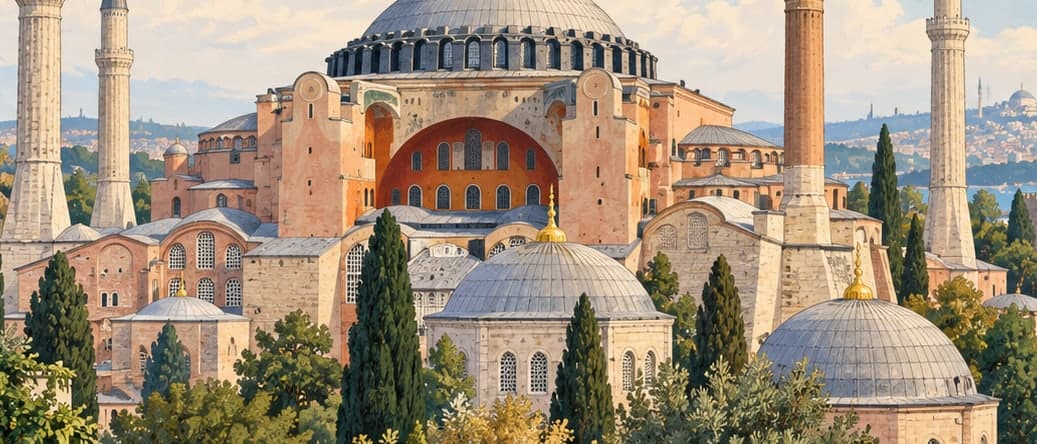
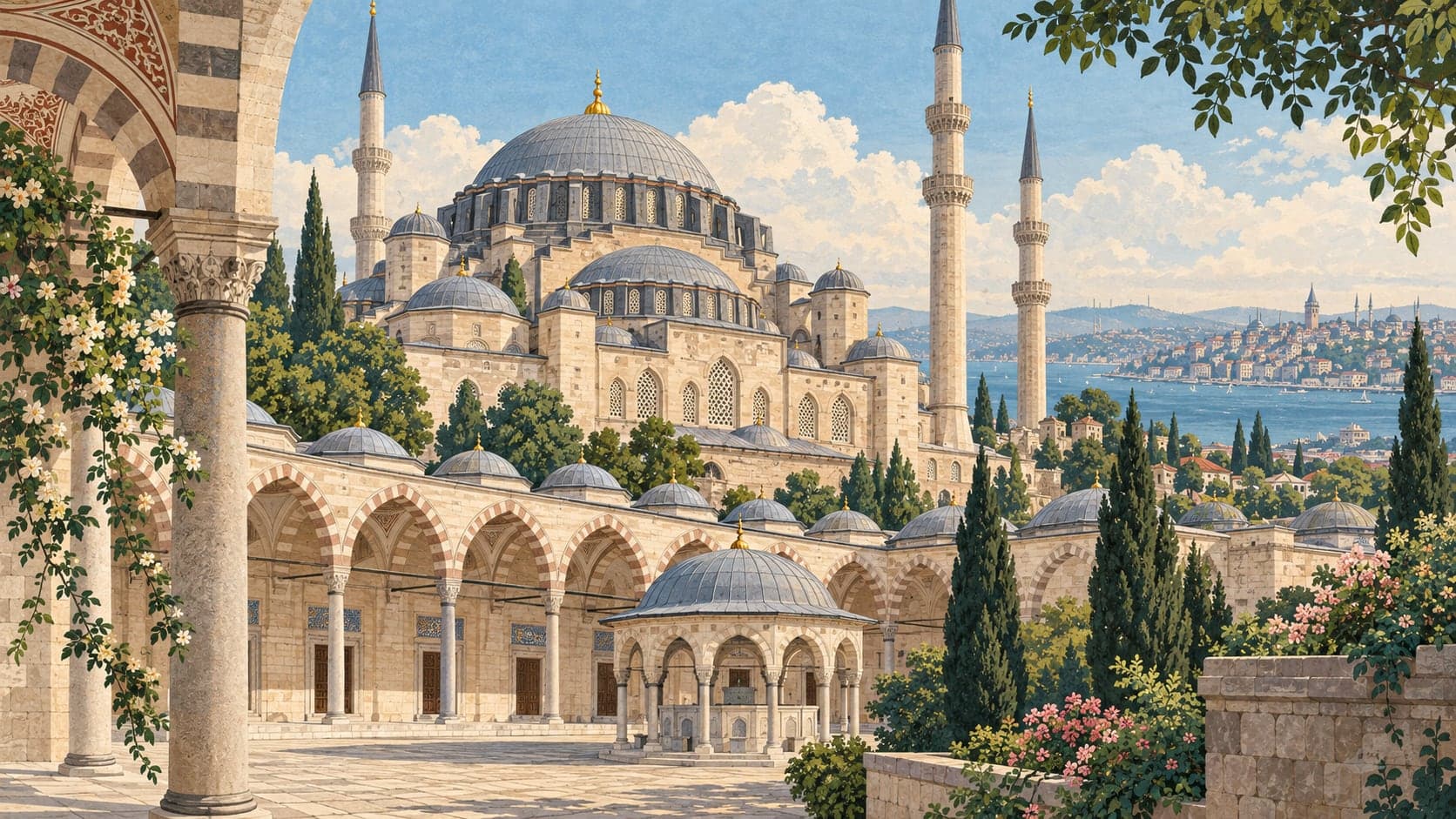
Above the prayer hall there is one main dome, two half domes, two quarter domes and ten small ones. The main dome rests on four piers, its arches on four great granite columns; it is 27.25 metres across, 53 metres above the floor, and pierced by 32 windows. Sixty-four earthenware jars half a metre tall are set into the dome and its corners with their mouths turned inward, which is how the building gets its acoustics.
The interior covers about 3,500 square metres, 59 metres long by 58 wide, lit by 238 windows. The sultan's and the müezzins' galleries stand on granite and marble columns. The section to the right of the müezzins' gallery, closed off with metal screens, served as a library until 1918, when the books were moved to the public library set up in the Süleymaniye medreses.
Coloured glass fills the windows above the mihrab, the work of a master of the period named İbrahim; Sinan compared the light coming through them to the wings of Gabriel. The four granite columns inside were brought from Alexandria, Baalbek, the Column of Marcian in İstanbul and the imperial palace; each is 9.02 metres high, 1.14 across and weighs forty to fifty tonnes, and Sinan likened them to the four caliphs.
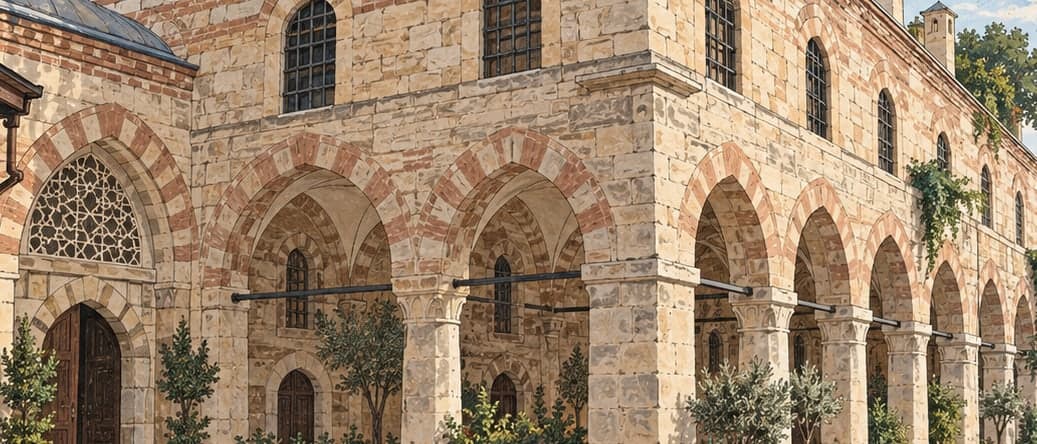
The marble-paved courtyard is enclosed by porticoes of 28 domes carried on 24 columns — twelve granite, ten marble and two of porphyry — and has three gates. The four minarets carry ten balconies between them, two with three each and two with two; the source reads the four as marking Süleyman the fourth sultan after the conquest and the ten as his place as tenth sultan of the dynasty.
The calligraphy is by Ahmet Karahisarî and his student Hasan Çelebi, with later additions by Kazasker Mustafa Efendi. Apart from a few, all the texts are taken from the Qur'an.