Guide
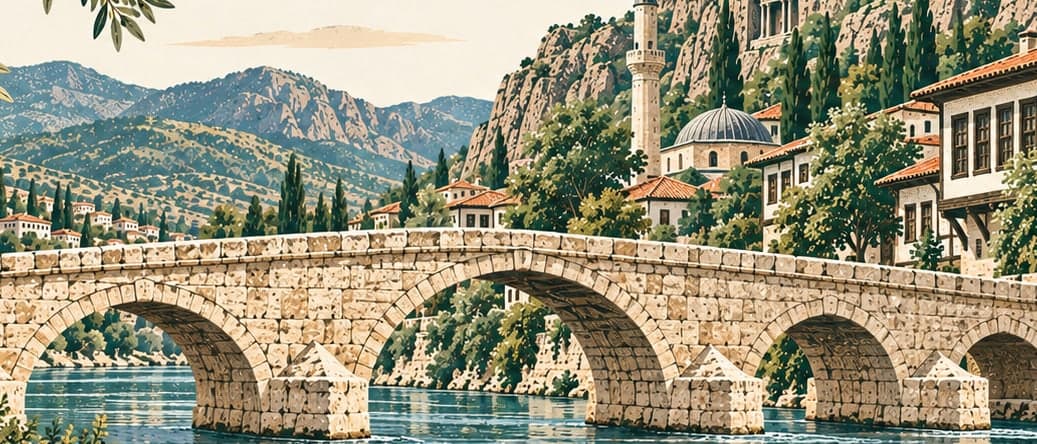
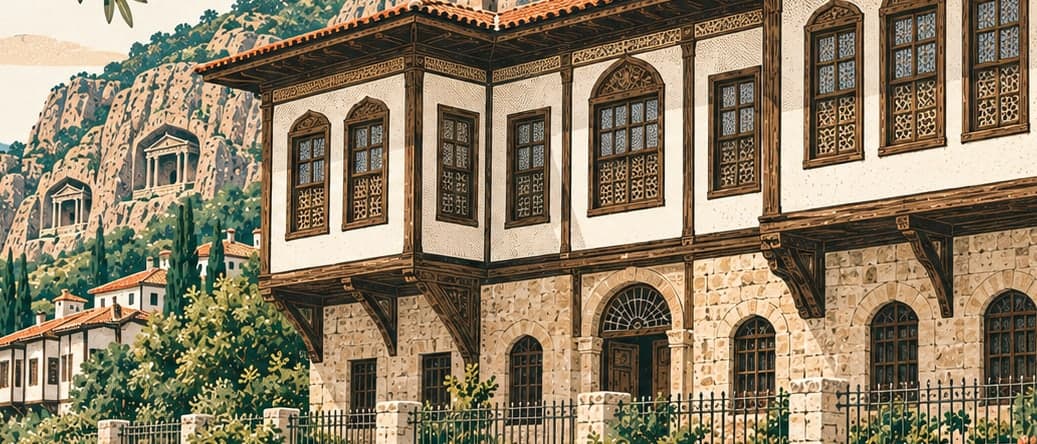
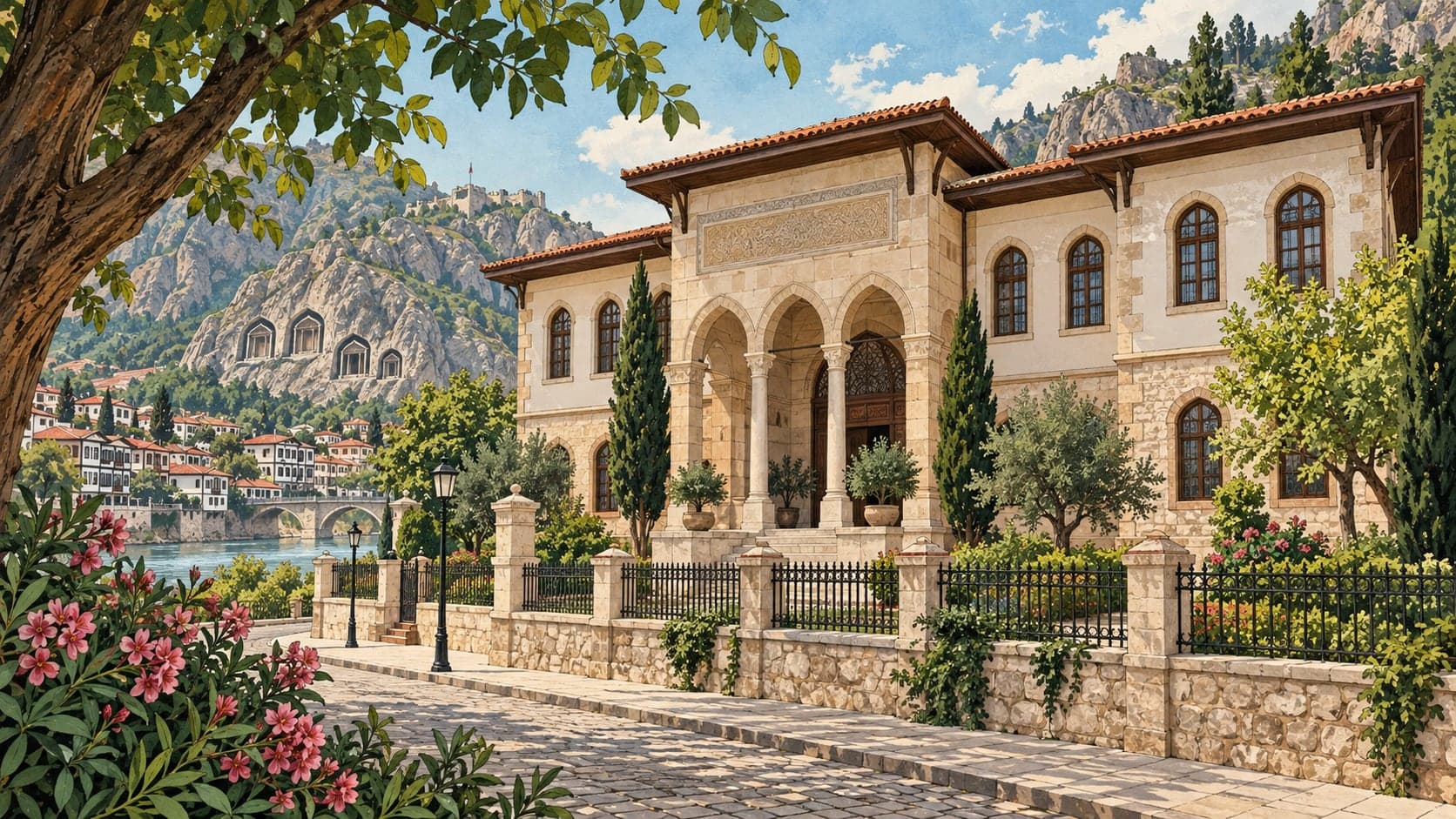
The museum stands on the bank of the Yeşilırmak, on the old town walls at the foot of the rock tombs of the Pontic kings, beside the pier of the Alçak Köprü — one of the oldest bridges of the Yaliboyu quarter. The two-storey timber building was designed as the museum from the start.
Its subject is a fact of Ottoman administration: princes were sent to Amasya to govern, and several of them left it for the throne. The museum reconstructs an Anatolian Turkish house of the fifteenth and sixteenth centuries around them — walls and ceilings worked in Hatai and Rumi patterns, original calligraphy and illumination on the walls, carpets laid on the wooden floor whose weave, colours and motifs are presented as fine examples of the traditional craft, and furnishings chosen to match the period.
Seven figures on the upper floor are those princes who did become sultan after their years in Amasya: Bayezid I, Mehmed I, Murad II, Mehmed II, Bayezid II, Selim I and Murad III. The five on the ground floor are those who did not — Şehzade Mustafa and Şehzade Bayezid, sons of Süleyman; Şehzade Ahmet and Şehzade Alaeddin, sons of Murad II; and Şehzade Ahmet, son of Bayezid II. The likenesses were modelled on period portraits, and each wears the dress of his own time.
A film runs continuously in which each figure speaks about himself and about what mattered in his period; it lasts about thirty minutes and foreign visitors can follow it in English through headphones. Photography and filming with amateur equipment are allowed.