Guide
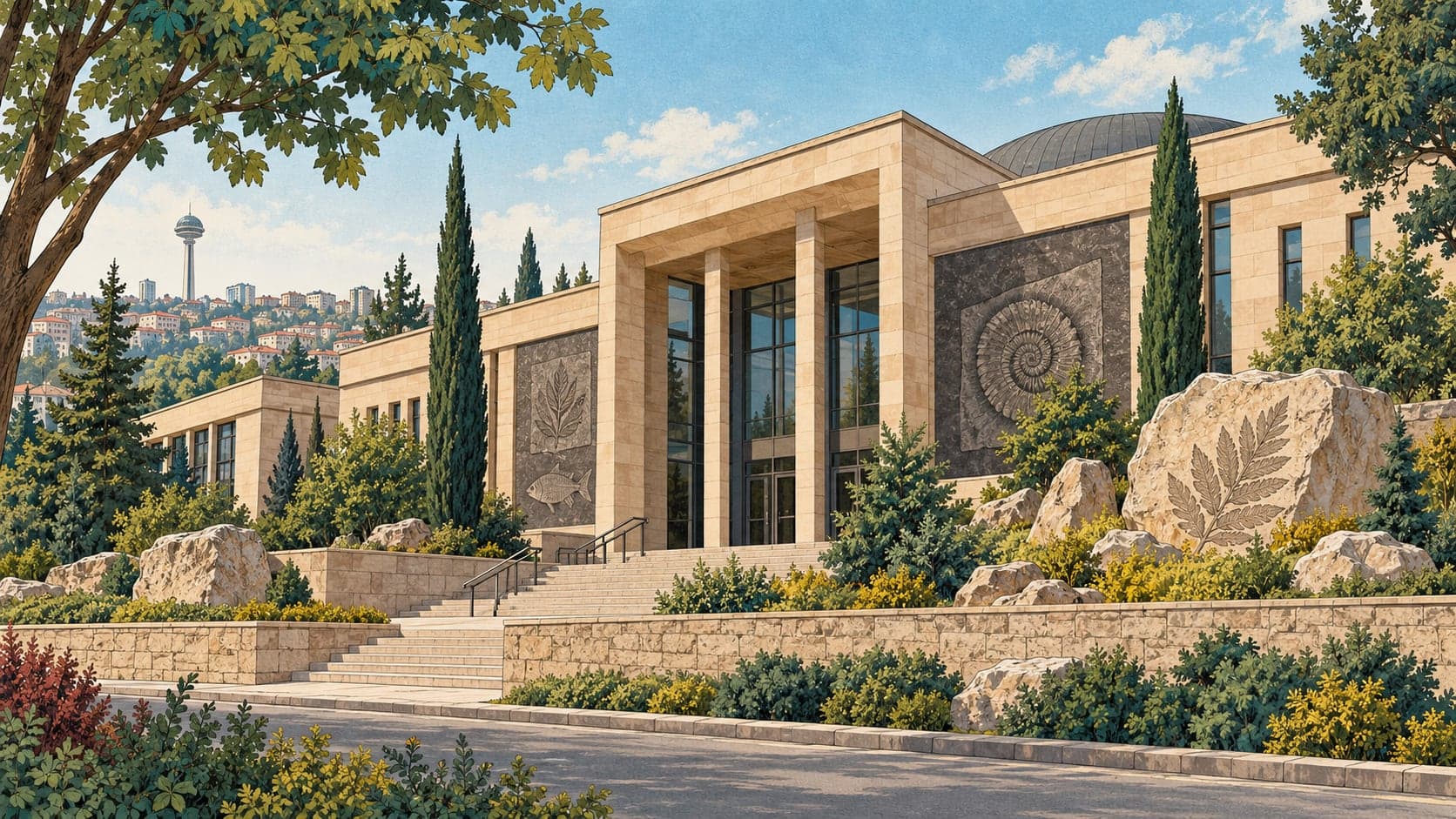
This is the natural history museum of the General Directorate of Mineral Research and Exploration, and the institution describes it as the first and largest in Türkiye. It was founded on 7 February 1968 to display and store the samples the directorate's field teams were bringing back, and it has occupied a new building within the campus since 2003. One practical point first: visiting groups must book an appointment with the museum before coming.
The collection is fossils, rocks, minerals and ore samples gathered from across Türkiye and the world. The building has four floors counting the ground. On the ground floor visitors can look closely at the planets of the solar system and examine moon rock, fulgurite and the meteorites the museum calls the postmen of space. A section prepared for blind visitors here was, the directorate notes, another first in the country. The same floor holds a teaching area for pre-school and primary pupils, an exhibition area for social events, a cafeteria and a conference hall.
The first floor is the one most people come for. Fossils of vertebrates and invertebrates and of plants stand alongside carnivorous dinosaurs of 140 million years ago, the Maraş elephant and a whale skeleton. The same floor holds the diorama section, with cases recreating the animals and plants of Türkiye, a cave model, a model showing how sediment is laid down, and a prehistory section displaying the tools and materials of prehistoric people.
Minerals, ornamental stones and rock samples from Türkiye and abroad occupy the second floor together with material on the history of mining in the country. On the third is the Science Tunnel, opened in 2017, which takes in the geological heritage areas of Türkiye, the safari parks of South Africa, the biological diversity found on underwater reefs, and the colours of flowers. In 2013 the Şehit Mehmet Alan Energy Park opened as part of the museum; on the same campus, it sets out renewable energy sources and types of fossil fuel, how energy is produced and how it can be used efficiently, through models and information panels, with coal galleries and a model oil well in its grounds.