Guide
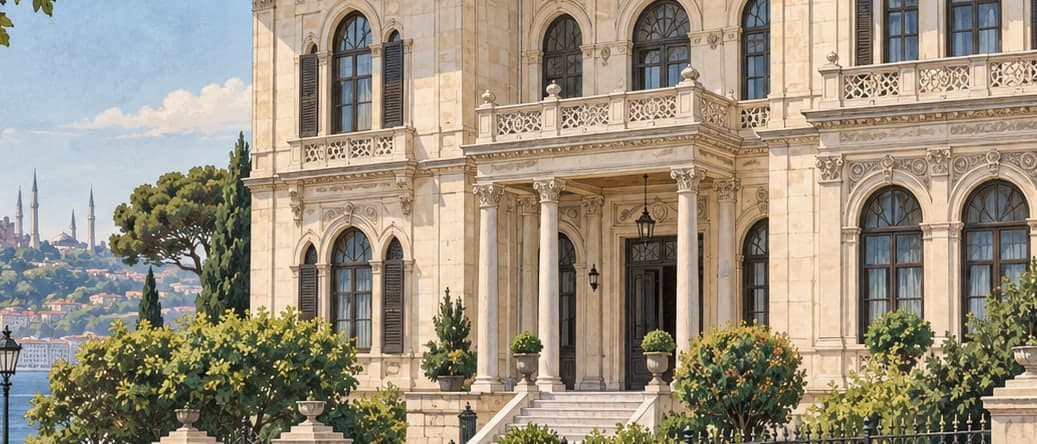
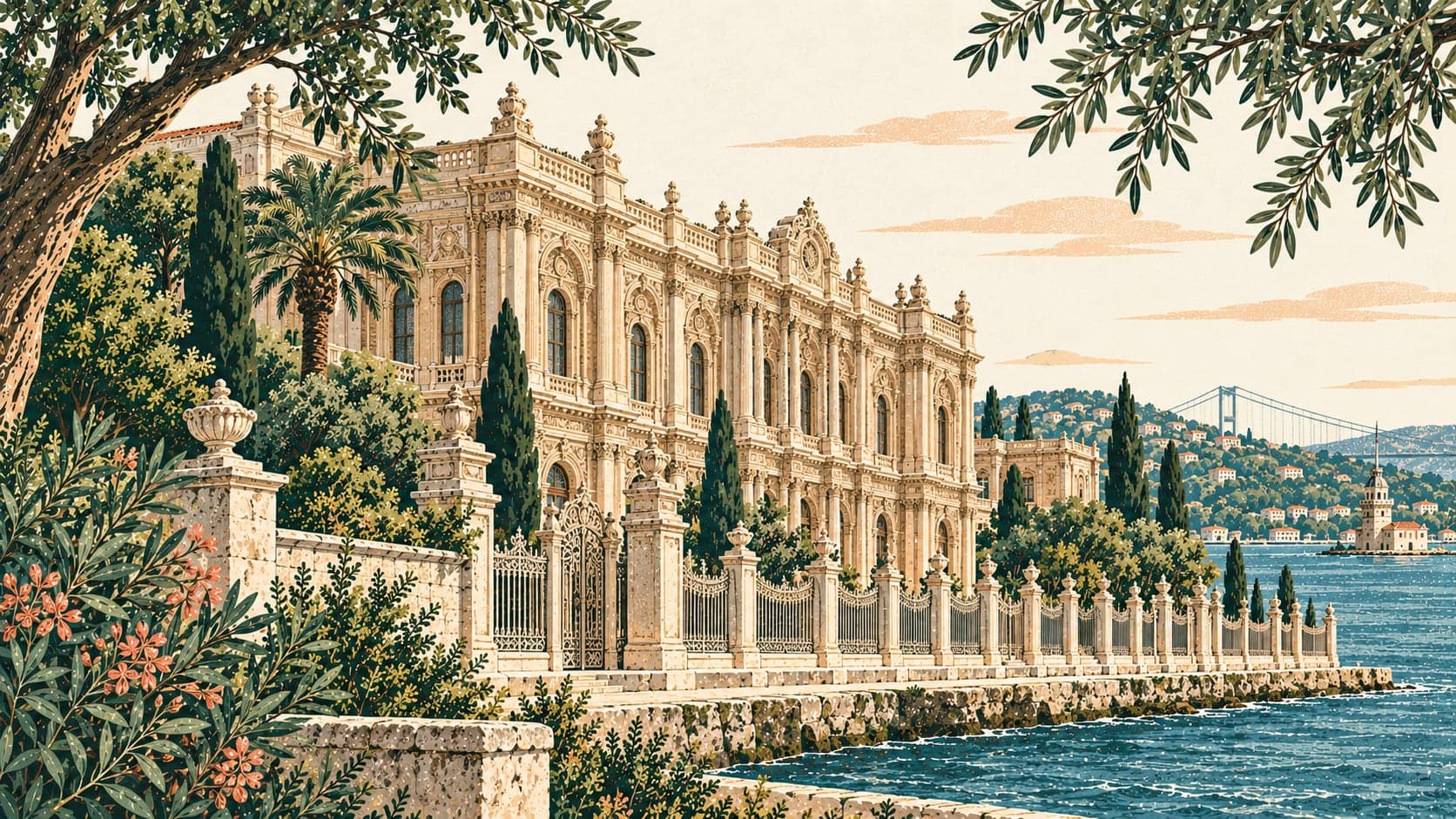
The Palace Collections Museum occupies the Imperial Kitchens (Matbah-i Amire) of Dolmabahçe Palace, built under Sultan Abdülmecid, and it is where the objects of the late Ottoman palaces were brought together: from Dolmabahçe, Beylerbeyi, Topkapı and Yıldız palaces and from the Aynalıkavak, Küçüksu, Ihlamur and Maslak pavilions, along with products of the Yıldız Porcelain works and the Hereke carpet and weaving factory. It has three parts — an art gallery, the museum proper, and the depot.
The displays are arranged by theme rather than by palace. The Sultan Abdülhamid II collection, moved here from Yıldız Palace, holds his personal belongings and a selection of the gifts presented for the 25th anniversary of his accession: his own carriage, his sword, whip, prayer beads and carpentry tools, and among the anniversary gifts a silver model of a building, a model of the Sultan Ahmed III fountain and a model telegraph pole.
Other sections read as a social history of the palace. The lighting cabinet runs from vast 19th-century crystal chandeliers down to a single hand candlestick, taking in lamps, sconces, lanterns and oil lamps, so that the shift from candle to gas to electricity can be followed object by object. The heating, health and industrial section is the same idea applied to technology: ovens, gas heaters, a cream machine, a typewriter, a telephone, a wheeled stove, a gramophone, irons, cinema machines, a shaving table and an electroshock device, all of which entered the palace quickly as the Industrial Revolution produced them. Porcelain, mostly bought from or presented by France, Germany and Britain, alongside Yıldız ware, occupies another; embroidery, silver-gilt banquet services, Hereke fabrics, calligraphy sets, furniture, children's clothes and the educational toys used by Durrusehvar Sultan up to the age of ten fill the rest. One clock and music item stands out: a Steinway wall piano made in Hamburg in the late 19th century.
The depot is unusual enough to be part of the visit. The palaces and pavilions hold tens of thousands of objects that cannot be placed in the present furnishing scheme; rather than leave them scattered in store rooms, the Directorate built a single depot with controlled climate and earthquake-conscious conditions suitable for porcelain, glass, textile, wood and metal alike, and opened it to visitors on 18 October 2016. The Directorate describes it as the first and only depot of its kind arranged this way in Türkiye.
Visit status for this record: open to visitors.
Entry fee
- Saray Koleksiyonları Müzesi · Local
- 80 ₺
- Saray Koleksiyonları Müzesi · Foreign
- 280 ₺
- Saray Koleksiyonları Müzesi · Reduced
- 50 ₺
Visiting hours
- Visiting hours
- 09:00:00 - 17:00:00