Guide
Safranbolu is a historic district of Karabük, eight kilometres north of the provincial centre — the two town centres adjoin one another. It lies two hundred and thirty-one kilometres from Ankara and ninety from the Black Sea coast. Its name comes from saffron, a rare plant that grows in the area.
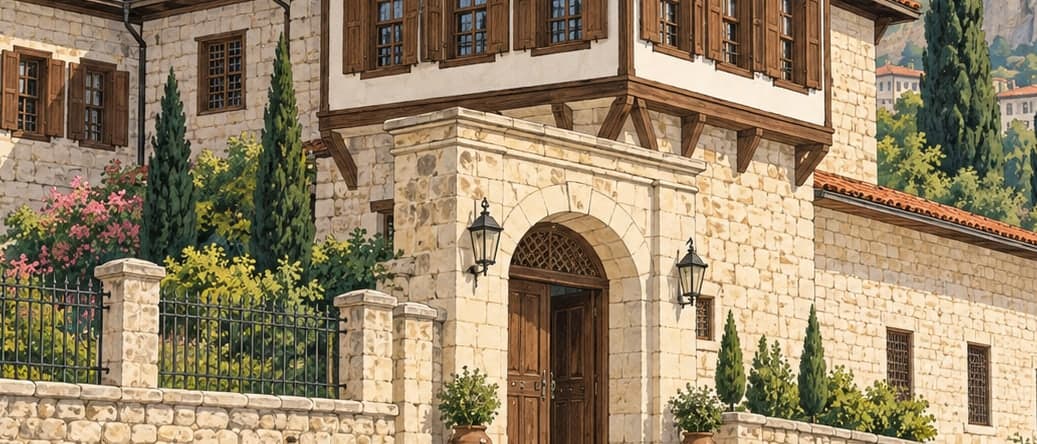
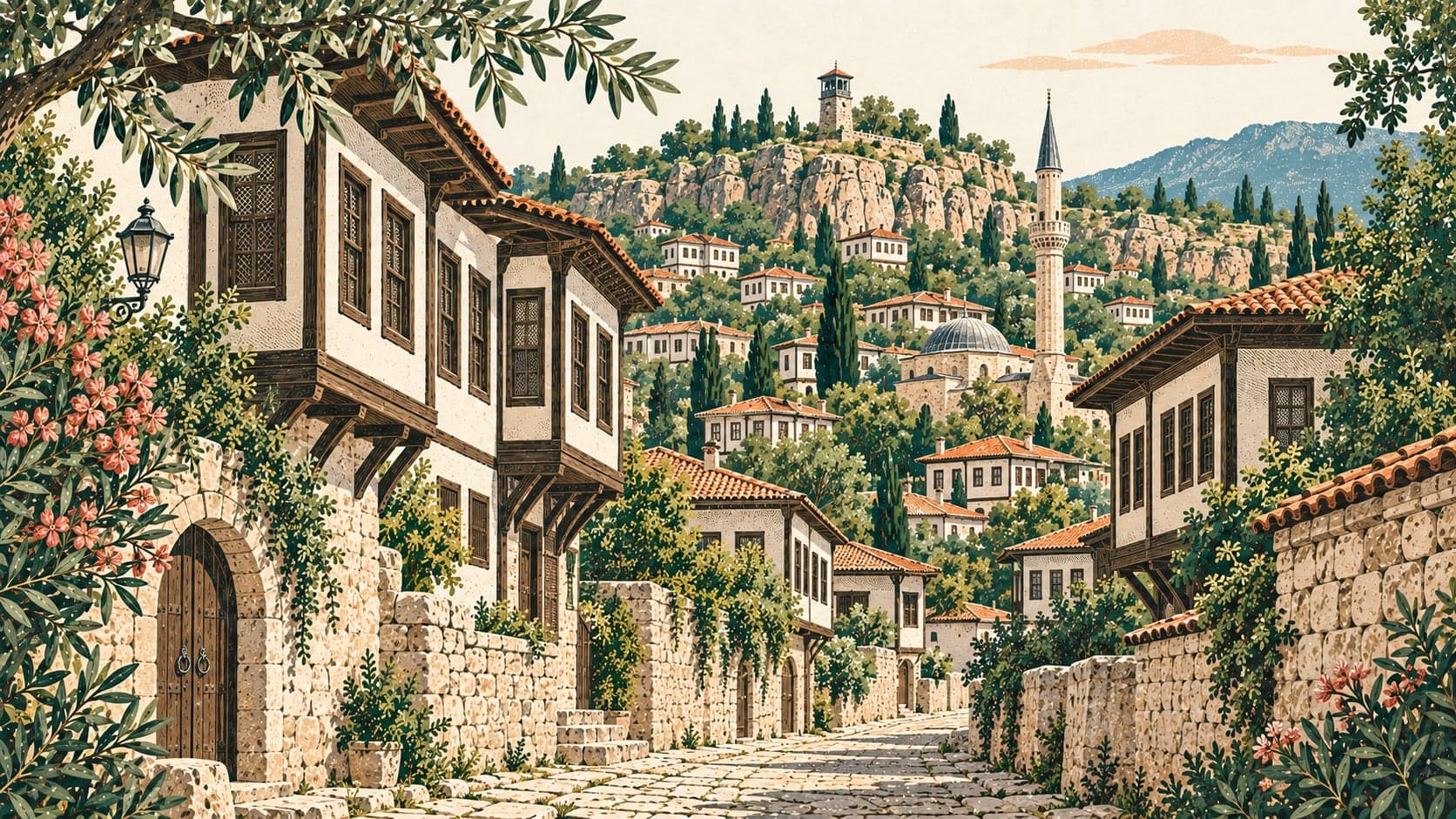
What makes the district known are its historic houses, which reflect classical Ottoman urban architecture. Houses of the same kind survive elsewhere too — in Beypazarı, Göynük, Taraklı, Odunpazarı and Osmaneli — but it is for this that Safranbolu has been among Türkiye's cultural properties on the World Heritage List since 17 December 1994.
Settlement here is very old. The town stands in Paphlagonia, the region named in Homer's Iliad, and its known history reaches back to around 3000 BC; tumuli dated between four and three thousand BC bear this out. The earliest known communities of the area were the Gasgas and the Zalpa, neighbours of the Hittites. Hittites, Phrygians, Persians, Hellenistic kingdoms, Rome and Byzantium, the Seljuks, the Çobanoğulları, the Candaroğulları and the Ottomans each held sway here in turn. The town has been identified with ancient names including Flaviopolis, Theodoropolis, Hadrianopolis, Germia and Dadybra.
It passed definitively into Turkish hands in 1196. Muhiddin Mesut Şah, son of the Seljuk sultan Kılıç Arslan II, promised to spare the Greek-Byzantine population if they surrendered without a fight; the records say the town was nonetheless taken by force, and what became of its Christian inhabitants is not known. Under Seljuk rule the town was called Zalifre. It was held by the Çobanoğulları between 1213 and 1280, by the Candaroğulları between 1326 and 1354, and by the Ottomans after 1423.
Its position made Safranbolu an administrative and commercial centre throughout its history. Its most prosperous period came under the Ottomans, in the seventeenth century, because it lay on the road from İstanbul to Sinop. A Greek community lived in what is now the Kıranköy quarter; this later became the main Greek neighbourhood, and the population exchange of 1923 took place there.