Guide
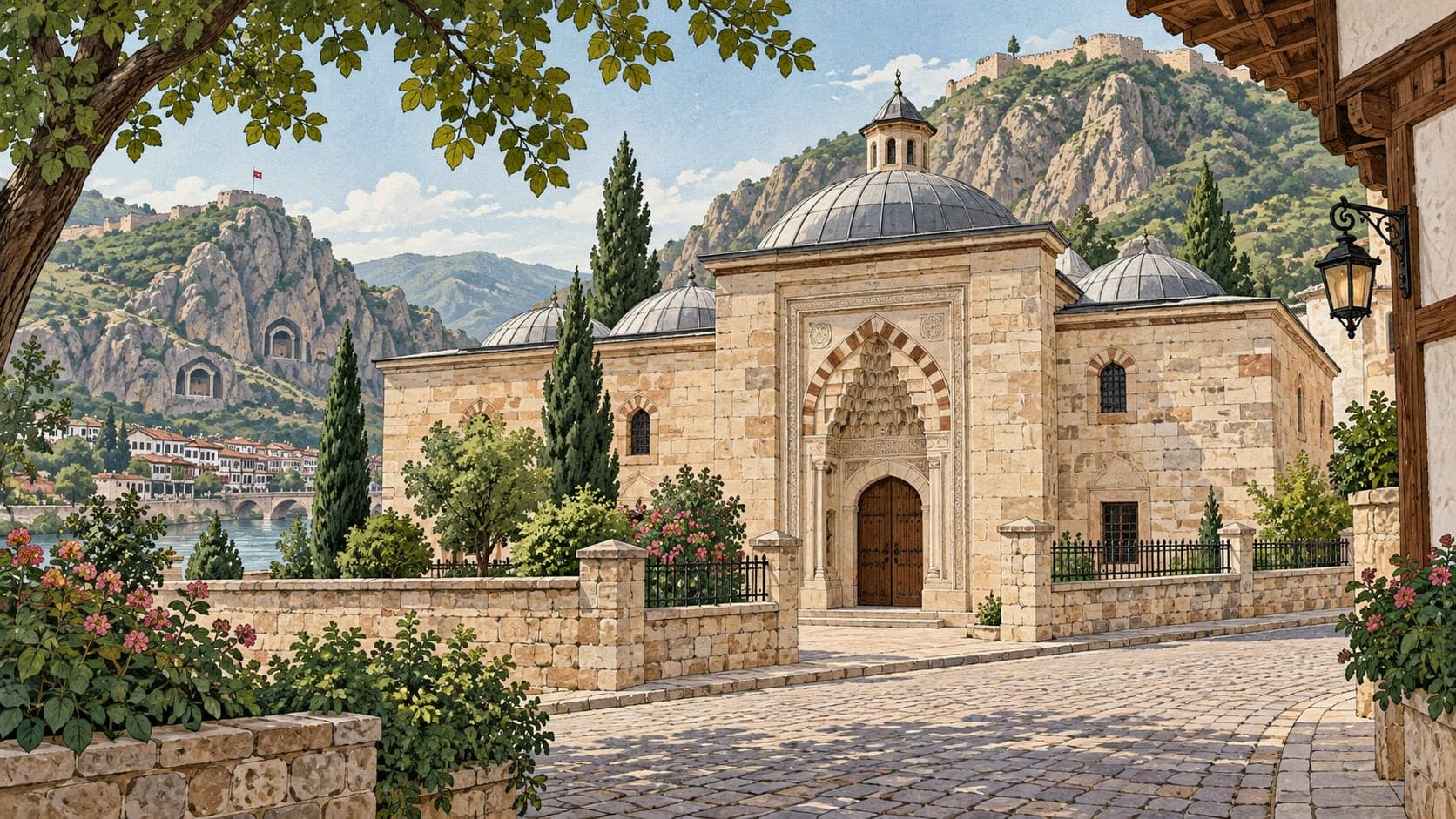
The building came first, and it is the reason to come. Anber bin Abdullah had it built in 1308-1309 in the names of the Ilkhanid ruler Sultan Mehmet Olcaytu and his wife Uduz Hatun, and the provincial authority describes it as the only Ilkhanid work in Amasya to have survived to the present. It is known as the first hospital in Anatolia where treatment was given with music.
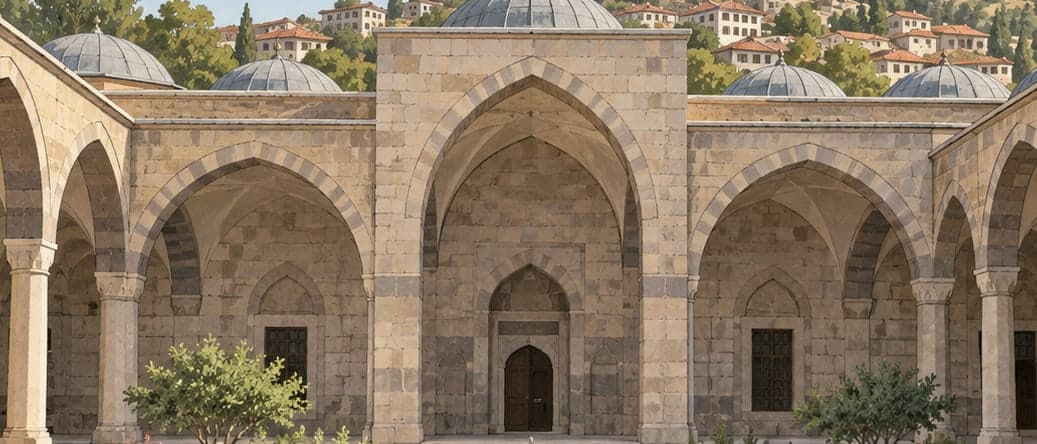
Its front is the part worth standing in front of. The capitals are the original Anatolian Seljuk type, worked with geometric leaf ornament and muqarnas, and the inverted capitals built up from Turkish triangles were tried here, at the corners of this façade, for the first time in Anatolian Seljuk architecture. The walls are of cut stone, with cylindrical buttresses at two corners. One detail belongs to this building alone: a kneeling human figure carved in relief on the keystone of the door.
The name it now carries is that of Sabuncuoğlu Şerefeddin, an Ottoman physician and surgeon who wrote the first Turkish surgical work. He came from a well-known family of doctors in Amasya — a quarter of the city is still called Sabuncuoğlu, or Hacı İlyas, after them — and was the grandson of Sabuncuoğlu Mevlânâ el-Hâc İlyas Çelebi Bey, chief physician to Çelebi Sultan Mehmed. He is thought to have studied under Burhâneddin Ahmed en-Nahcuvânî at the Amasya hospital, practised there for fourteen years, spent a period in Kastamonu under the Candaroğlu ruler İsfendiyar Bey, and presented his book, the Cerrâhiyye-i İlhâniyye, to Mehmed the Conqueror.
The building became a museum under his name in 2011.