Guide
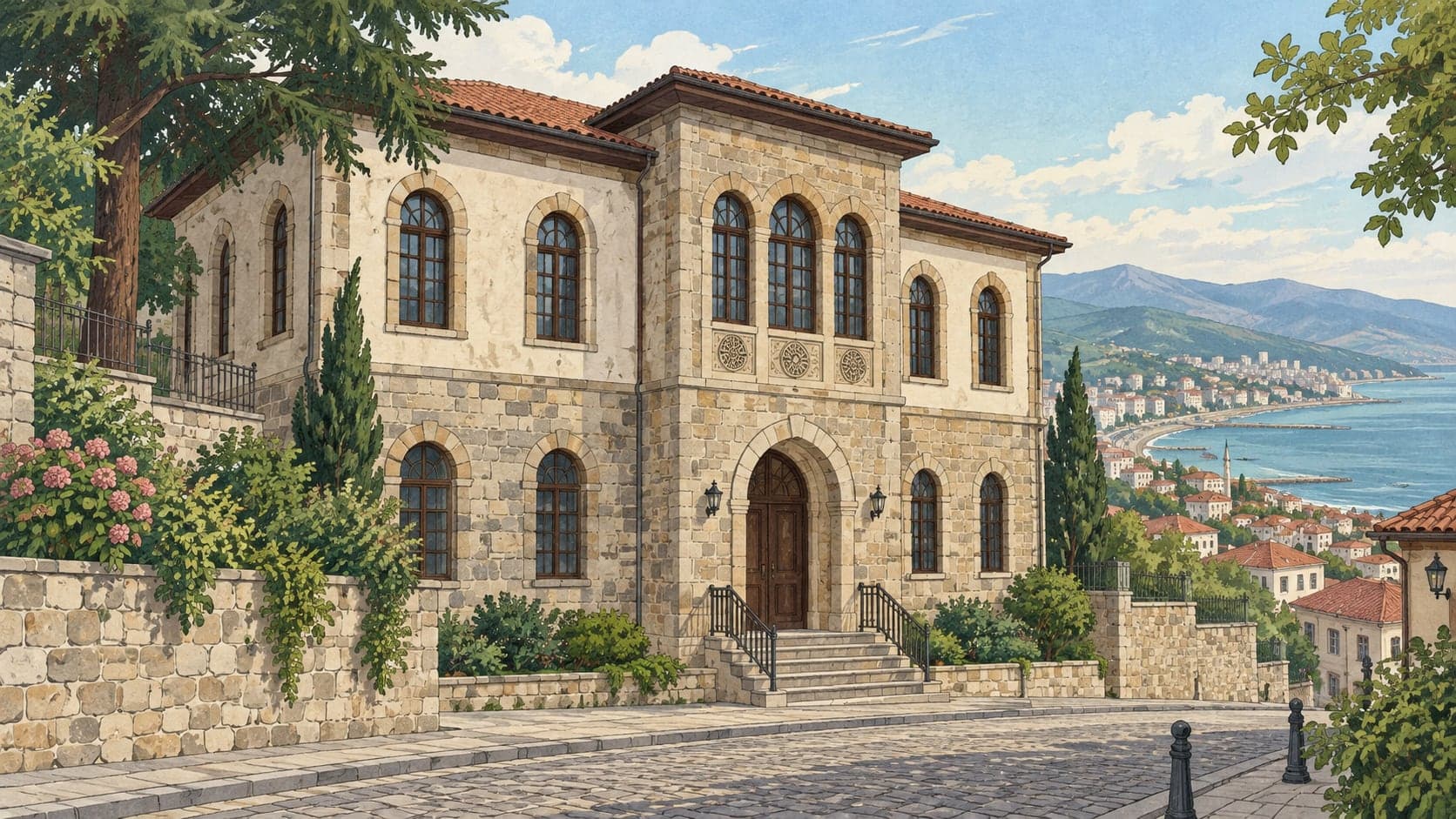
The Trabzon History Museum occupies a historic Turkish house in Ortahisar that the municipality expropriated and converted, on a street said to be where Süleyman the Magnificent was born and spent his childhood. The museum was opened by the Ortahisar municipality; the idea of a history museum for the city had been argued over publicly as far back as the 1920s, so the institution arrived, as the source puts it, about eighty years late.
What is inside is a city archive as much as a display. There are 7,800 documents and 2,200 photographs. The oldest images of Trabzon are here in two forms: engravings made by foreign travellers who came through from the eighteenth century onwards, and the earliest surviving Trabzon postcards, which together show the nineteenth-century urban fabric that has since gone.
The heaviest part of the collection is official paper. Thousands of documents survive from correspondence with the province of Trabzon in the early twentieth century, many of them single surviving copies, and they cover what happened in and around the city during the National Struggle and the War of Independence. Among them is a letter bearing the wet-ink signature of Gazi Mustafa Kemal Paşa as Speaker of the Grand National Assembly. Film survives too: documentary footage of the Russian occupation of the Eastern Black Sea during the First World War, and images of Trabzon in the 1930s.
A sports section carries the same kind of material, its most personal item the handwritten memoir of Süleyman Rıza Kuğu, a Trabzon athlete, about the Paris Olympics — the first Olympic Games the Republic of Türkiye competed in. Ethnographic objects are shown as well, and the museum keeps a library of books about the city.
It opens 09:00 to 17:00, the same hours in summer and winter, and does not open on public holidays. Entry is free for every category of visitor; the Müzekart is not used here, because nothing is charged.