Guide
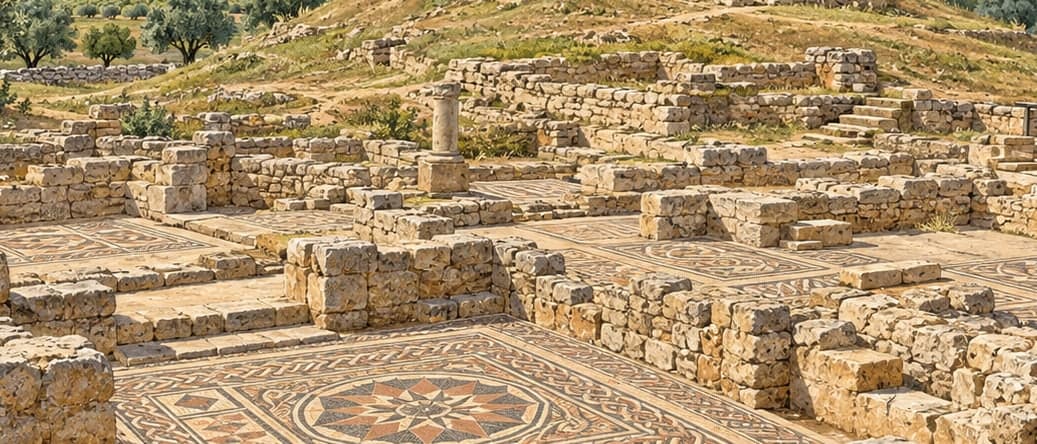
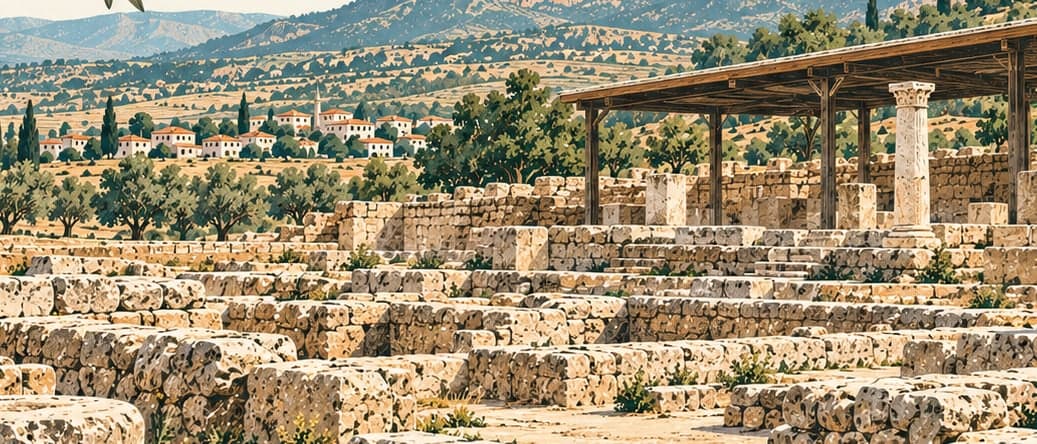
South-west of Oylum Höyük lies a church of basilical plan with a mosaic floor, dated to the sixth century AD and belonging to the early Christian period. Part of it was uncovered in 1999, and nearly all of it in the excavations of 2004 and 2006. It covers some eight hundred square metres.
The building, which proves to be a long rectangle, is built of local stone: black basalt together with limestone. Entered from the west, its interior was divided into three aisles by two rows of columns.
The excavation produced two inscriptions, a large number of Roman and medieval coins, and the remains of column bases, but the capitals belonging to those columns were not found. The capital standing in the garden of the provincial directorate is said to have been brought from here.
The floor mosaic is composed in red, brown, white, grey, orange and black stone, with plant motifs of leaves, Maltese crosses, and geometric patterns of intersecting circles, lozenges, squares and zigzags. It shows the character of early Byzantine art.