Guide
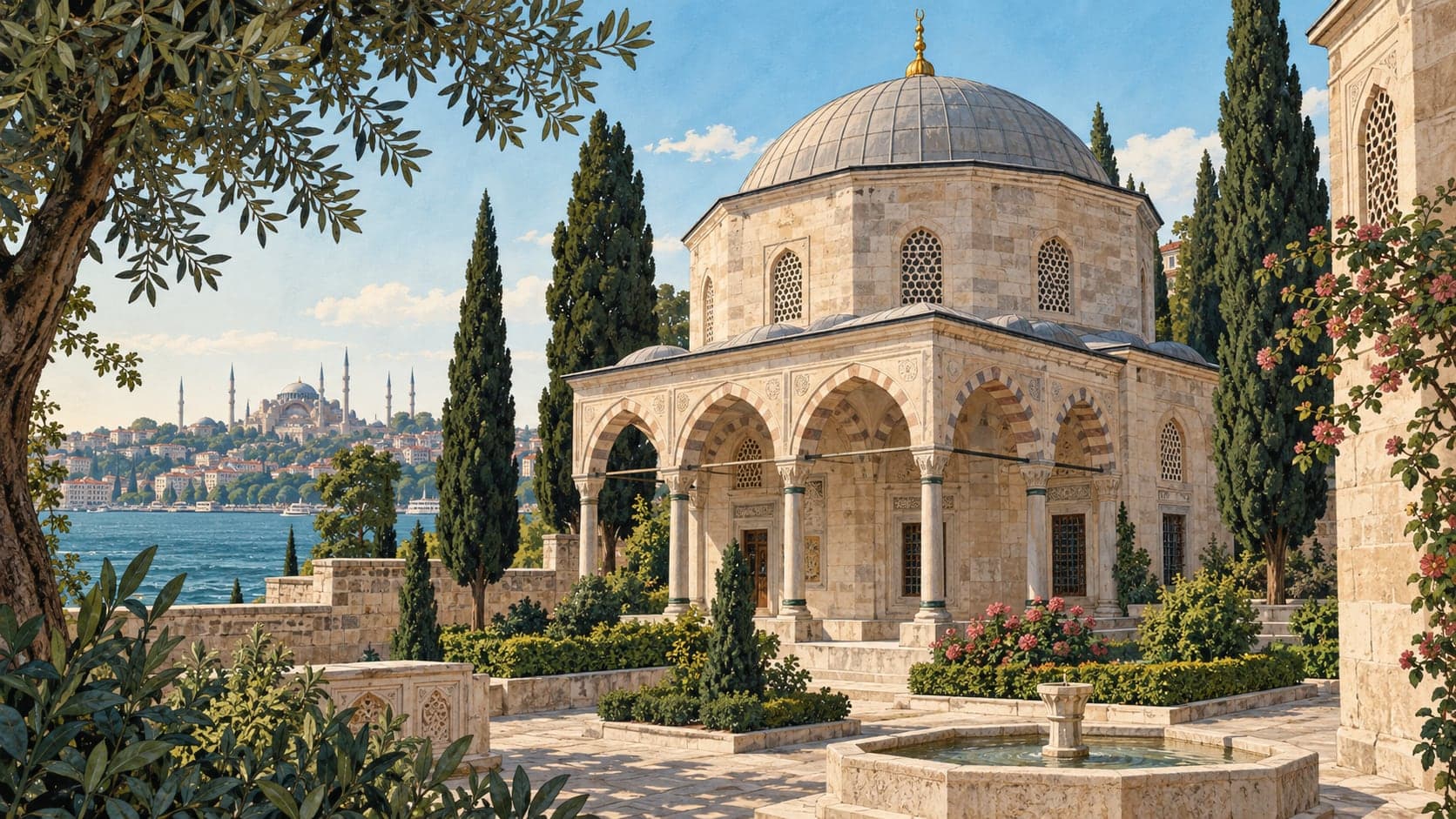
Kılıç Ali Paşa, the admiral of the fleet who died in 1587, founded his complex at Tophane on what was then the shoreline, at the head of the most important landing stage for boats coming up from the harbour of İstanbul to the Beyoğlu side. His tomb lies on the qibla side of the mosque, nearer the sea than the rest, with a burial ground beside it.
It is built of cut stone and octagonal in its outer walls, covered as most tombs are by a dome within a dome. The entrance sits inside a deep niche, and the unusual thing is what that arrangement does inside: two columns placed opposite the doorway brace, together with the solid walls of the entrance niche, the arches that carry the dome — a solution rarely met with in tombs of this kind.
The mosque it stands behind was completed in 1580 and, on the evidence of the registers of Sinan's works, is his. Evliya Çelebi, writing in the first half of the seventeenth century, said there was nothing else like it in the city and compared it to Hagia Sophia. In the burial ground around the tomb and along the side of the mosque are a great many graves, among them headstones brought here from the cemeteries of the Defterdar Ebülfazl mosque on the Fındıklı slopes and the Ağa mosque in Beyoğlu.