Guide
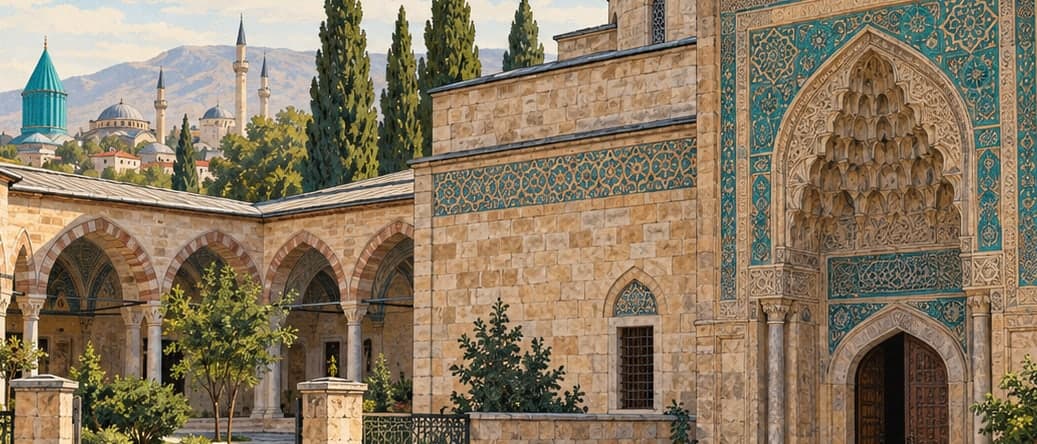
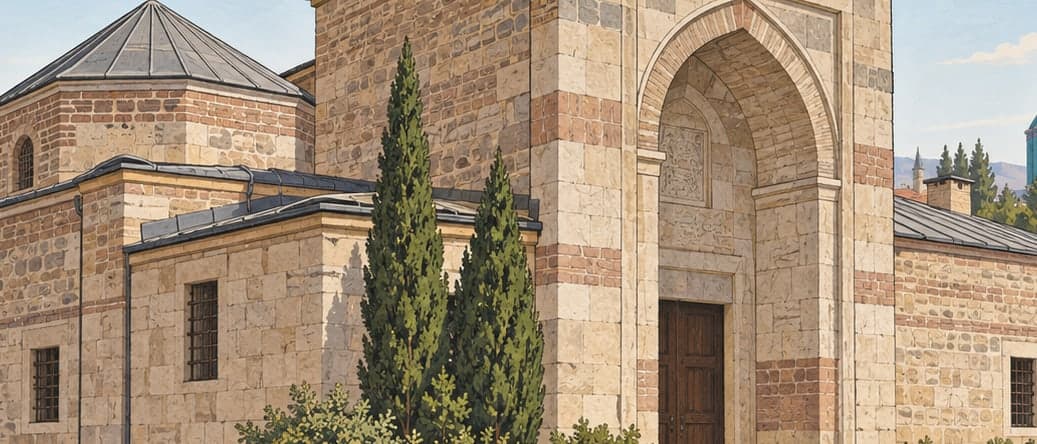
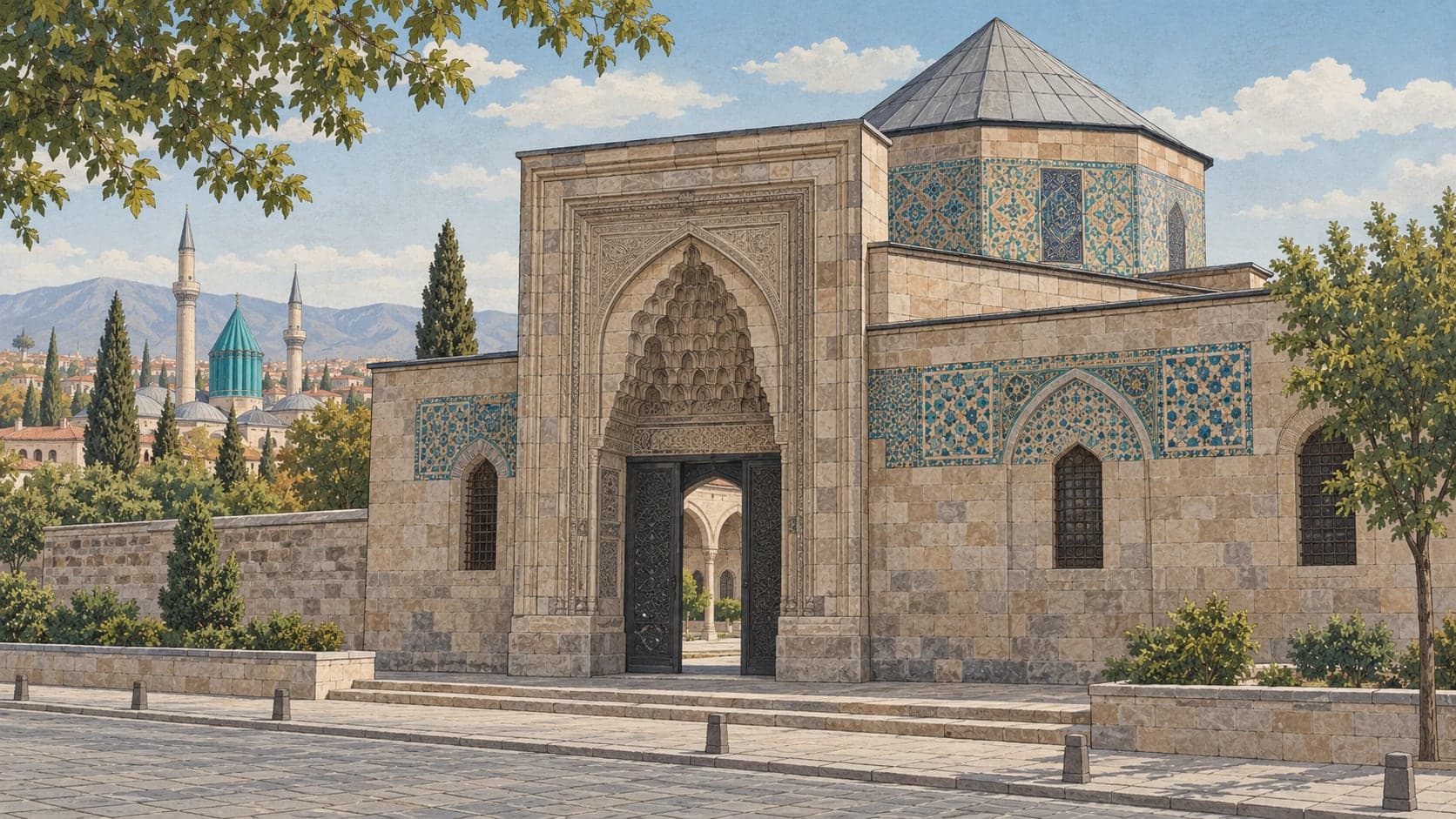
The Karatay Medrese was built in 1251 by the emir Celaleddin Karatay, during the reign of the Seljuk sultan İzzeddin Keykavus II, and it now houses Konya's museum of tilework. It was founded for the teaching of hadith and Quranic exegesis, and it follows the closed-courtyard medrese plan: a single storey, walls of Sille stone, domes and vaults of brick. Its architect is thought to have been Muhammed bin Havlan.
You enter from the east through a doorway of blue-grey and white marble that is a masterwork of Seljuk stone carving, carrying the building inscriptions and, on its other faces, selected verses and hadiths in relief. Inside, the interior surfaces are covered with mosaic and plaque tilework in turquoise, dark blue and black — this is why the building was chosen for the collection it now holds. Celaleddin Karatay's own tomb is in the southwest cell. The medrese opened as the Museum of Tile Works in 1955, and it displays tiles and ceramics of the Seljuk, Beylik and Ottoman periods, plaster ornament, cupboards, tiled dishes and lamps, with the tiles from the Kubad-Abad palace as the centrepiece. Together with the other major Seljuk medreses in Konya, Kayseri, Erzurum, Sivas and Kırşehir it was added to the UNESCO Tentative List in 2014 under the heading of the Anatolian Seljuk Medreses. The museum is in the city centre, opposite Alaaddin Hill.