Guide
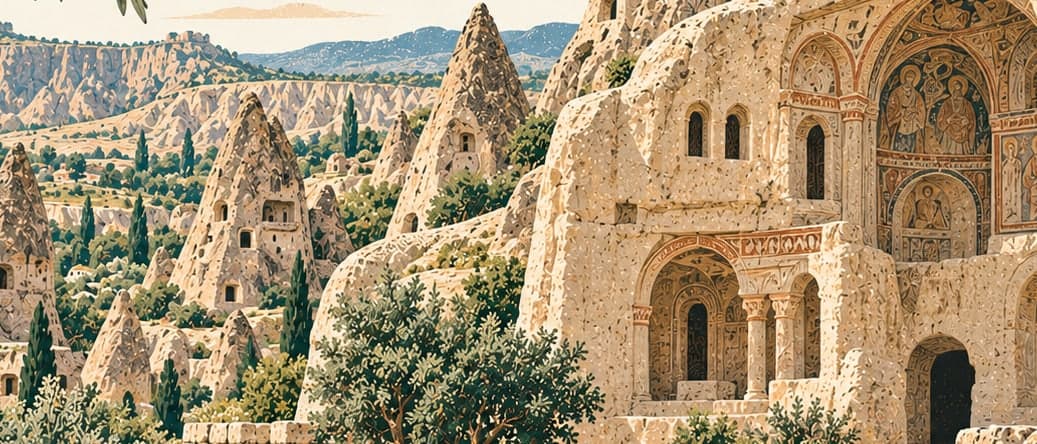
The Dark Church at Göreme is a monastery complex dated to the end of the eleventh century. Because so little light reaches the inside, its frescoes have survived in excellent condition, and the scenes uncovered during restoration count among the highest points of Cappadocian painting.
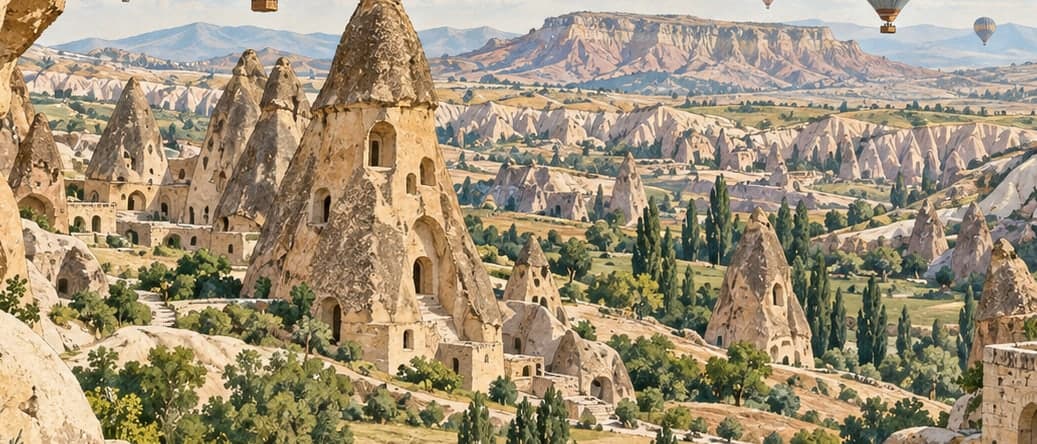
The rock it is cut into was formed over a long stretch of geology. Tectonic movement beginning in the late Miocene, as the Afro-Arabian plate drew closer to the Eurasian one, brought heavy volcanic activity to Cappadocia over the last ten million years, laying down ignimbrite, volcanic ash and lava flows across a wide area. Erosion shaped this soft tuff into the fairy chimneys and valleys around Nevşehir, and because the stone is easy to work the people of the region cut houses, monasteries and churches into it.
Cappadocia served as a refuge and a monastic centre for early Christians fleeing Roman pressure. In the fourth century the teaching of Basil of Caesarea hastened the move from the hermit's life to life in community, and places of worship were cut into the tuff.
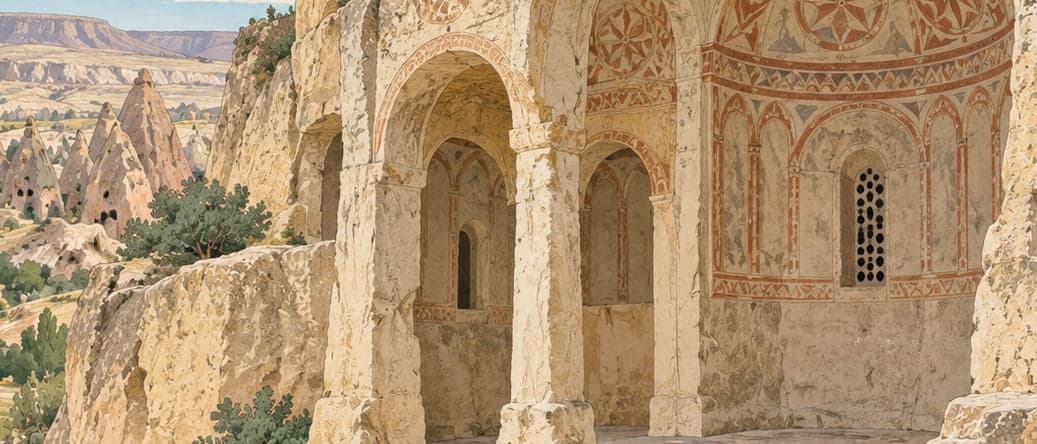
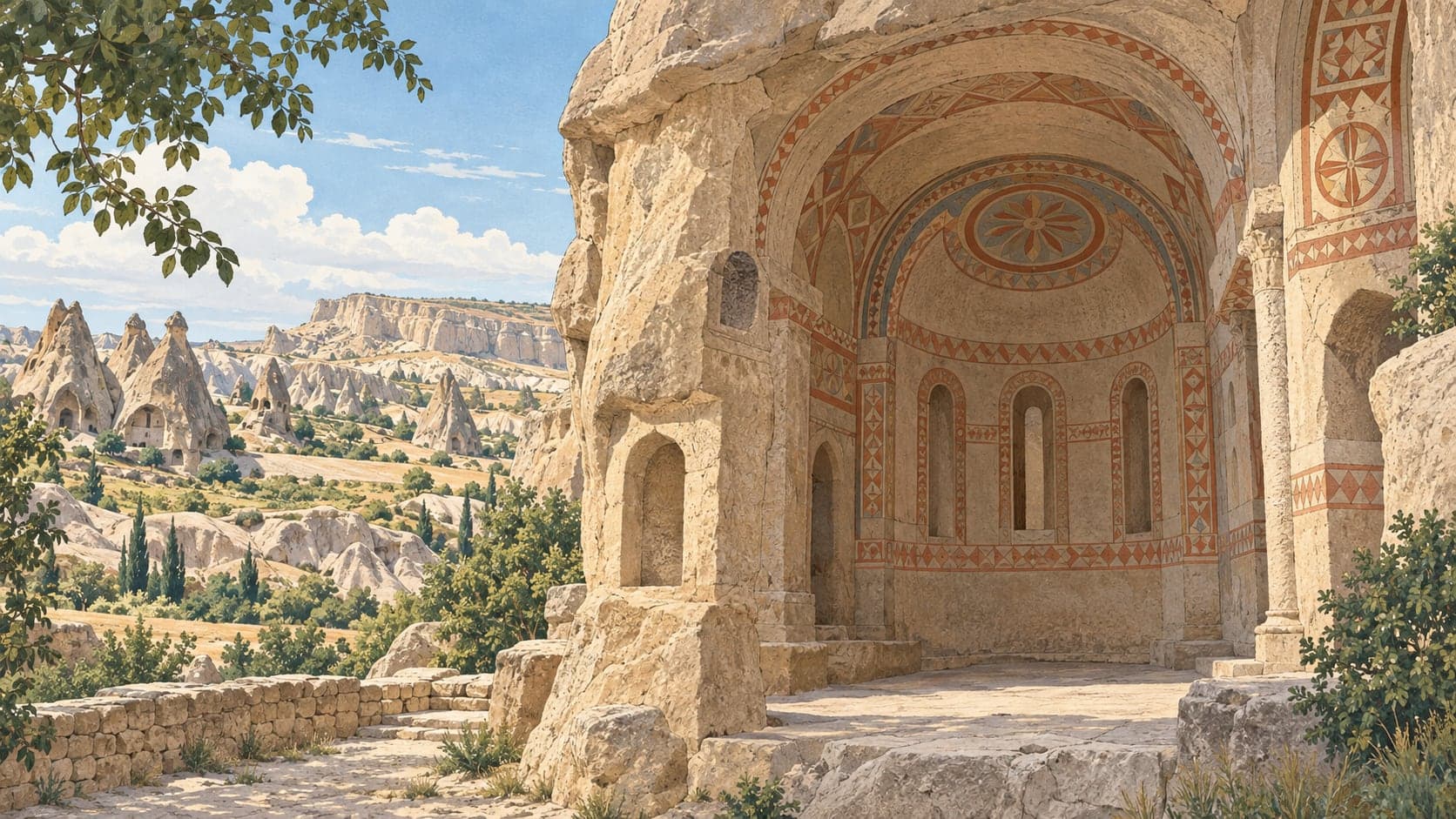
The painting in these churches follows the course of Byzantine art. During the iconoclast years between 726 and 843 figurative work was forbidden and decoration was held to crosses and geometric motifs. After that, and especially in the churches cut in the tenth and eleventh centuries, rich frescoes depicting scenes from the Gospels make up some of the finest Byzantine work anywhere — and the Dark Church, sheltered from the light, is where that survives best.