Guide
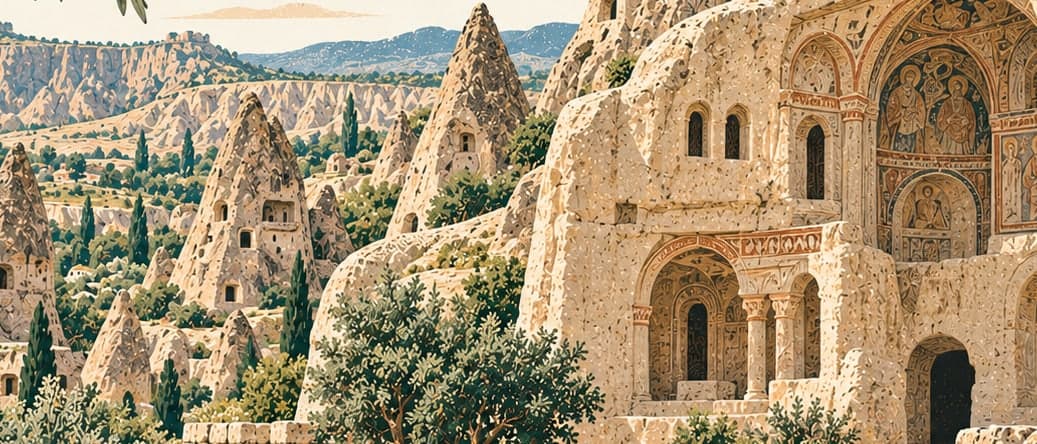
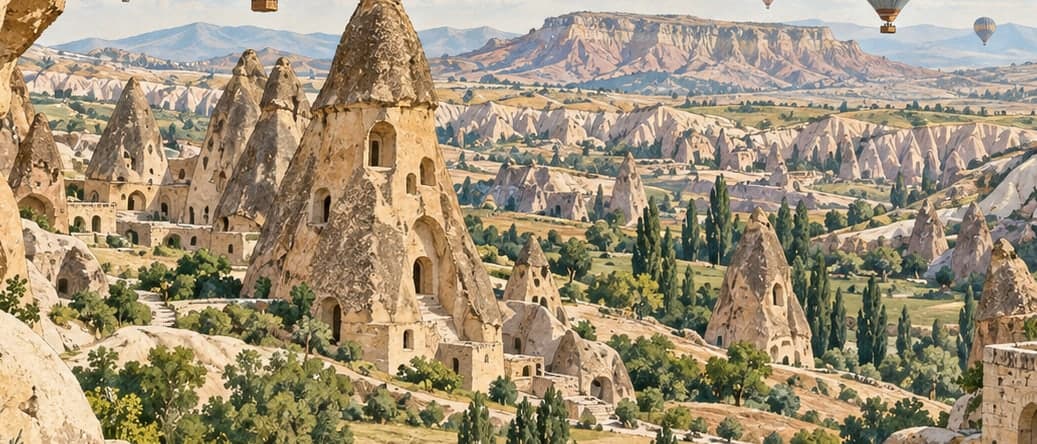
El Nazar is cut into a single free-standing cone of rock on the east side of the flood channel between Göreme and Avcılar, standing about fifteen metres above the lowest ground around it. Isolating the church this way gave its builders something the valley's cliff-face chapels do not have: all four sides, and therefore a shape that reads as a building rather than a doorway. The Ministry's inventory record dates the work to the 10th–11th centuries and assigns it to the Byzantine period.
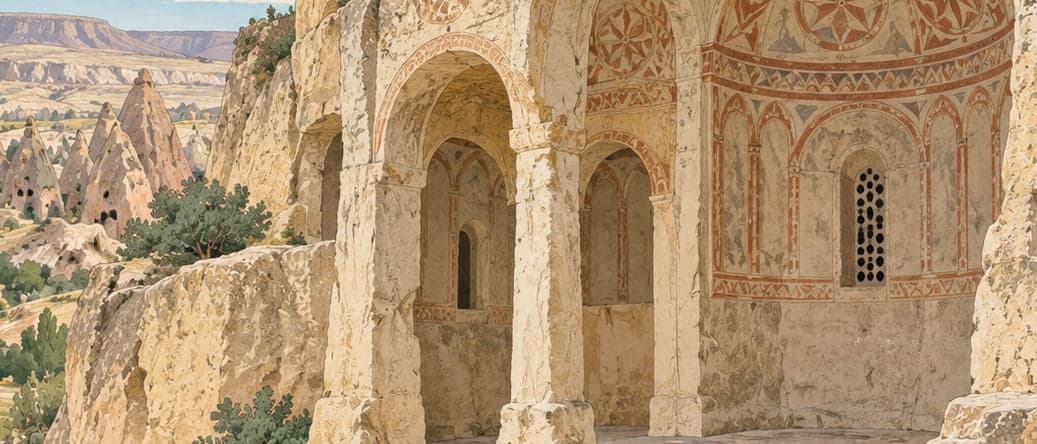
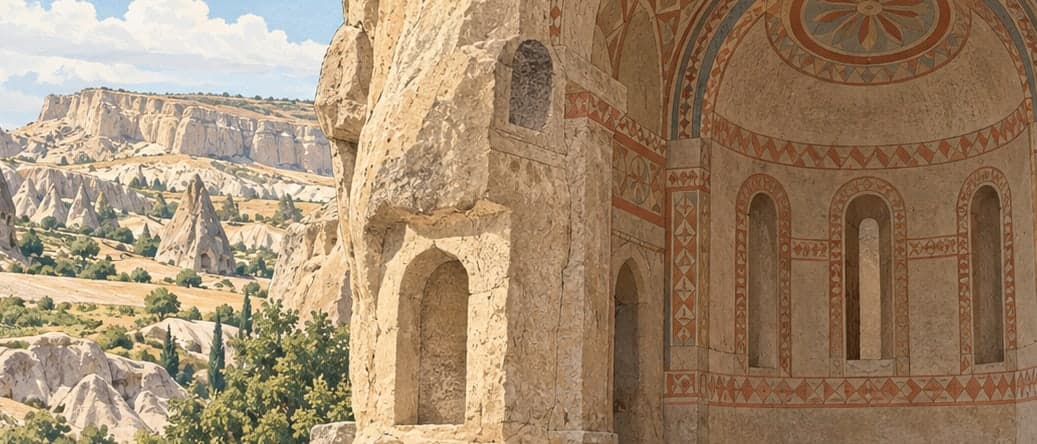
The plan is a T. Three barrel-vaulted arms open into a square central bay covered by a dome, and the apse at the east end is horseshoe-shaped. The main church floor is entered from the west; below it, reached separately from the south, is a further chamber, and above it a small room. The building is registered at the highest monumental protection grade and has been repaired; the registration decision dates from 30 September 1989.
The interior walls carry frescoes in an archaic style dating from the 11th century, showing scenes, miracles and the passion from the Gospels. The inventory notes that these paintings resemble those in other churches of the valley but survive more completely, and that while the palette is broadly the same, orange appears here and there in a way it does not elsewhere. The church stands within the area of the Göreme Open Air Museum in Nevşehir.