Guide
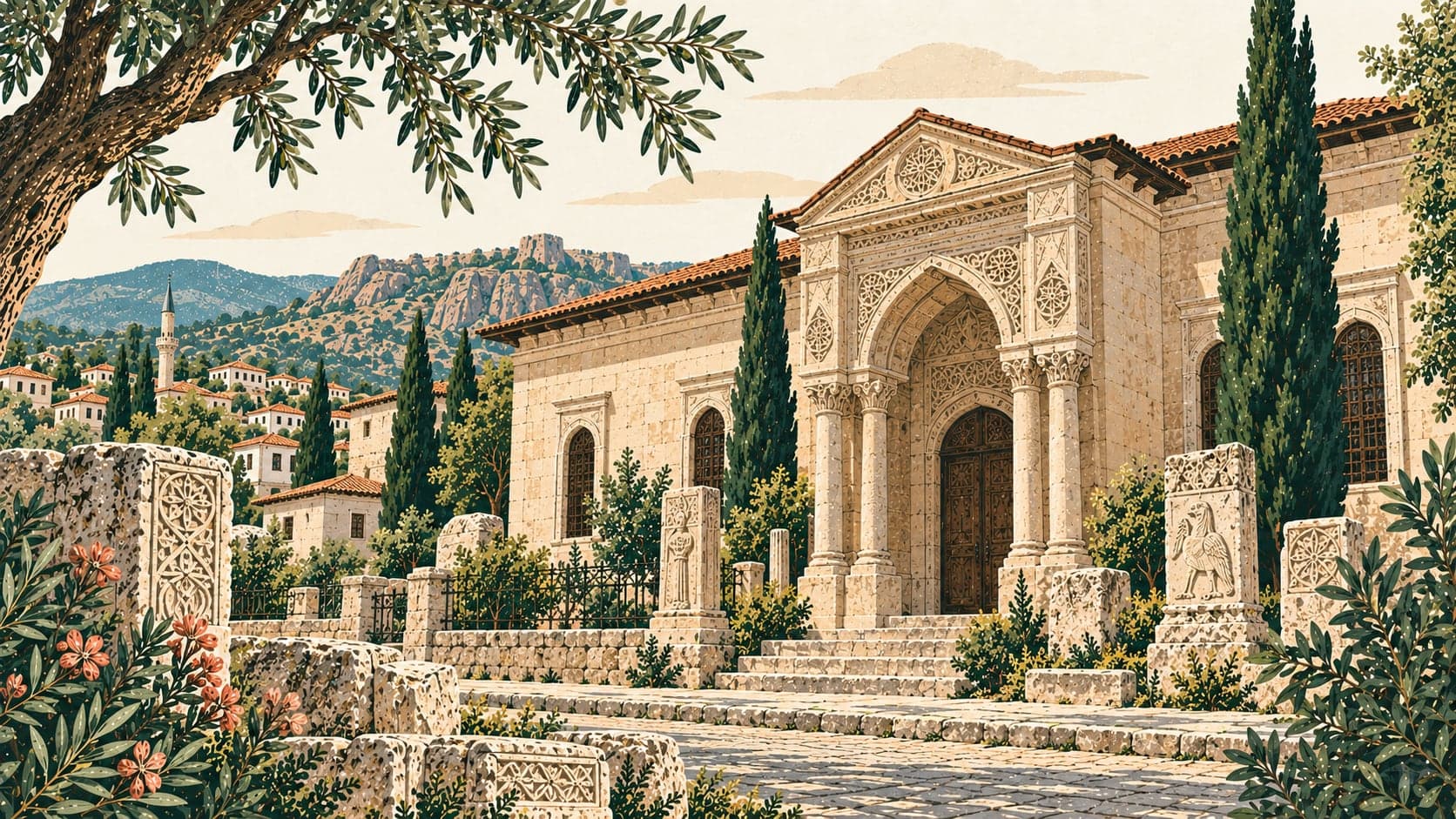
The Karaman Museum stands behind the Hatuniye Medrese in Karaman and shows work from a long span of periods.
The idea of a museum came up in 1961 because of the sheer number of finds in the region. Through the efforts of the district governor of the day, Necati Tümay, and the mayor, Kemal Kaynaş, it began work in 1962 as a storage museum. Objects that had until then been gathered at the Karaman Library and Tourism Association were moved in 1963 to a building in the Karaman market, where they stayed until 1966.
As the collection grew and the objects were shifted from place to place, a building of the museum's own became necessary. Work on it began in 1970 and, after a long construction, the museum opened in its new home in 1980. The museum director, the archaeologist İlhan Temizsoy, did much to bring that about.
The building has two floors. The lower floor is laid out as a Karaman house, and the museum also holds display halls, stores, a photography room, a laboratory, exhibition rooms and the administrative offices.
The collection falls into two parts, archaeology and ethnography. The archaeological section runs from the Chalcolithic through to the late Byzantine period; the ethnographic section holds work of the Seljuk period, of the Anatolian principalities and of the Ottomans. In the garden stand stone works, chiefly Roman grave stelae along with Byzantine and Turkish-Islamic pieces.
Besides finds from Sısan and Gökçe Höyük there are objects of the Yortan culture, material from Gelindere in Mersin, Iasos in Muğla and the area around Adıyaman, and terracotta figurines, jugs, lamps and plates found at places in the Karaman region such as Taşkale, Bayır, Karacaören and Kazımkarabekir. Byzantine wooden lids and boxes are shown here too, and the Roman and Byzantine glass bottles are among the museum's notable holdings.
Coins make up the richest collection of all, rounded out by cylindrical stone seals of the early and late Hittite periods and Urartian bronze plaques. The body of a woman brought from the Manazan Caves is displayed in the archaeological hall; there is no firm evidence for when the caves were cut, but the small finds from them point to the Byzantine period.