Guide
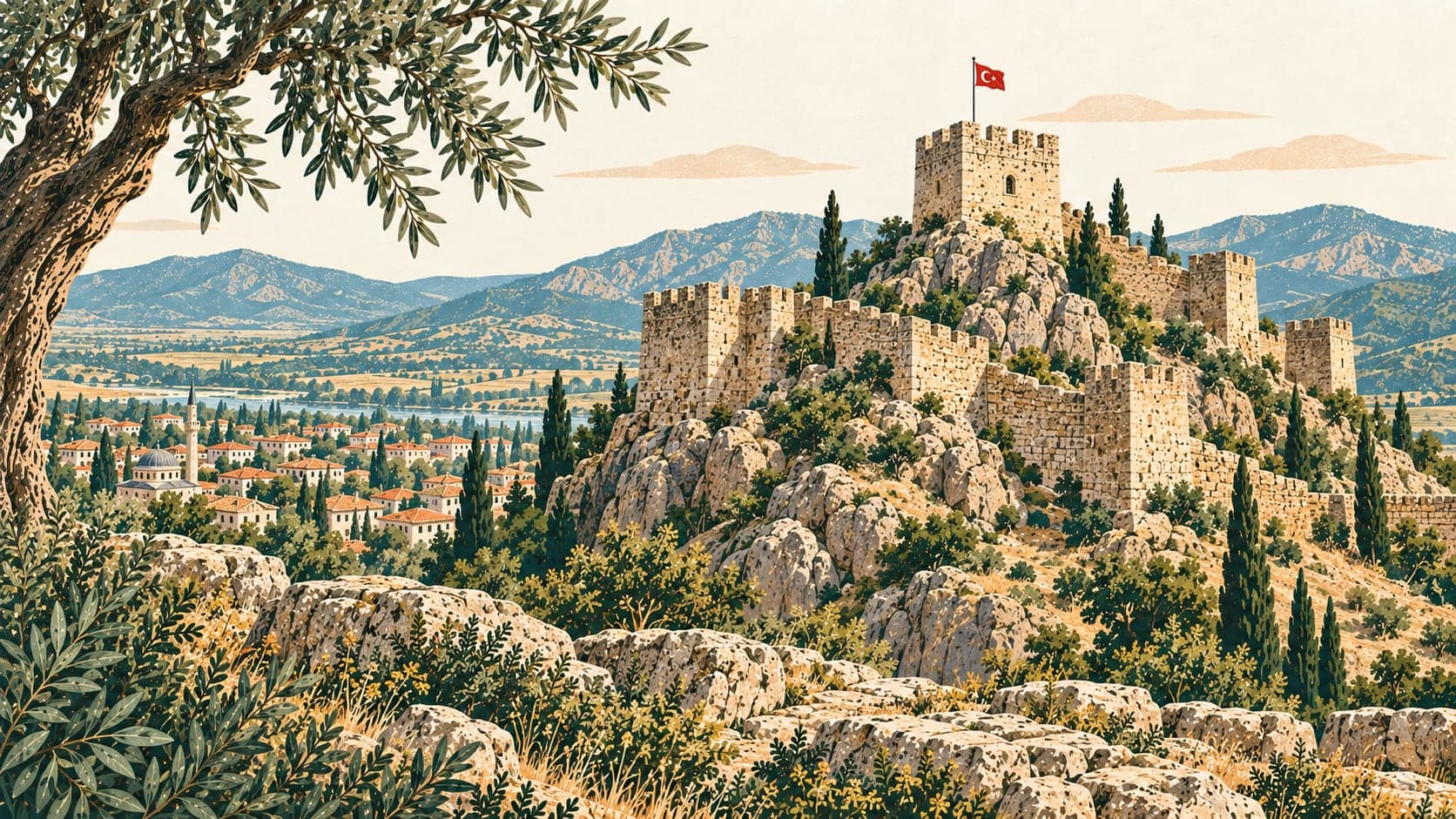
Karacahisar Castle is a Byzantine fortress built on the plateau beside the Porsuk stream, south-west of Eskişehir. The plateau stands 1,010 metres above sea level, and the castle, ringed by its walls, covers a space of some 200 by 300 metres.
The border of the Anatolian Seljuk state reached as far as Karacahisar. The lord of the castle paid tribute to the Seljuks, as the other Byzantine lords in the region did, and on that footing the peace between the Byzantines and the Turks held.
When the family of Ertuğrul Gazi came into the region, Greeks were living at Karacahisar. Ertuğrul was troubled by them, asked leave of Alaeddin Keykubad I to make a campaign, and took the area. Alaeddin Keykubad changed the name of Eskişehir to Sultanönü and gave it to Ertuğrul Gazi.
Osman Bey, born in 1258, took the head of the tribe in 1281 on his father's death. He took the Byzantine fort of Kulaca Hisar in 1284, Karacahisar in 1288 and Bilecik in 1298. Turks were settled in the area and the place was given the name Karacaşehir. In 1299 Osman appointed a judge and a prayer leader, had the Friday sermon read in his own name and had coins struck. Once Karacahisar was his, he pushed on into Byzantine land and widened the borders of the emirate, and the taking of this castle counts for a good deal in the founding of the Ottoman state.
The first excavations began in 1999 under Professor Halil İnalcık and continued as surface surveys under Professor Halime Doğru, carried out by academics from the archaeology, art history and history departments of the faculty of letters at Anadolu University. In 2000 and 2001 a team under the Eskişehir Archaeological Museum, advised by Professor Ebru Parman, cleared the site and laid out its surroundings. Permission was obtained in 2002 for a ministry excavation, and digging under Professor Parman went on until 2005, when it was broken off because of her health.
The 2009 season was carried out as clearing and excavation under Dursun Çağlar, director of the Eskişehir Archaeological Museum, with Professor Erol Altınsapan of the art history department at Anadolu University as scientific adviser. The work turned up glazed and unglazed sherds from vessels of various kinds — rims, bases, handles and body pieces — along with thirteen coins.