Guide
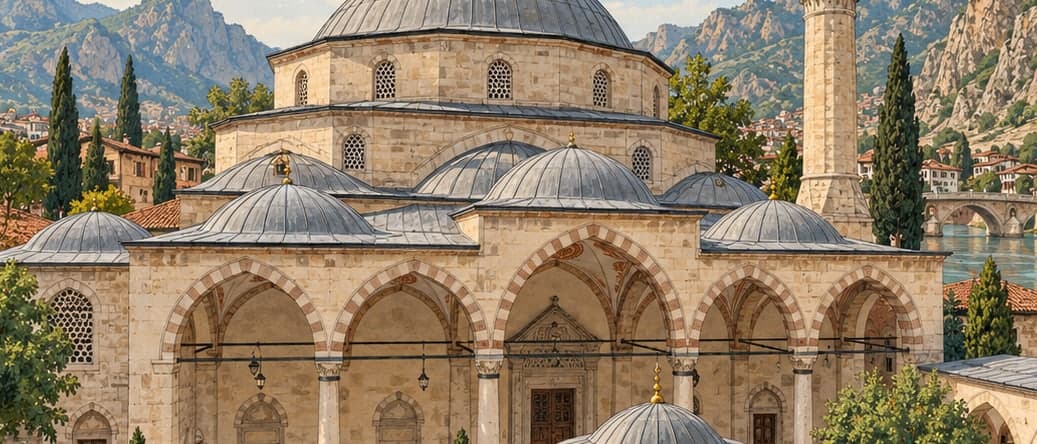
Also called the Büyük Ağa medrese, this was built in 1488 by Hüseyin Ağa, the kapı ağası — chief of the palace gate — of Sultan Bayezid II. Its plan departs from the classical Ottoman medrese, and the portal states that the octagonal scheme familiar from Seljuk funerary monuments was applied here for the first time in a building of this kind.
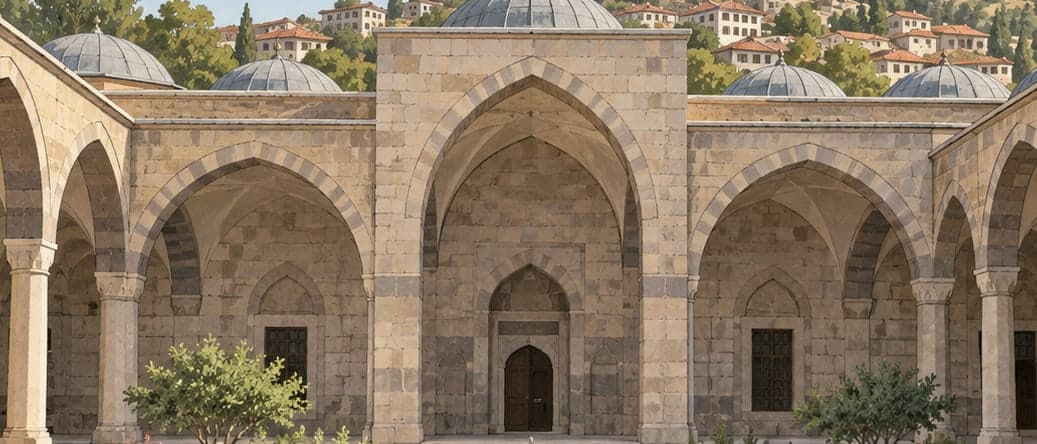
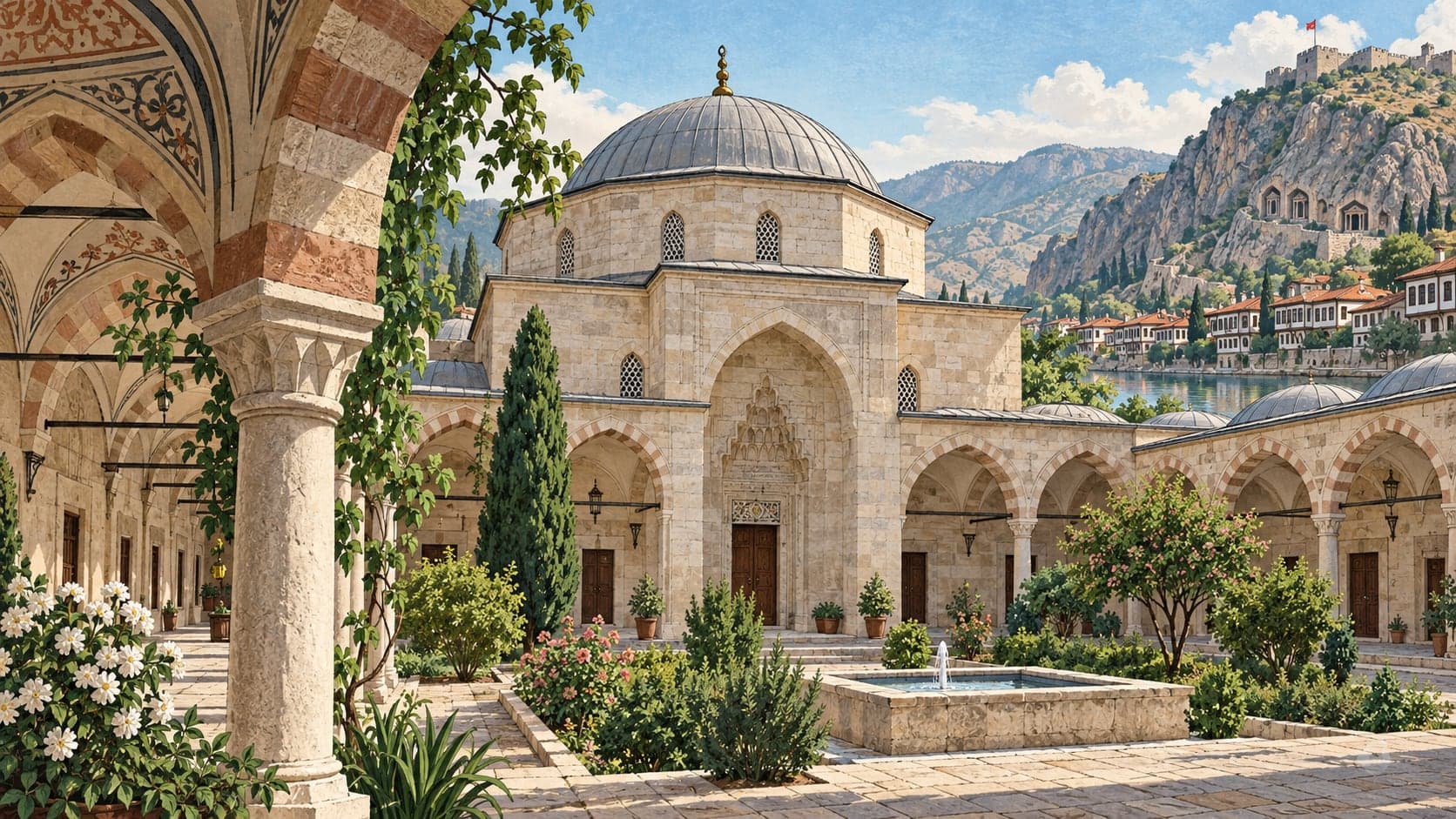
Entry is through a large segmental-arched door on the north-west side, followed immediately by a short passage with rectangular niches on either hand. The octagonal courtyard at the centre is surrounded on each of its eight sides by four columns carrying pointed arches of the type known as the Bursa arch, which does a great deal for the interior. From these vaulted arcades one passes into the students' cells, each opening outward through a single window in a rectangular marble frame and covered by a dome on an octagonal drum.
On the south side is the lecture hall, larger than the students' rooms and under a higher dome, which also served as the mosque. The walls combine rubble stone and brick: three courses of brick in horizontal bands with rubble filling the space between.
This was where higher teaching was done in Amasya. It belonged to the group of medreses ranked at sixty, and many scholars taught here — Taşköprülüzade Mustafa Müslihiddin Efendi the best known among them. It lost its old vitality toward the end of the nineteenth century and was left unusable after earthquakes; the restoration of 1978 gave it the form it has now.