Guide
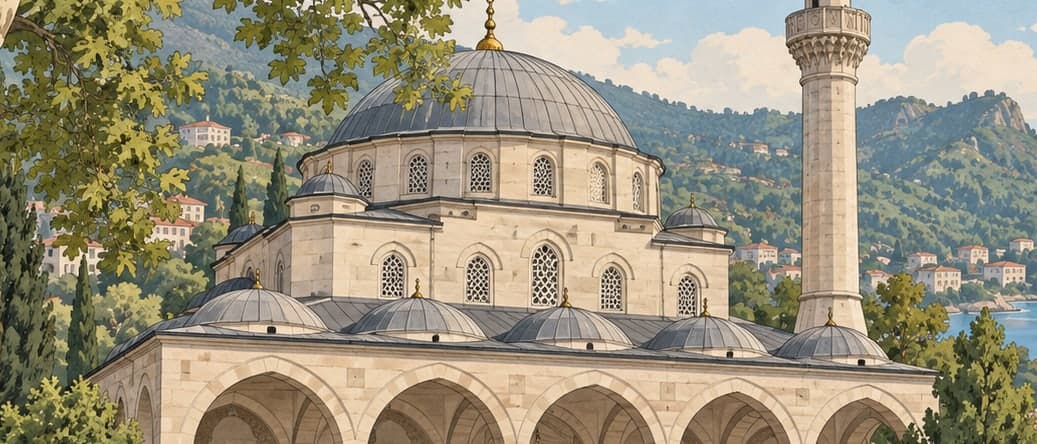
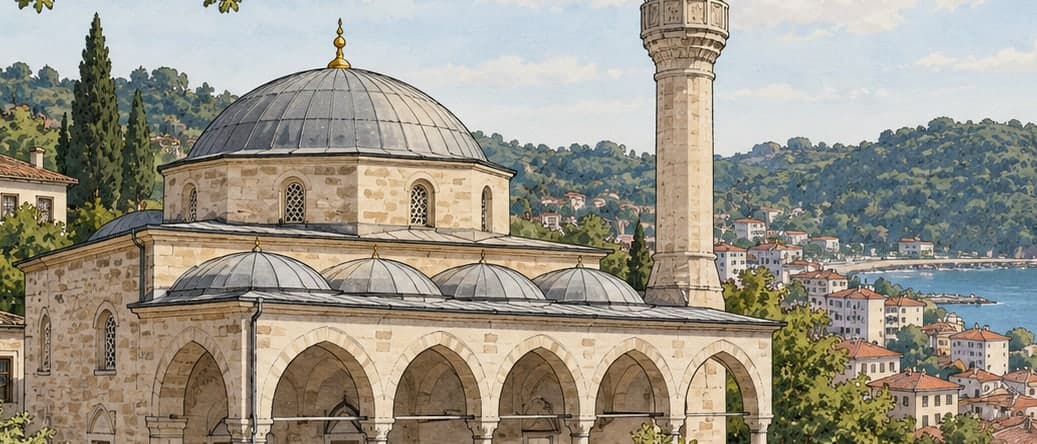
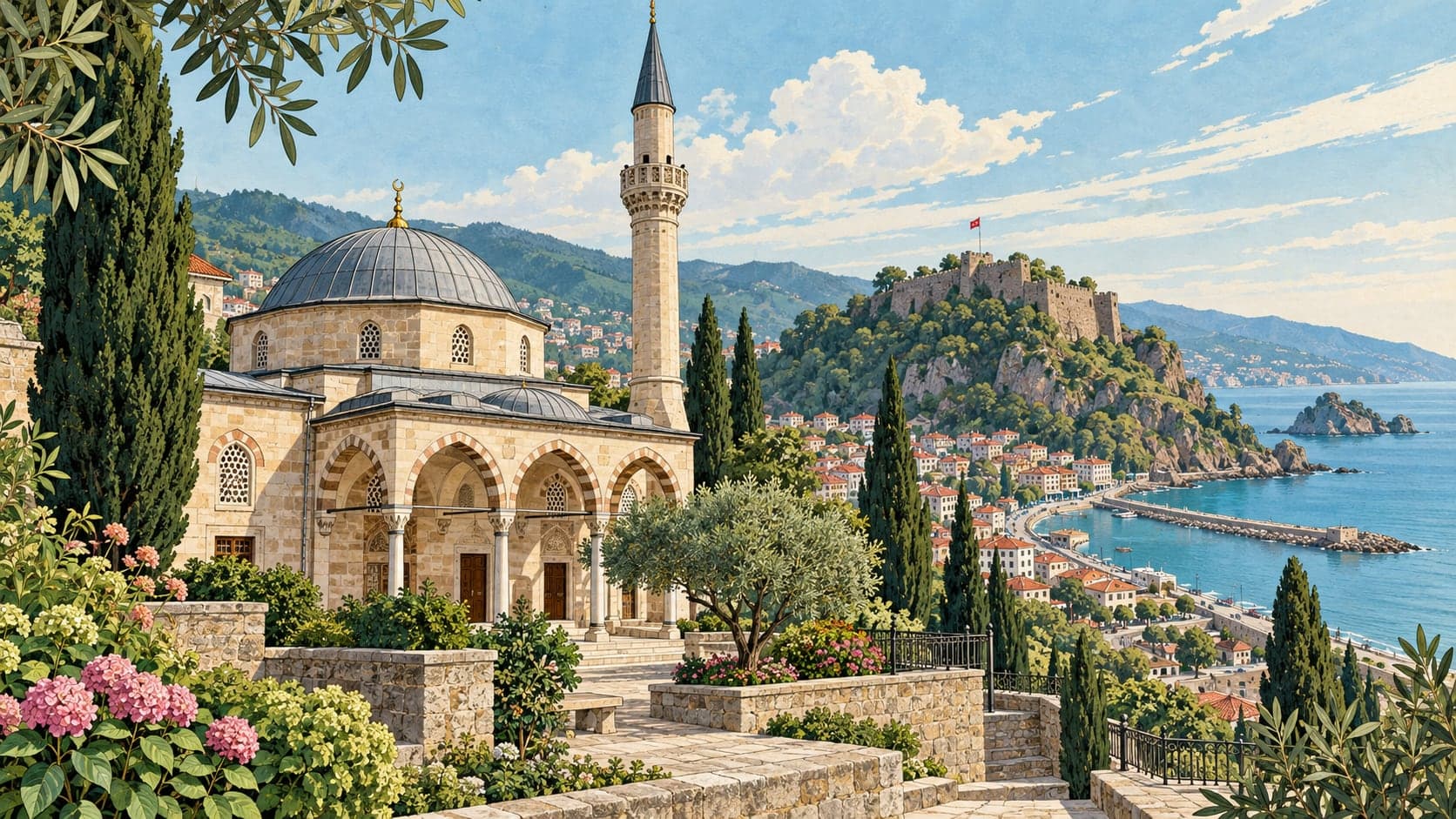
The mosque stands on a platform above the street: square in plan, cut stone, under a single central dome. It was registered as a cultural property requiring protection by decision of the ministry's high council dated 14 February 1986.
There is only one way in, on the north — a doorway with a stone lintel and a depressed arch, flanked by slender columns. This is an Ottoman building put up under western influence, and the carving on that doorway of monolithic stone columns, like the ornament inside, carries the mark of the baroque. The mihrab and the minbar are thought to be original because they show the features of the same period. Curving and circular ornament covers the whole face of the mihrab; the minbar is wood, made in the applique technique.
The minaret rises on the north-east face, cut stone in keeping with the main building, with a single balcony. Its base is polygonal, and the balcony carries meander, egg-and-dart, dentil and palmette motifs. It is entered from outside through a round-arched door.
Three dates and three builders lie behind the mosque as it stands. It is thought to have been built first in the Ottoman period by Hacı Muhiddin Ağa, in the Lonca quarter where the Muslims of the town lived. The inscription over the entrance shows that it was rebuilt in 1830 by Dizdarzade Ematullah Hatun. Its present form came from a second rebuilding in 1913 by Hacı Mustafa Efendi, one of the notables of the town, and the fountain against the garden wall was built between 1921 and 1924 by Eşref Efendi of the same family.