Guide
The İzmir Archaeological Museum shows the works recovered through excavation and research in İzmir and western Anatolia. The collections run from the Bronze Age to the Roman and Byzantine periods and take in stone, marble and small finds. The museum continues the museum work that began in İzmir in the last Ottoman period, and in the republican era it was organised under the Ministry of Culture and Tourism to conserve, record and present archaeological material.
The idea of founding an archaeological museum in the region was put forward by Aziz Ogan, who came to the area in 1914 as inspector of antiquities for the Aydın and İzmir district. The work stopped during the First World War and the war of independence that followed, and began again after the republic was declared.
The museum was first founded in 1924, at Mustafa Kemal Atatürk's wish, in the abandoned church of Aya Vukla in the Basmane quarter, under the name Museum of Antiquities, and after three years of gathering and compiling material it opened to the public in 1927. Selâhattin Kantar succeeded Aziz Ogan as director, and during his time, in 1943, the museum took the name İzmir Archaeological Museum. In 1951 it moved to the culture pavilion of the education ministry inside Kültürpark, and since 1984 it has been in its modern building in Bahribaba Park at Konak.
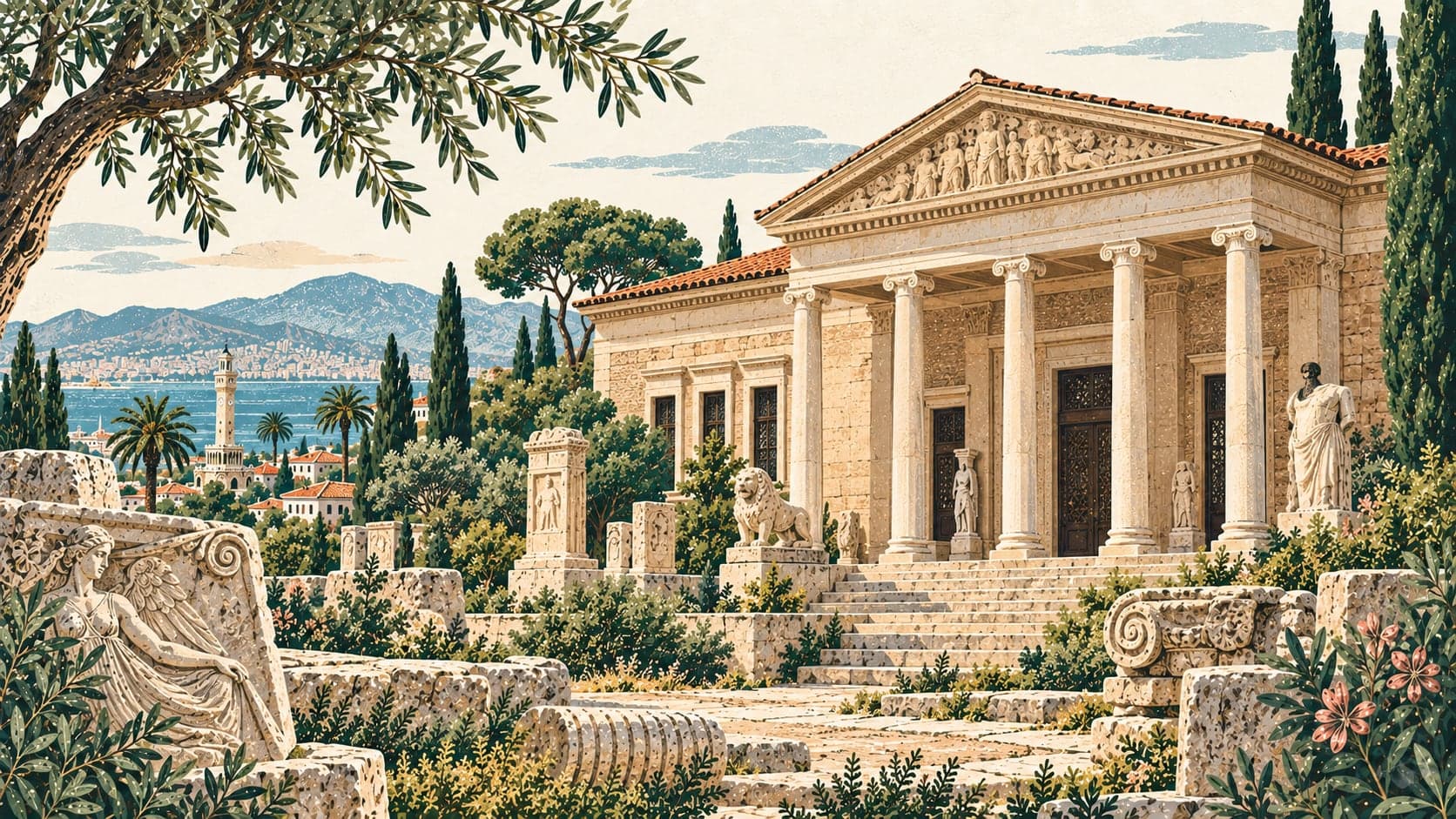
Finds from excavations across the Aegean region — at Bayraklı, the old Smyrna, and at Ephesus, Pergamon, Miletos, Klazomenai, Teos and Iasos — are displayed in the museum and in its garden, and they throw light on the history of western Anatolia.
The museum holds a hall of stone works, a small treasury room and the Ekrem Akurgal hall of ceramics. The stone hall is given mostly to Roman statues of men and women; among the pieces that draw attention are a bust of Hygieia, goddess of health, and the bronze running athlete. In the treasury room coins of the Roman and Ottoman periods are arranged in order of date. Opposite the museum, in a much older building, stands the İzmir Ethnography Museum.
The display halls are on the second and third floors, the administrative sections on the first, and on the ground floor are the stores where all the material is kept in its separate categories, along with the restoration laboratory and the library.
Visit status for this record: open to visitors.
Entry fee
- Single entry to the museum or site · Local
- MüzeKart
- Single entry to the museum or site · Foreign
- €4