Guide
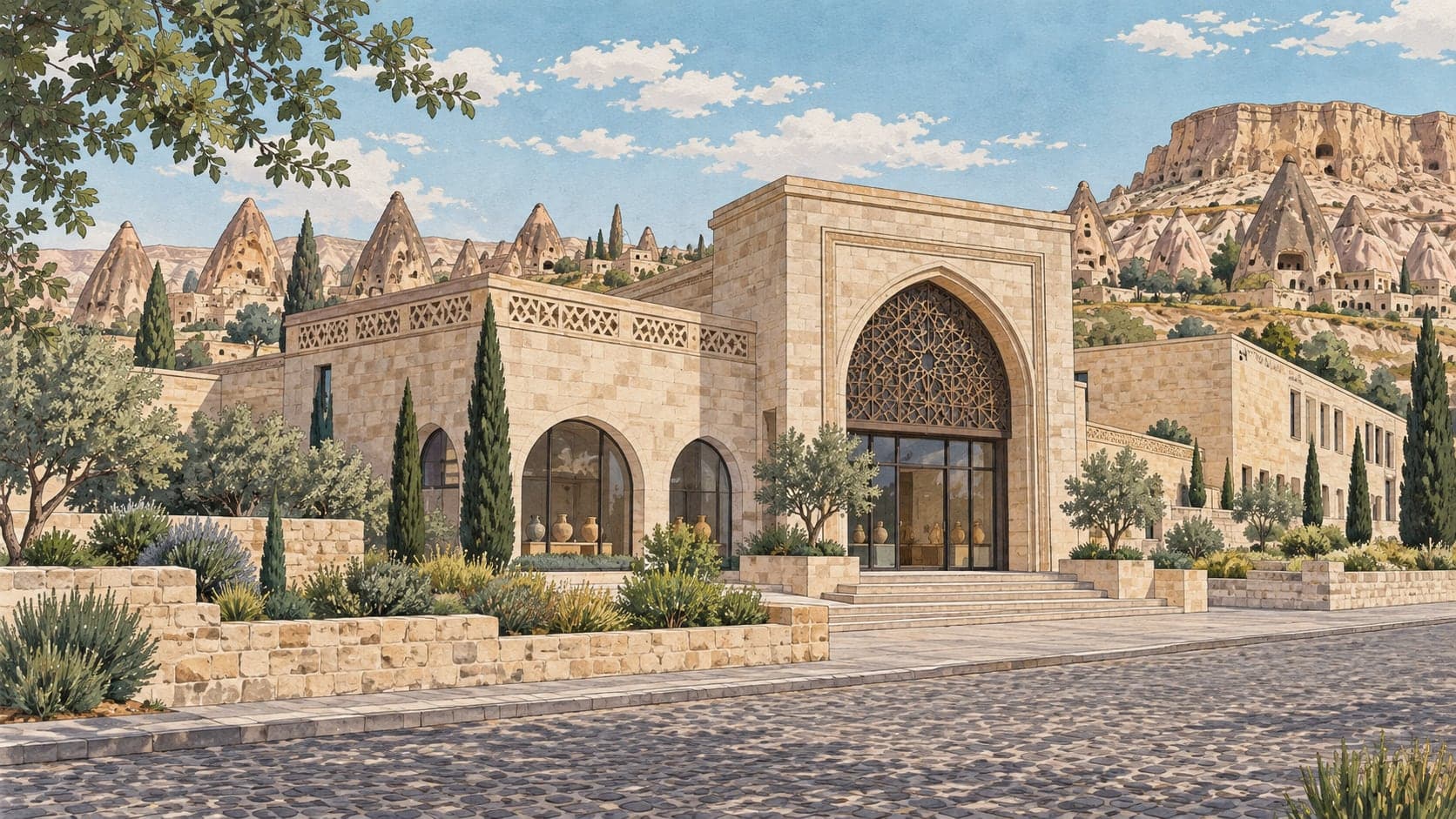
Güray Museum, also called the Cappadocia Underground Ceramics Museum, lies in the Avanos district of Nevşehir. It was built underground by cutting into the rock, and its collection is of ceramics; it covers both archaeology and modern art. The galleries occupy 1,600 square metres twenty metres below the surface, and the museum is described as the first underground ceramics museum in the world.
Building began in 2009 on the initiative of the businessman Güray Tüysüz, was finished in 2012, and the museum opened to visitors in 2015. It carries its founder's name.
The Hall of Ancient Works holds ceramics of periods running from the Copper Age to the Ottomans, arranged in order of time to show how the ceramic culture of Anatolia developed — a history of potting that has gone on in Anatolia since the Hittites. The hall is laid out on a star plan, with a circular space at the centre, compartments forming the arms of the star, and a tunnel running around them. The Hall of Modern Works, also star-shaped, shows contemporary and traditional work by Turkish ceramic artists.
The exhibition halls serve as an art gallery where artists working today in painting, sculpture, ceramics and photography show their work.
There is also a ceramics workshop within the museum, and what is made there is sold in the museum shop. The workshop lies on the visitor route and is open, so visitors can try making ceramics at both modern and traditional potters' wheels.
The collection holds earthenware, perfume bottles, mother goddess figurines, jewellery of various kinds, Assyrian tablets, oil lamps, İznik tiles of the fifteenth century and Kütahya tiles of the nineteenth, and Ottoman pipe bowls. Among the notable pieces in the archaeological section is a 3,200-year-old pot decorated with a deer, found in a town near Van.
Two Old Assyrian tablets in cuneiform, bought by the museum in 2014 and 2016, are among the older works on display. One is dated to 1809 BC and concerns a payment made; the other lists payments made by different people for the neck, hide, breast and shoulder of an animal. A further Assyrian tablet in the museum is a Neo-Assyrian document concerning a barley debt owed by a woman named Atiya.
Twenty oil lamps of the Hellenistic, Roman and Byzantine periods are recorded in the inventory. The earliest of them date to the end of the fourth and the beginning of the third century BC, the latest to the second half of the fourth century AD.