Guide
Gökgöl Cave, 3,350 metres long counting its branches, is the tenth longest cave in Türkiye, and with 875 metres of walkway it has the largest visitable area of any cave in the country. It lies on the Zonguldak–Ankara road, four kilometres out of Zonguldak, which makes it very easy to reach.
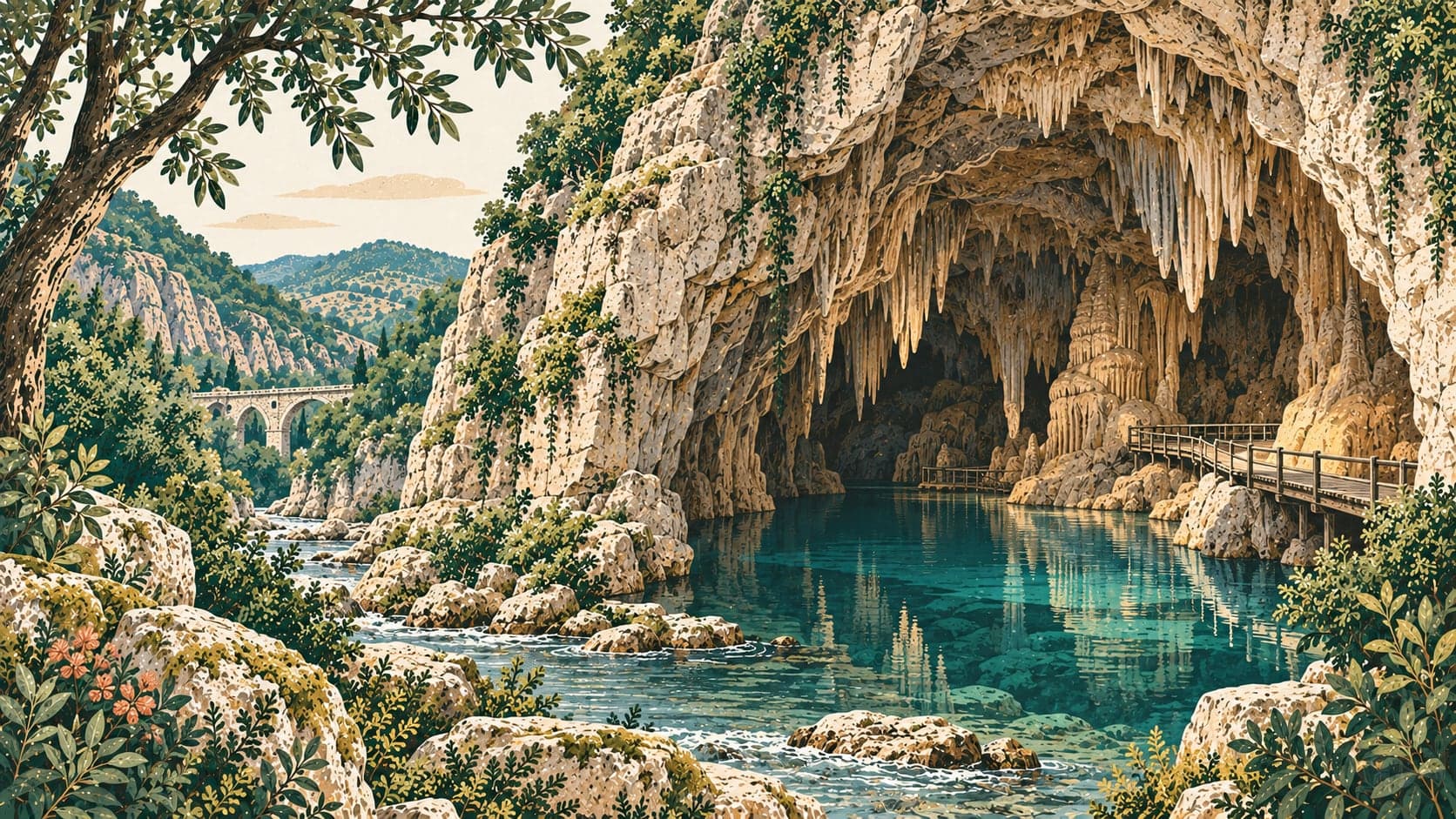
Every kind of dripstone is found inside — stalactites, stalagmites, columns, flag formations and soda straws — along with an underground stream whose flow rises in the wet season. The stream empties into the Erçek stream through a natural siphon.
The cave is dated to the Carboniferous and is about 350 million years old. Twelve hundred metres of it were explored in 1975 by the Turkish caver Temuçin Aygen with the English cavers Chris Mauer and Harvey Lomas, and a further four hundred metres in 1977 by the Paris speleology club.
The cave was opened to visitors in 2001, and according to the official records it drew 218,000 people between 2001 and 2008. It is open between 9.00 and 18.00 and has a car park, snack kiosks and souvenir shops. In 2014 it was flooded and stayed closed until 2016; after the damage done by water and mud to the infrastructure was made good and measures taken against future flooding, it reopened in May 2016.
The first 875 metres from the entrance have been fitted with a walkway, lighting, bridges and a viewing platform so that visitors can go through. The sections between the entrance and the great collapse chamber carry names: the fossil entrance, the asthma hall, the hall of wonders and the hall of miracles.
There is very little movement of air in the cave; a draught is felt only where the openings are low and at the siphon.
No endemic animals live here. Between the entrance and the siphon are flatworms and a subspecies of black molluscs, along with blind cave millipedes, European cave spiders and cave bats. Beyond the siphon no animals have been observed. Fish of ten to fifteen centimetres live in the pools formed by the underground river.