Guide
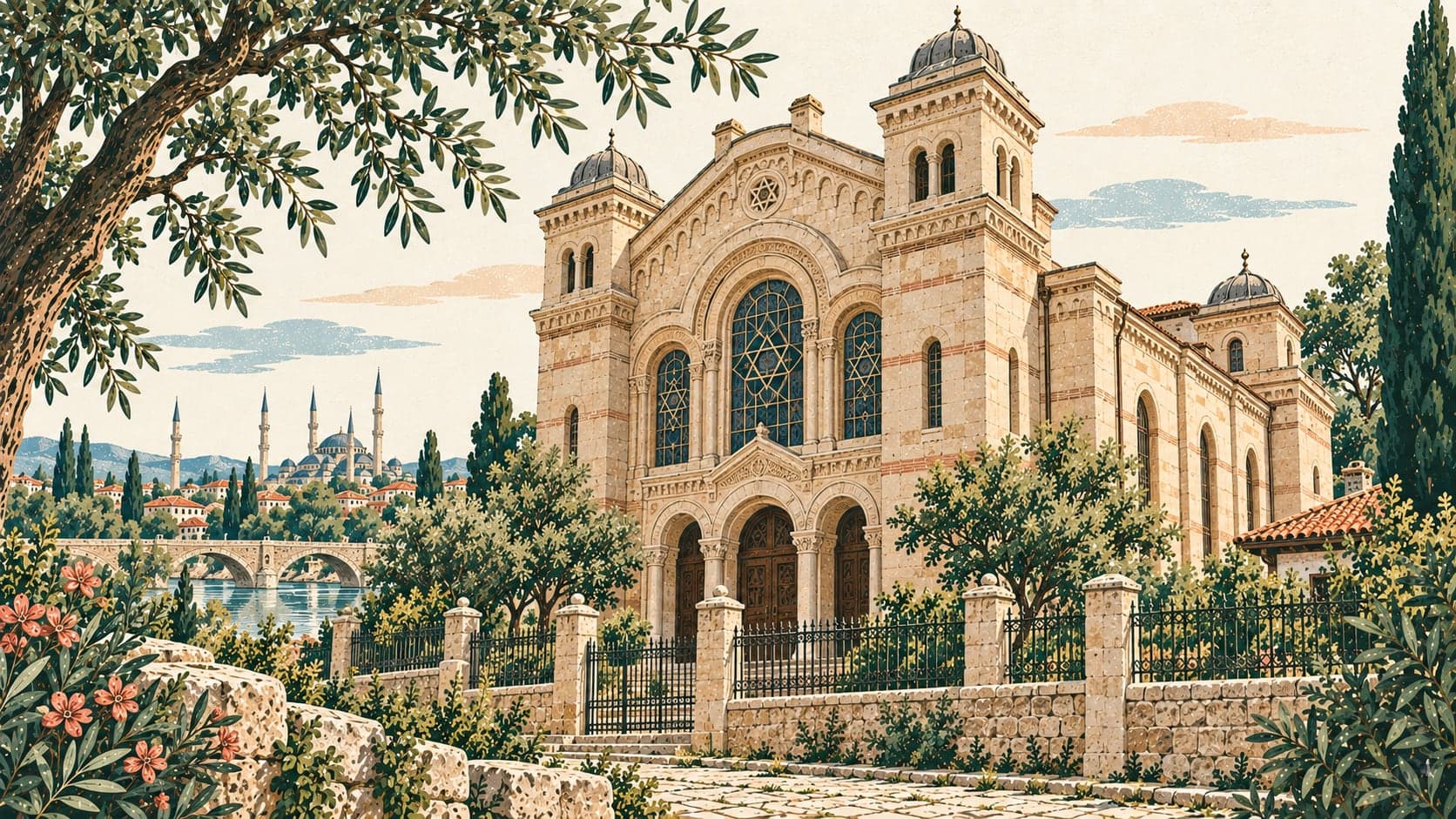
The Great Synagogue of Edirne is described by the source as the largest synagogue in Türkiye and the third largest in Europe. Its history reaches back to the Sephardic community that fled persecution in Europe and took refuge in the Ottoman empire in 1492.
When Manuel I of Portugal issued a decree in 1497 ordering the Jews in his kingdom to choose between conversion and leaving the country, some of those who left reached Ottoman territory and settled in Edirne. In that period the number of synagogues founded by Jews in the city reached thirteen.
All thirteen were damaged in a great fire in Edirne in 1905, after which it was decided to build one large synagogue in their place. It was rebuilt by decree of Abdülhamid II and came back into use in 1907, on the eve of Passover. The French architect France Depré designed the building, drawing on the Leopoldstädter Tempel in Vienna.
One of the synagogues lost in that period, which no longer exists in Edirne, belonged to a congregation known as the Portuguese community, who were able to carry on here the rites and services they had been used to in the country they came from. A tale attached to it holds that during a chant sung in that synagogue the spirit of Israel ben Moshe Najara — one of the musicians who first worked to adapt synagogue music to the Turkish modes — appeared in splendour above the building.
The Great Synagogue remained open for worship until 1983. As the Jewish population left Edirne it fell out of use and towards ruin. Ownership passed to the Directorate General of Foundations in 1995, restoration was begun by decision of that directorate in 2010, and the building was opened for use again on 26 March 2015, with representatives of the state and members of the Jewish community present. The Anoten prayer was said according to Sephardic custom at the opening and at the first wedding held in the synagogue afterwards.