Guide
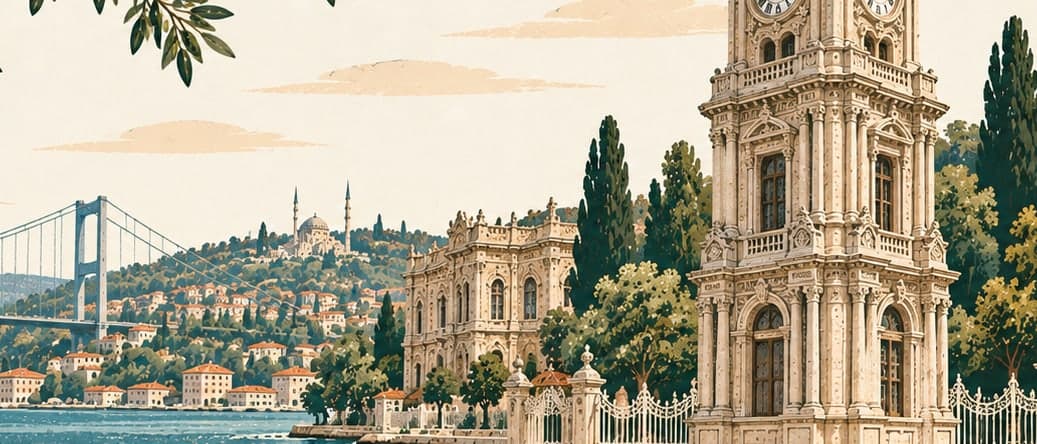
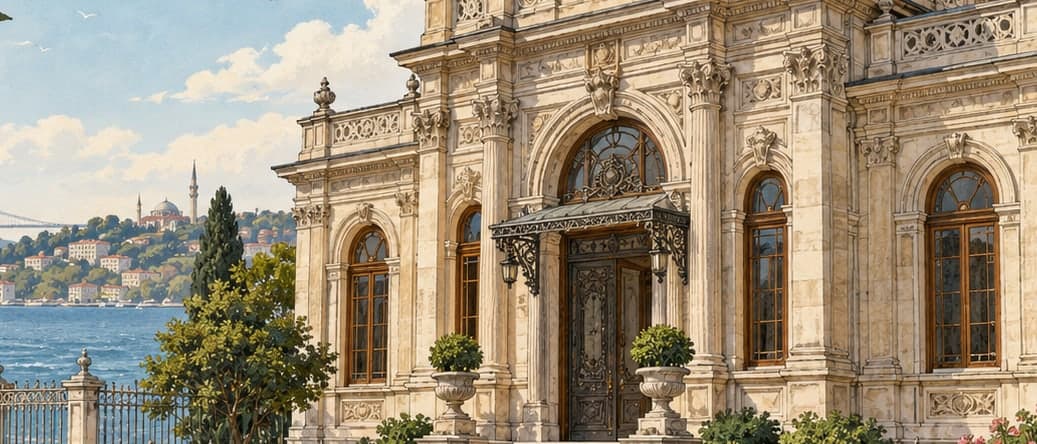
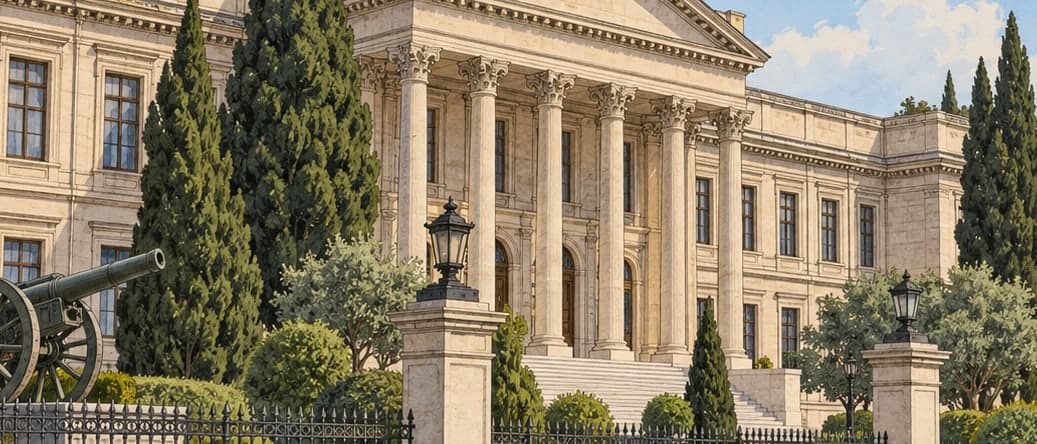
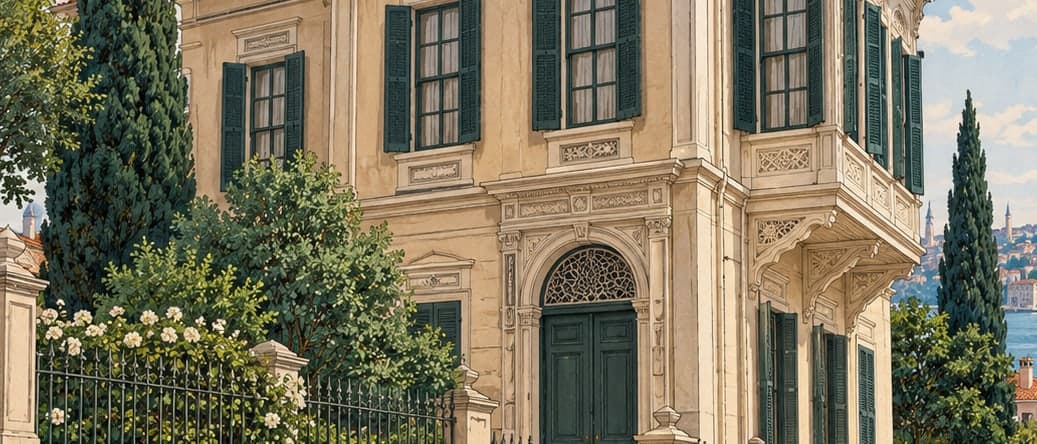
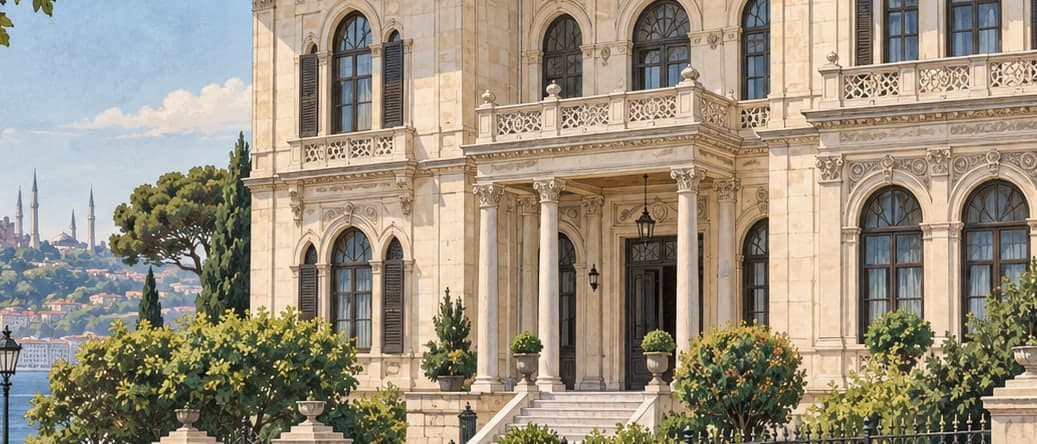
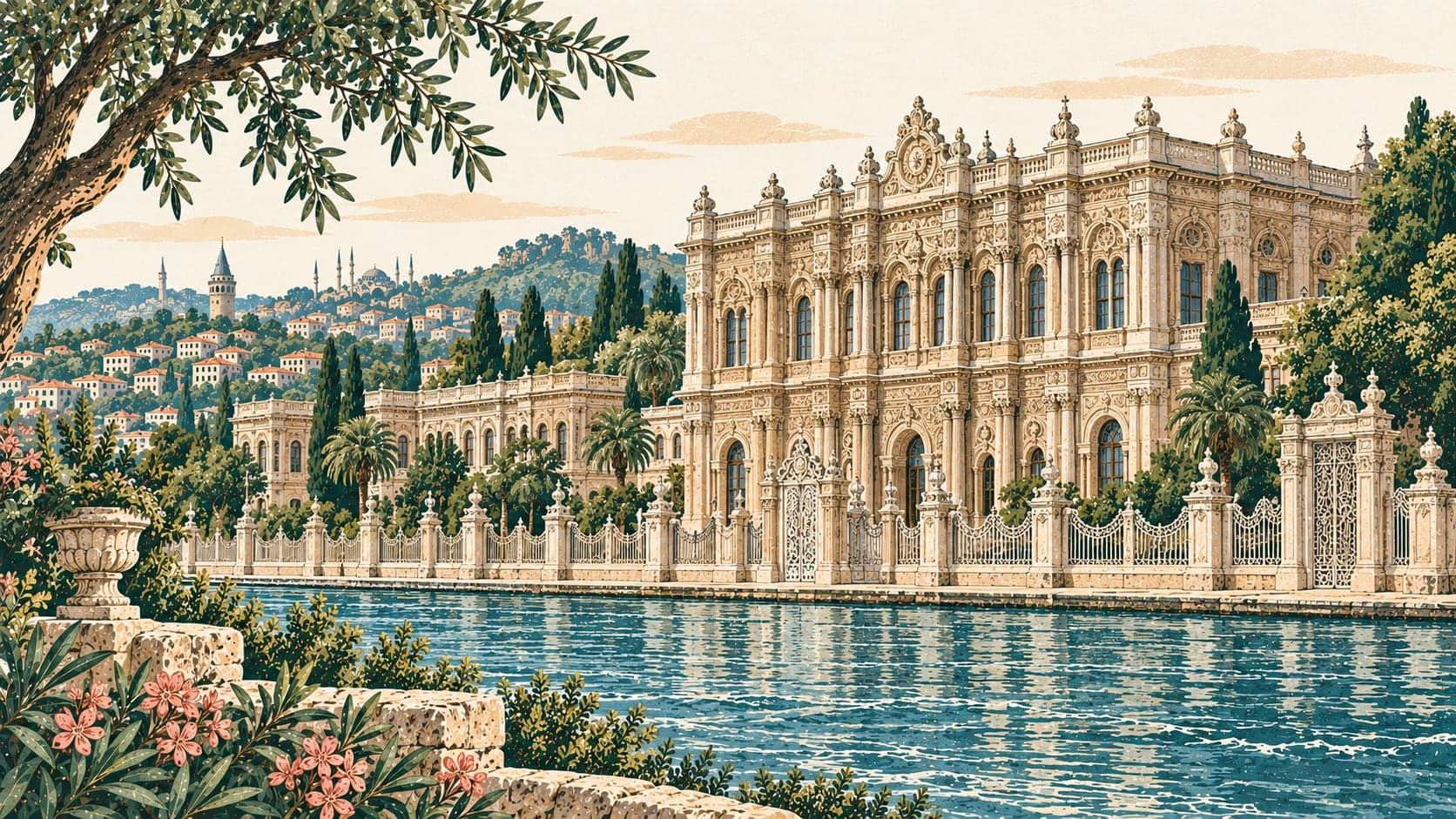
Dolmabahçe Palace stands on 250,000 square metres between Dolmabahçe Caddesi and the Bosphorus in Beşiktaş, İstanbul, on the left bank as you come in from the Sea of Marmara, across from Üsküdar and Kuzguncuk. It was built for Sultan Abdülmecid between 1843 and 1856, and is a museum today.
Four centuries ago the ground it occupies was a large bay of the Bosphorus where the Ottoman grand admiral anchored his ships and where traditional naval ceremonies were held; in time it silted into marsh. Filling began in the seventeenth century and the bay was turned into a royal garden for the rest and pleasure of the sultans. The group of pavilions and villas built in that garden at various dates was long known as the Beşiktaş Shore Palace.
Western influence entered Turkish architecture towards the second half of the eighteenth century, and the decorative manner called Turkish Rococo began to show itself in the neo-baroque pavilions, villas and fountains of the period. Selim III was the first sultan to have buildings in the western manner put up on the Bosphorus, commissioning a villa at the Beşiktaş palace from the architect Antoine Ignace Melling and enlarging other buildings as he saw fit. Mahmud II, besides the Topkapı shore palace, had two large western-style palaces built in the gardens of Beylerbeyi and Çırağan. By then the old Topkapı Palace was effectively, if not formally, abandoned: Beylerbeyi, the marble-columned Çırağan at Ortaköy, the old Beşiktaş palace and the pavilions at Dolmabahçe were Mahmud's residences through the seasons. Abdülmecid thought as little of the old palace as his father had, staying there only a few months each winter, and almost all of his more than forty children were born in the Bosphorus palaces.
After living for a time in the old Beşiktaş palace, Abdülmecid decided to build a palace on a European plan and in a European manner, in place of the classical palaces preferred until then, to serve at once as residence, summer house, place of reception and seat of government. Though he had not been given as thorough an education as other princes, he was a ruler with modern ideas; he liked western music and a western way of living, and knew enough French to hold a conversation. It is said that while the palace was being built he declared that evil and ugliness were forbidden there, and that only beautiful things should be found in it.
It is not recorded exactly when the pavilions standing on the site were pulled down to bring the reclaimed ground back into use; the old palace was still there in 1842, and construction of the new one is thought to have begun after that date, with fields and cemeteries round about bought and expropriated to enlarge the site. Sources give different dates for completion. A French visitor who went round the palace at the end of 1853 found the decoration still being done and the furniture not yet in place.
The front runs 600 metres along the European shore of the Bosphorus. The palace was built between 1843 and 1855 by the Armenian architects Garabet Amira Balyan and his son Nigoğos Balyan, in an eclectic manner mixing European styles. It was fully finished in 1855, and the opening ceremony was held after the Treaty of Paris was signed with the Russian empire on 30 March 1856; the newspaper Ceride-i Havadis reported that the palace was formally opened on 7 June 1856.
It was ruinously expensive. In Abdülmecid's reign the cost, given in the source as three million purses of gold and also as five million gold pieces, was transferred to the treasury, which was left paying salaries in the middle of the month rather than at its start and later only once every three or four months. Abdülmecid lived in the palace for just five years. Under Abdülaziz, who inherited an empire in outright bankruptcy, 5,320 people served in it and its annual cost reached two million pounds sterling; he was less taken with the West than his brother, preferring a modest way of living, with a fondness for wrestling and cockfighting.
On 30 May 1876 Murad V was taken from his apartment in the palace to the war ministry, where the oath of allegiance was sworn; as he returned from Sirkeci to Dolmabahçe in the royal caique, Abdülaziz was being taken in another caique to Topkapı. A second ceremony of allegiance was held for Murad in the upper hall of the Mabeyn. When Abdülhamid II came to the throne after him the whole city was lit with lanterns while in Dolmabahçe a light burned in one room alone, the sultan at work on the text of the constitution. Fearing assassination, Abdülhamid gave up living at Dolmabahçe and moved to the Yıldız Palace, having stayed here only 236 days. Through his thirty-three-year reign the palace was used for the two ceremonies held each year in the Great Ceremonial Hall. By the accession of Mehmed V it had stood thirty years neglected and was in poor condition; when it was restored as the sultan's seat of government a thorough restoration proved necessary, and Mihran Mesrobyan was later engaged as its chief architect.
Visit status for this record: open to visitors.
Entry fee
- Selamlık, Harem ve Resim Müzesi Birlikte · Local
- 250 ₺
- Selamlık, Harem ve Resim Müzesi Birlikte · Foreign
- 2000 ₺
- Selamlık, Harem ve Resim Müzesi Birlikte · Reduced
- 150 ₺
- Okul Öğrenci Grupları (Mavi Salon Bölgesi Öğrenci Güzergahı) · Reduced
- 80 ₺
- Okul Öğrenci Grupları (Mavi Salon Bölgesi Öğrenci Güzergahı) · Local
- 750 ₺
- Okul Öğrenci Grupları (Mavi Salon Bölgesi Öğrenci Güzergahı) · Foreign
- 3500 ₺
Visiting hours
- Visiting hours
- 09:00:00 - 17:00:00