Guide
The tomb stands on the qibla side of the Davud Paşa mosque, in the quarter of that name between Cerrahpaşa and Kocamustafapaşa. The complex around it — mosque, tabhane, medrese, school, tomb and fountain — was built in 1485 by Koca (Derviş) Davud Paşa, one of the viziers of Bayezid II, according to the Arabic inscription over its door; Âşıkpaşazade's chronicle records simply that Davud Paşa built an imaret and a great mosque in İstanbul and brought fine water to its door.
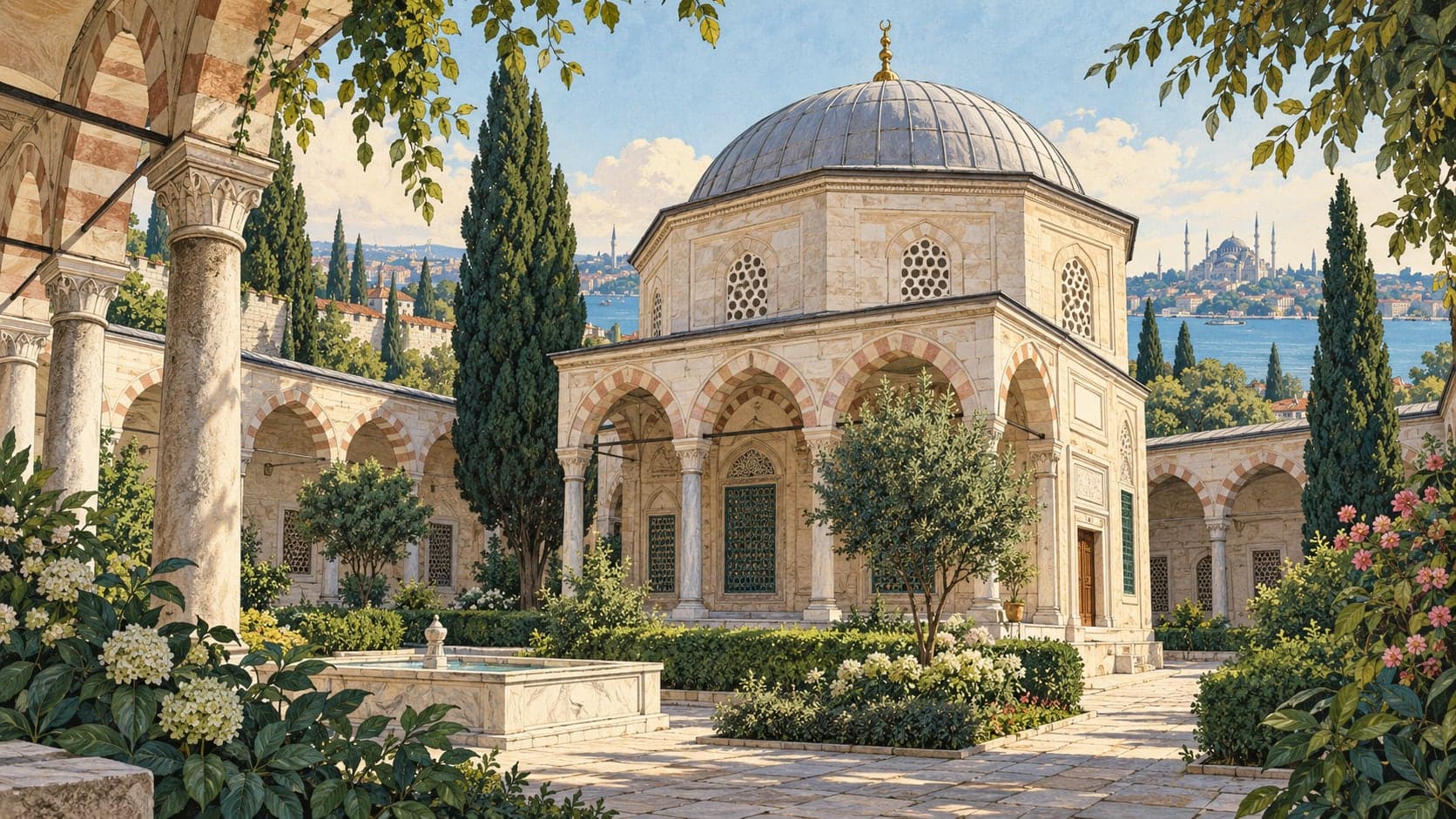
The tomb is domed on an eight-sided plan, and the stonework is as clean as the mosque's. A canopy eave on two columns shelters the entrance, and each face is lit by two windows, one above the other: the lower ones framed with a moulding and given decorated relieving arches of the Bursa type, the upper ones classic pointed arches. The interior measures 7.36 metres across. The name Derviş Davud can be read in the Arabic inscription set in four cartouches above the arch; the pasha's death date, written not in the inscription but on the lintel stone over the door arch as 905 (1499–1500), is thought to have been cut wrongly at a later date.
Outside the courtyard gate stands the Davud Paşa fountain, the oldest Turkish fountain in İstanbul that still carries its inscription, and probably the outlet of the water Âşıkpaşazade credited to its founder. It is a plain thing of cut stone, no more than a broken pointed arch, and its two lines read only that this is the work of the late Davud Paşa, with the year 890 (1485) — the founder is called late, so the fountain was made in his name after his death although it bears the date of the complex.