Guide
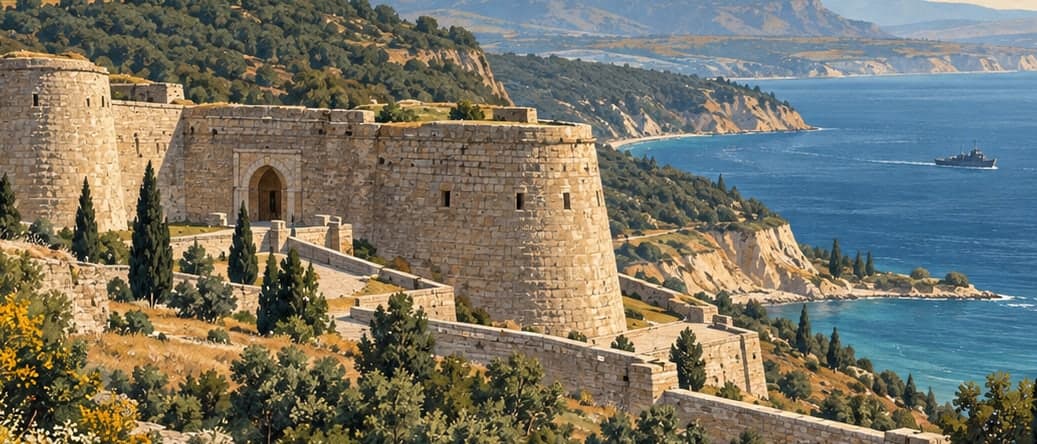
The castle known as Kale-i Sultaniye, or Çimenlik Castle, was raised on the Asian shore of the Dardanelles in the reign of Mehmed the Conqueror; the source gives the date both as 1462 and as 1452. Directly opposite it, on the European side of the strait, stands Kilitbahir. Fitted with thirty guns, the castle brought the 1,250 metres of the strait within range.
It was strengthened by Süleyman the Magnificent in 1551, renewed during the long Cretan war against Venice, and thoroughly renewed again by Selim III during the Napoleonic wars. Kale-i Sultaniye played a key part in the defence of the Dardanelles down to the First World War.
At the end of the nineteenth century the seaward walls were rebuilt as a row of gun emplacements in place of a solid wall, which made the castle a target for the British and French ships in 1915. A shell fired from the British ship Queen Elizabeth on 18 March 1915 opened a hole two metres wide in the northern wall and failed to explode; it still lies where it fell.
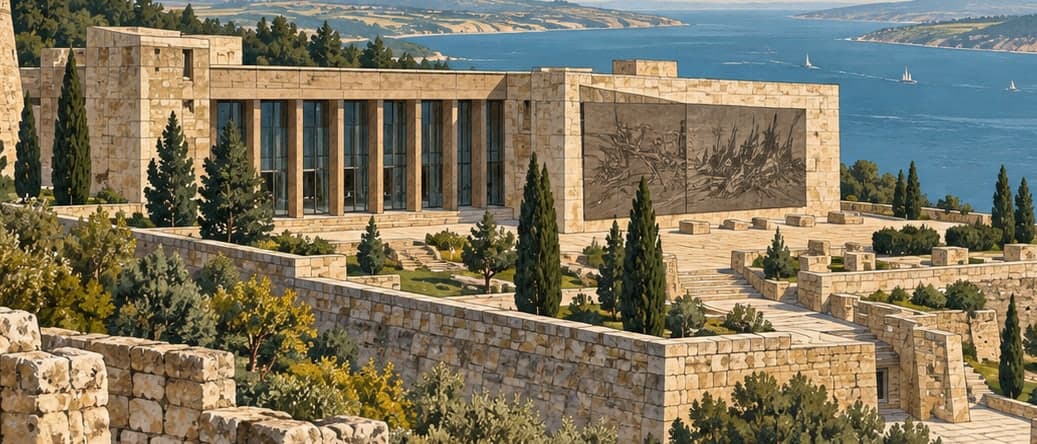
The castle serves as a museum today. In its courtyard and grounds are displayed guns of various nations used in the Çanakkale battles, along with guns of other periods.
Çimenlik is made up of two parts, the outer walls and the inner castle. The outer walls stand eleven metres high and in places eight metres thick, laid out on a simple rectangular plan of a hundred by 150 metres, with nine towers.
In the courtyard are the powder magazine and two mosques built in the reigns of Mehmed the Conqueror and Abdülaziz and named after them.
The inner castle measures 42 by 48 metres, with walls 9.5 metres thick reaching twenty-five metres in height. It had three floors: the first stood on a masonry base four metres above the level of the inner courtyard, and the two floors above it were of wood.