Guide
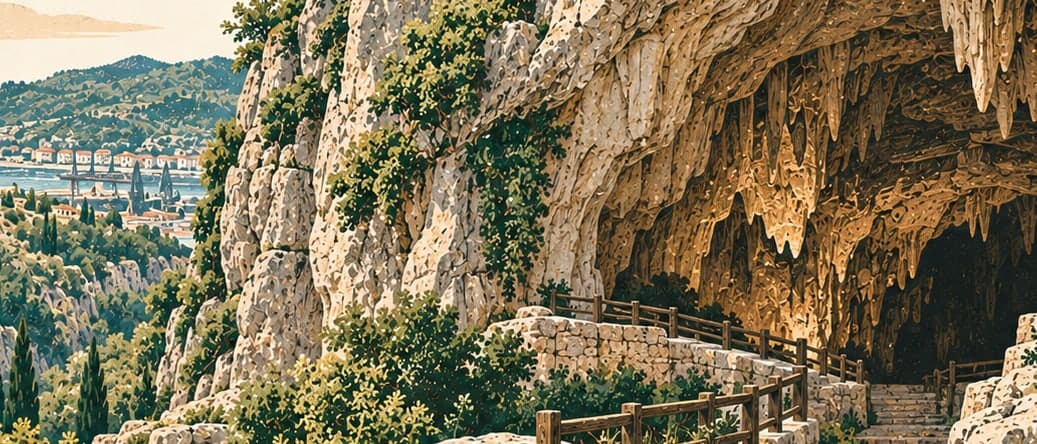
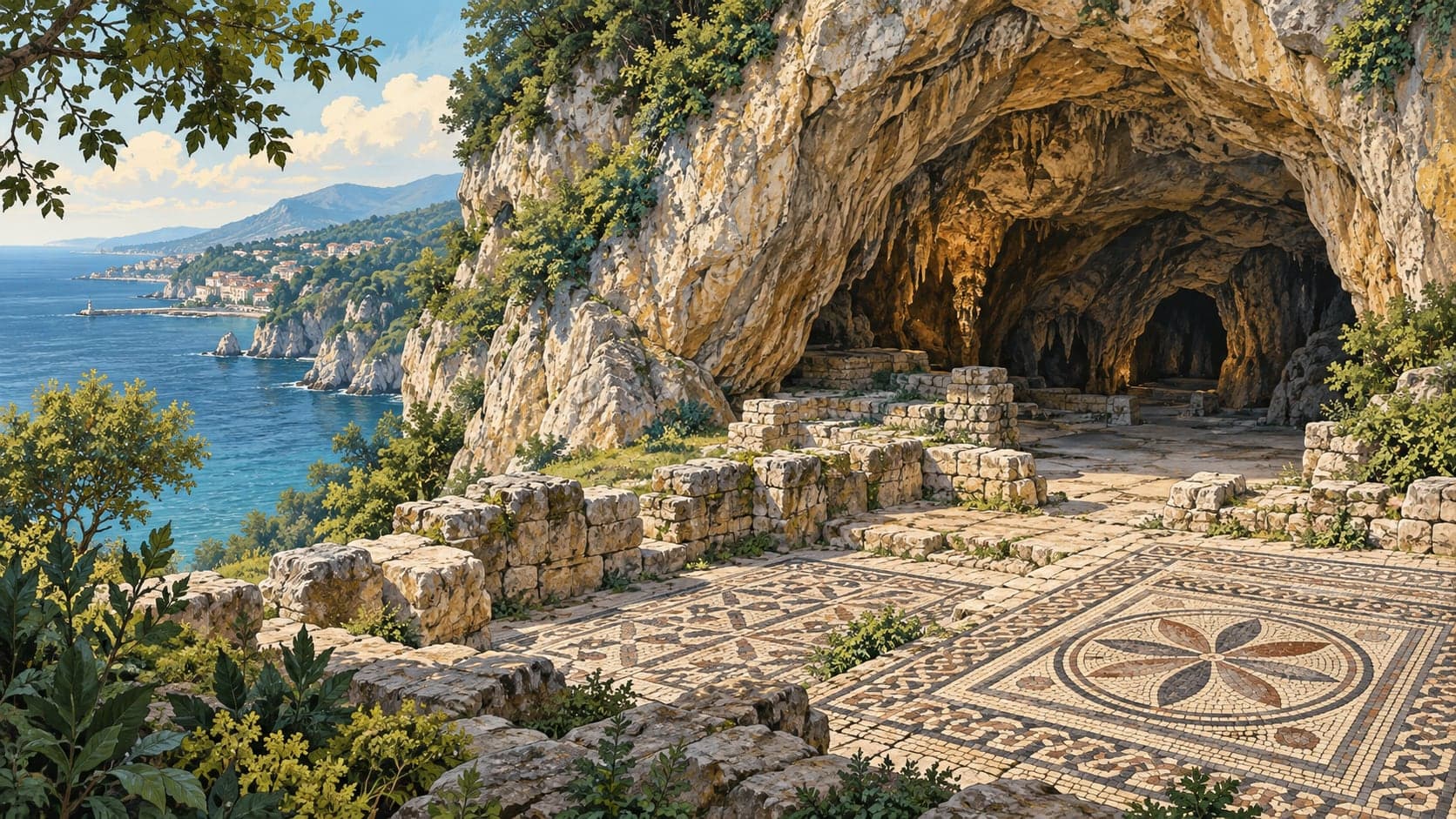
Three caves stand side by side in the Ereğli district of Zonguldak, in what antiquity knew as the valley of the Acheron. Archaeological writing also calls them the caves of prophecy. They are half natural and half made: the hollows formed in volcanic tuff, and people then cut them into usable rooms.
The first is the Church Cave, laid out in two parts. The floor of the first is still covered with its original mosaic of plant and geometric motifs. In the second, a small apse opens in the east wall with stepped platforms in front of it. This was a very early Christian church, used as a hidden place of worship in the years when the faith was spreading and forbidden; the columns and capitals, the mosaic floor and the niches cut for lamps all carry motifs of that early period.
The second is the Cave of Heracles. A narrow entrance on a slope about ten metres above the roadside leads to a vertical ladder of three steps; below it the cave covers some 400 square metres, carried on two pillars. This is where myth places the hardest of the twelve labours Eurystheus set for Heracles: he entered here to reach the realm of Hades and brought Kerberos, the three-headed dog guarding the underworld, up to the surface. The story goes on to say that the poppies growing nearby sprang from the foam that fell from the dog's mouth as it barked in front of the cave.
The city's ancient name follows from the same story. It was called after Heracles in thanks for the labour completed here, and was later distinguished from other places of that name as Herakleia Pontika — Karadeniz Ereğli today. Locally the cave goes by another name entirely: Koca Yusuf.
Visit status for this record: open to visitors.