Guide
Ariassos is a city of Pisidia, fifty kilometres north of Antalya and one kilometre from the village of Akkoç, just west of Çubukbeli — the pass that links the Antalya coast to the Anatolian plateau. Its official foundation is placed in 189–188 BC, in connection with the campaign of Manlius Vulso and the Peace of Apameia. It went on striking coins from the first century BC until the reign of Gallienus (253–267). The Byzantine geographer Hierokles lists it in the province of Pamphylia in late antiquity, and the church documents known as the Notitiae Episcopatuum keep calling it a bishopric of Pamphylia as late as the twelfth century. It stood in union with the other Pisidian cities, and its position on the connecting roads is what it lived on: tolls and tribute. Life here ended after the Byzantine period.
The plan reads clearly from east to west: first a necropolis, then the south corner of the city wall with private buildings, then the city gate, then a probable colonnaded street running west from it, with the main settlement on the north side of that street and another necropolis to the west. The city is laid out on terraces cut into the north slope, parallel to the street.
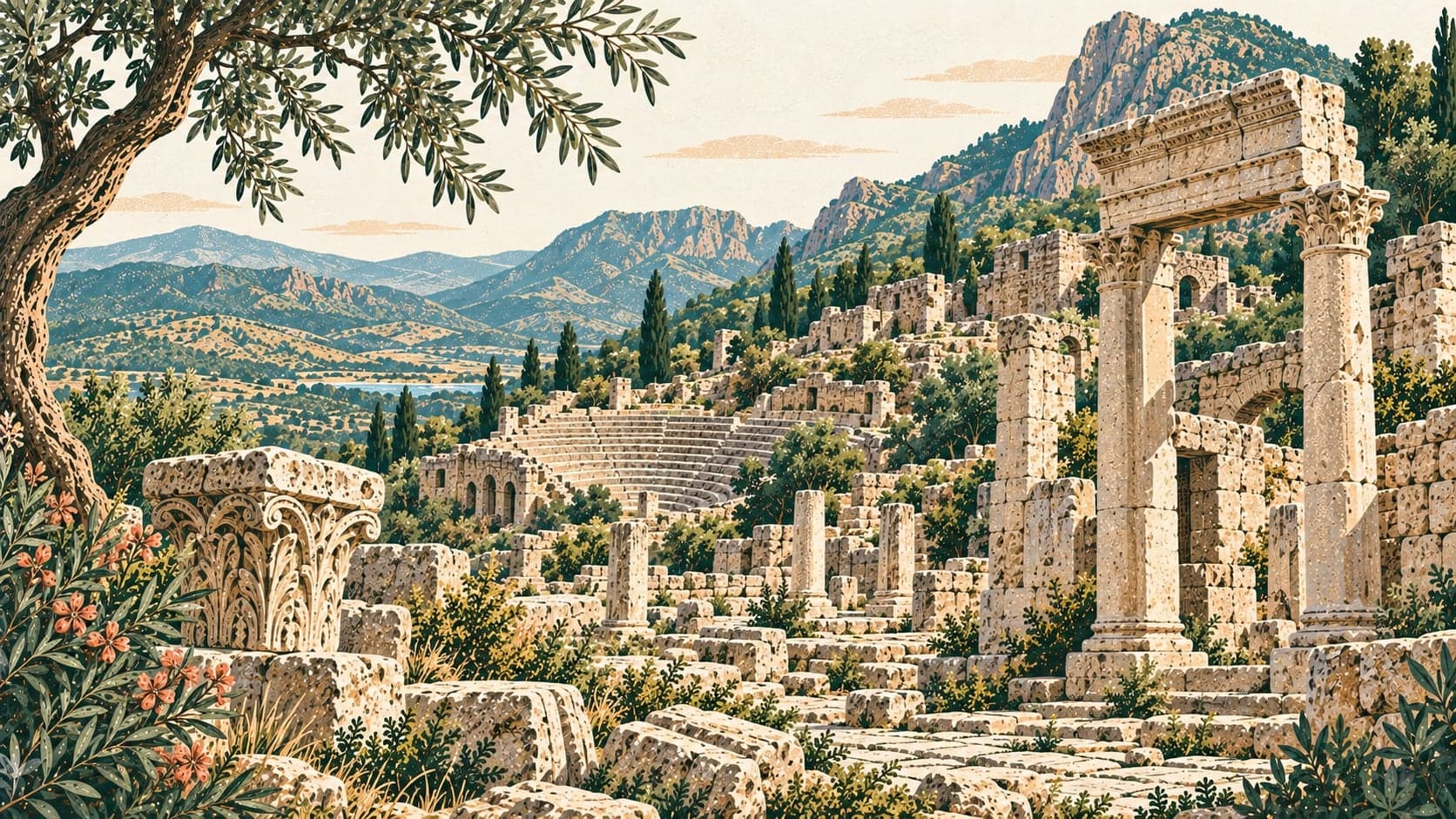
The most impressive thing standing is the monumental entrance, which rises at the mouth of the valley by which the city is reached. The three-arched gate survives almost whole, and it is understood to have been in use under the emperor Severus Alexander.
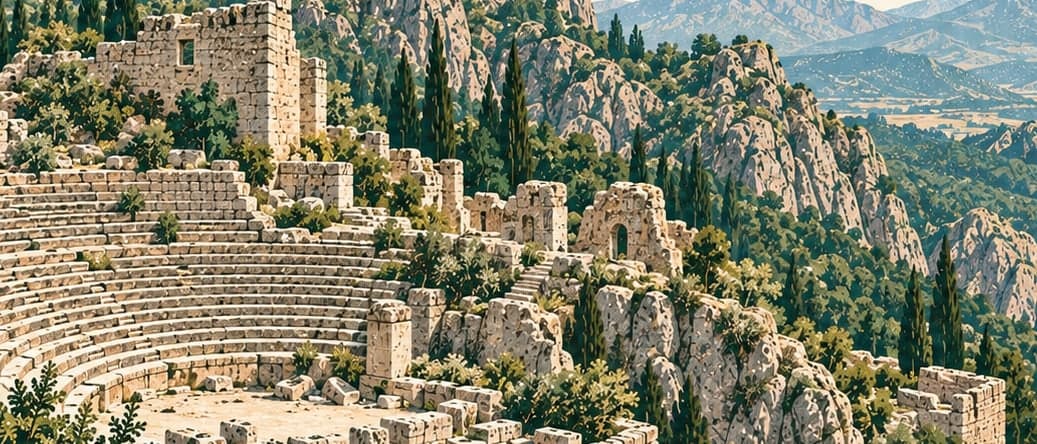
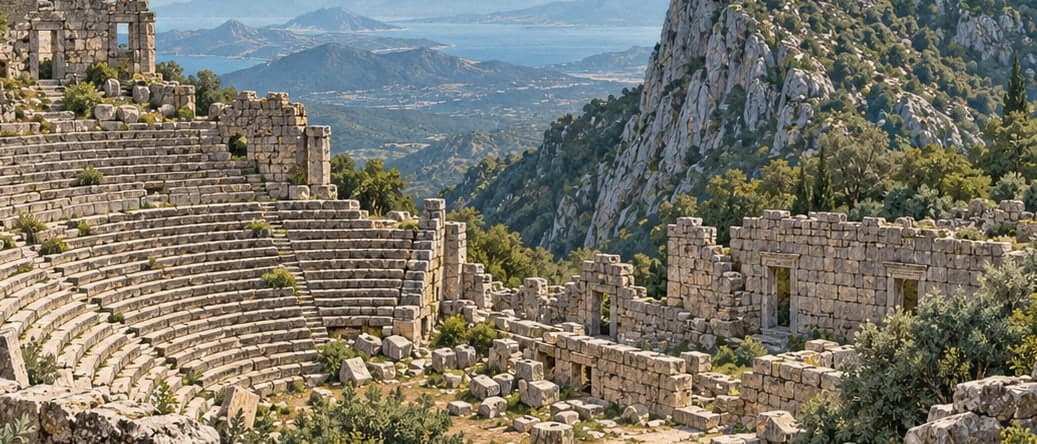
The rest is the ordinary equipment of a Pisidian city, much of it identifiable: the walls, mausoleum-type tombs, the Roman road, the water channel, a nymphaion, a bouleuterion, a gymnasium, a bath and a theatre. Three small churches have been located — two on the colonnaded street between the gate and the fountain building, one in the north-west of the city. On the western slope a stretch of Roman road descends across the modern track to Akkoç village, laid in large well-fitted blocks.